309 kr
Markus Fjellström – författare
Visar alla böcker från författaren Markus Fjellström. Handla med fri frakt och snabb leverans.
5 produkter
5 produkter
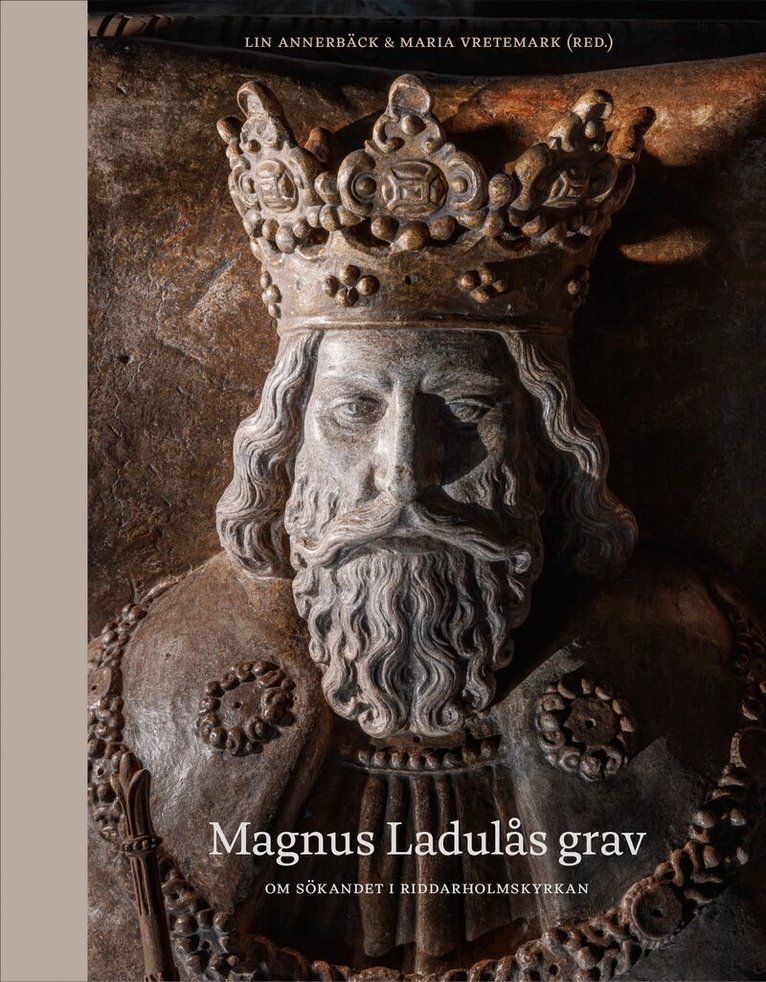
- Inbunden, Svenska, 2026Riddarholmskyrkan har, allt sedan den mäktiga tegelbyggnaden murades upp i slutet av 1200-talet, varit en betydelsefull plats för de som styrde i kungariket Sverige. Här har historia skapats men bara en bråkdel av allt som hänt har lämnat spår i olika källor. Det mesta är sedan länge bortglömt. I Projekt Magnus Ladulås har arkeologer försökt fylla några kunskapsluckor och hitta svar genom nya undersökningar och analyser. Mellan 2011 och 2018 gjordes arkeologiska undersökningar i och kring de två gravtumbor som finns i Riddarholmskyrkans kor. Målet var att återfinna Magnus Ladulås kvarlevor och undersökningarna. Vad fann arkeologerna? Denna publikation är en vetenskaplig slutrapport för projektet men boken vänder sig också till en bredare läsekrets med ett intresse för Stockholms, och Sveriges, medeltida historia.
- Häftad, Engelska, 2023
663 kr
Skickas inom 10-15 vardagar
Broken Bodies, Places and Objects demonstrates the breadth of fragmentation and fragment use in prehistory and history and provides an up-to-date insight into current archaeological thinking around the topic.A seal broken and shared by two trade parties, dog jaws accompanying the dead in Mesolithic burials, fragments of ancient warships commodified as souvenirs, parts of an ancient dynastic throne split up between different colonial collections… Pieces of the past are everywhere around us. Fragments have a special potential precisely because of their incomplete format – as a new matter that can reference its original whole but can also live on with new, unrelated meanings. Deliberate breakage of bodies, places and objects for the use of fragments has been attested from all time periods in the past. It has now been over 20 years since John Chapman’s major publication introducing fragmentation studies, and the topic is more present than ever in archaeology. This volume offers the first European-wide review of the concept of fragmentation, collecting case studies from the Neolithic to Modernity and extending the ideas of fragmentation theory in new directions.The book is written for scholars and students in archaeology, but it is also relevant for neighbouring fields with an interest in material culture, such as anthropology, history, cultural heritage studies, museology, art and architecture.The Open Access version of this book, available at http://www.taylorfrancis.com, has been made available under a Creative Commons Attribution-Non Commercial-No Derivatives (CC-BY-NC-ND) 4.0 license. - Inbunden, Engelska, 2023
2 570 kr
Skickas inom 10-15 vardagar
Broken Bodies, Places and Objects demonstrates the breadth of fragmentation and fragment use in prehistory and history and provides an up-to-date insight into current archaeological thinking around the topic.A seal broken and shared by two trade parties, dog jaws accompanying the dead in Mesolithic burials, fragments of ancient warships commodified as souvenirs, parts of an ancient dynastic throne split up between different colonial collections… Pieces of the past are everywhere around us. Fragments have a special potential precisely because of their incomplete format – as a new matter that can reference its original whole but can also live on with new, unrelated meanings. Deliberate breakage of bodies, places and objects for the use of fragments has been attested from all time periods in the past. It has now been over 20 years since John Chapman’s major publication introducing fragmentation studies, and the topic is more present than ever in archaeology. This volume offers the first European-wide review of the concept of fragmentation, collecting case studies from the Neolithic to Modernity and extending the ideas of fragmentation theory in new directions.The book is written for scholars and students in archaeology, but it is also relevant for neighbouring fields with an interest in material culture, such as anthropology, history, cultural heritage studies, museology, art and architecture.The Open Access version of this book, available at http://www.taylorfrancis.com, has been made available under a Creative Commons Attribution-Non Commercial-No Derivatives (CC-BY-NC-ND) 4.0 license. - Inbunden, Engelska, 2025
558 kr
Skickas inom 10-15 vardagar
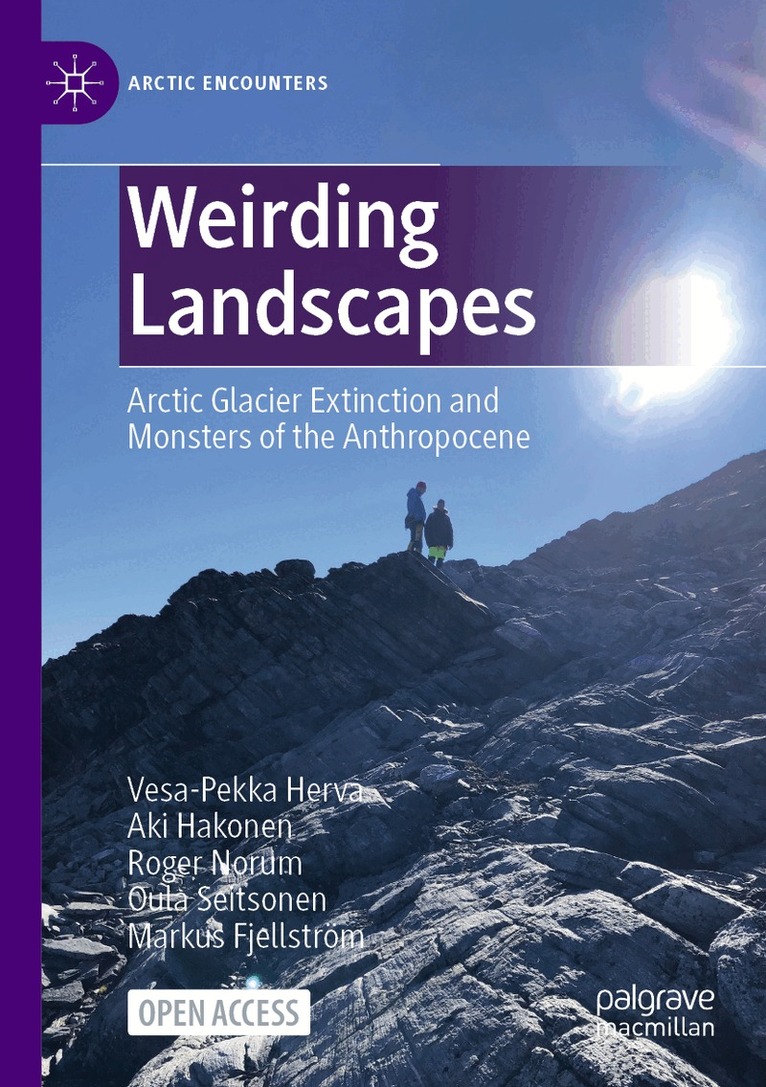
This open access book investigates human-environment relations in the context of the anthropocenic Arctic. Through an archaeological and anthropological study of landscape, it wields “weirding” – a creative mode of engagement with the world – as a means of coming to terms with the stranger, experiential dimensions of a planet populated by diverse non-human entities often bearing monstrous characteristics. Such entities are exemplified by climate change itself, at once human-induced and a force of its own volition that maintains an elusive “presence” as a co-inhabitant of the Anthropocene. The book focuses on the landscape of Ritničohkka, a fjell in Sápmi, Finnish Lapland. Ritničohkka is erstwhile home to a diminutive “glacier”, whose “weird”, anomalous characteristics crowned the fjell until it several years ago melted into history. Taking a broadly autoethnographic approach, it considers perceptions of, and affective experiences in, this rough and relatively remote, “otherworldly” environment, discussing diverse ways of encountering and relating to the Arctic in the context of scientific fieldwork. - Häftad, Engelska, 2026
448 kr
Skickas inom 10-15 vardagar
This open access book investigates human-environment relations in the context of the anthropocenic Arctic. Through an archaeological and anthropological study of landscape, it wields “weirding” – a creative mode of engagement with the world – as a means of coming to terms with the stranger, experiential dimensions of a planet populated by diverse non-human entities often bearing monstrous characteristics. Such entities are exemplified by climate change itself, at once human-induced and a force of its own volition that maintains an elusive “presence” as a co-inhabitant of the Anthropocene. The book focuses on the landscape of Ritničohkka, a fjell in Sápmi, Finnish Lapland. Ritničohkka is erstwhile home to a diminutive “glacier”, whose “weird”, anomalous characteristics crowned the fjell until it several years ago melted into history. Taking a broadly autoethnographic approach, it considers perceptions of, and affective experiences in, this rough and relatively remote, “otherworldly” environment, discussing diverse ways of encountering and relating to the Arctic in the context of scientific fieldwork.