Marlene Dobkin de Rios – författare
Visar alla böcker från författaren . Handla med fri frakt och snabb leverans.
4 produkter
4 produkter
Inbunden, Engelska, 2008
680 kr
Skickas inom 10-15 vardagar
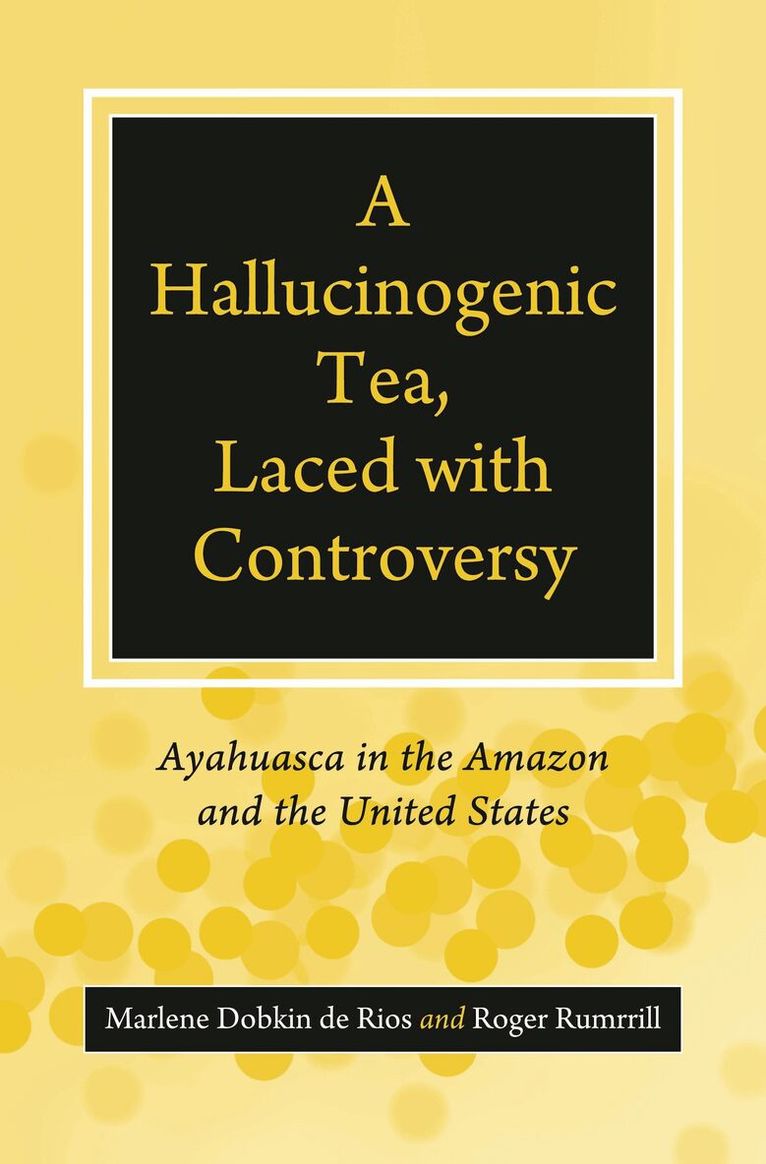
One country's sacrament is another's illicit drug, as officials in South America and the United States are well aware. For centuries, a hallucinogenic tea made from a giant vine native to the Amazonian rainforest has been taken as a religious sacrament across several cultures in South America. Many spiritual leaders, shamans, and their followers consider the tea and its main component - ayahuasca - to be both enlightening and healing. In fact, ayahuasca (pronounced a-ja-was-ka) loosely translated means spirit vine. In this book, de Rios and Rumrrill take us inside the history and realm of, as well as the raging arguments about, the substance that seems a sacrament to some and a scourge to others. Their book includes text from the United Nations Convention on Psychotropic Substances and interviews with shamans in the Amazon.One country's sacrament is another's illicit drug, as officials in South America and the United States are well aware. For centuries, a hallucinogenic tea made from a giant vine native to the Amazonian rainforest has been taken as a religious sacrament across several cultures in South America. Many spiritual leaders, shamans, and their followers consider the tea and its main component - ayahuasca - to be both enlightening and healing. In fact, ayahuasca (pronounced a-ja-was-ka) loosely translated means spirit vine. Ayahuasca has moved into the United States, causing legal battles in the Supreme Court and rulings from the United Nations. Some U.S. church groups are using the hallucinogen in their ceremonies and have fought for government approval to do so. The sacrament has also drawn American drug tourists to South America to partake, say authors de Rios and Rumrrill. But they warn that these tourists are being put at risk by charlatans who are not true shamans or religious figures, just profiteers.In this book, de Rios and Rumrrill take us inside the history and realm of, as well as the raging arguments about, the substance that seems a sacrament to some and a scourge to others. Opponents fight its use even as U.S. scientists and psychologists continue investigations of whether ayahuasca has healing properties that might be put to conventional use for physical and mental health. This book includes text from the United Nations Convention on Psychotropic Substances and interviews with shamans in the Amazon.
E-bok
PDF, Engelska, 2008545 kr
Läs direkt efter köp
One country's sacrament is another's illicit drug, as officials in South America and the United States are well aware. For centuries, a hallucinogenic tea made from a giant vine native to the Amazonian rainforest has been taken as a religious sacrament across several cultures in South America. Many spiritual leaders, shamans, and their followers consider the tea and its main component - ayahuasca - to be both enlightening and healing. In fact, ayahuasca (pronounced a-ja-was-ka) loosely translated means spirit vine. In this book, de Rios and Rumrrill take us inside the history and realm of, as well as the raging arguments about, the substance that seems a sacrament to some and a scourge to others. Their book includes text from the United Nations Convention on Psychotropic Substances and interviews with shamans in the Amazon.One country's sacrament is another's illicit drug, as officials in South America and the United States are well aware. For centuries, a hallucinogenic tea made from a giant vine native to the Amazonian rainforest has been taken as a religious sacrament across several cultures in South America. Many spiritual leaders, shamans, and their followers consider the tea and its main component - ayahuasca - to be both enlightening and healing. In fact, ayahuasca (pronounced a-ja-was-ka) loosely translated means spirit vine. Ayahuasca has moved into the United States, causing legal battles in the Supreme Court and rulings from the United Nations. Some U.S. church groups are using the hallucinogen in their ceremonies and have fought for government approval to do so. The sacrament has also drawn American drug tourists to South America to partake, say authors de Rios and Rumrrill. But they warn that these tourists are being put at risk by charlatans who are not true shamans or religious figures, just profiteers.In this book, de Rios and Rumrrill take us inside the history and realm of, as well as the raging arguments about, the substance that seems a sacrament to some and a scourge to others. Opponents fight its use even as U.S. scientists and psychologists continue investigations of whether ayahuasca has healing properties that might be put to conventional use for physical and mental health. This book includes text from the United Nations Convention on Psychotropic Substances and interviews with shamans in the Amazon.
Häftad, Engelska, 2008
492 kr
Skickas inom 10-15 vardagar
One country's sacrament is another's illicit drug, as officials in South America and the United States are well aware. For centuries, a hallucinogenic tea made from a giant vine native to the Amazonian rainforest has been taken as a religious sacrament across several cultures in South America. Many spiritual leaders, shamans, and their followers consider the tea and its main component - ayahuasca - to be both enlightening and healing. In fact, ayahuasca (pronounced a-ja-was-ka) loosely translated means spirit vine. In this book, de Rios and Rumrrill take us inside the history and realm of, as well as the raging arguments about, the substance that seems a sacrament to some and a scourge to others. Their book includes text from the United Nations Convention on Psychotropic Substances and interviews with shamans in the Amazon.One country's sacrament is another's illicit drug, as officials in South America and the United States are well aware. For centuries, a hallucinogenic tea made from a giant vine native to the Amazonian rainforest has been taken as a religious sacrament across several cultures in South America. Many spiritual leaders, shamans, and their followers consider the tea and its main component - ayahuasca - to be both enlightening and healing. In fact, ayahuasca (pronounced a-ja-was-ka) loosely translated means spirit vine. Ayahuasca has moved into the United States, causing legal battles in the Supreme Court and rulings from the United Nations. Some U.S. church groups are using the hallucinogen in their ceremonies and have fought for government approval to do so. The sacrament has also drawn American drug tourists to South America to partake, say authors de Rios and Rumrrill. But they warn that these tourists are being put at risk by charlatans who are not true shamans or religious figures, just profiteers.In this book, de Rios and Rumrrill take us inside the history and realm of, as well as the raging arguments about, the substance that seems a sacrament to some and a scourge to others. Opponents fight its use even as U.S. scientists and psychologists continue investigations of whether ayahuasca has healing properties that might be put to conventional use for physical and mental health. This book includes text from the United Nations Convention on Psychotropic Substances and interviews with shamans in the Amazon.
E-bok
Engelska, 2003160 kr
Läs direkt efter köp
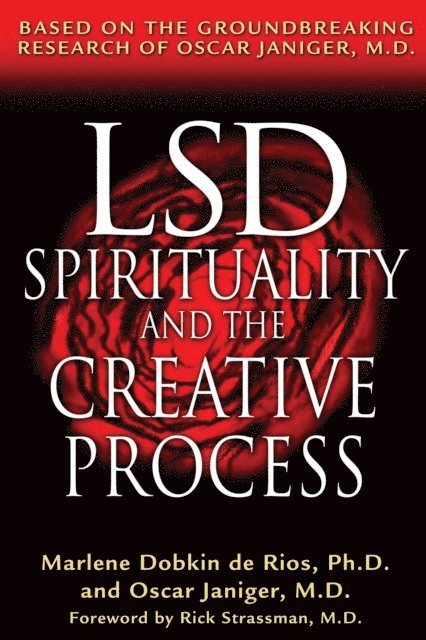
An exploration of how LSD influences imagination and the creative process. • Based on the results of one of the longest clinical studies of LSD that took place between 1954 and 1962, before LSD was illegal. • Includes personal reports, artwork, and poetry from the original sessions as testimony of the impact of LSD on the creative process. In 1954 a Los Angeles psychiatrist began experimenting with a then new chemical discovery known as LSD-25. Over an eight-year period Dr. Oscar Janiger gave LSD-25 to more than 950 men and women, ranging in age from 18 to 81 and coming from all walks of life. The data collected by the author during those trials and from follow-up studies done 40 years later is now available here for the first time, along with the authors'' examination of LSD''s ramifications on creativity, imagination, and spirituality. In this book Marlene Dobkin de Rios, a medical anthropologist who studied the use of hallucinogens in tribal and third world societies, considers the spiritual implications of these findings in comparison with indigenous groups that employ psychoactive substances in their religious ceremonies. The book also examines the nature of the creative process as influenced by psychedelics and provides artwork and poetry from the original experiment sessions, allowing the reader to personally witness LSD''s impact on creativity. The studies recounted in LSD, Spirituality, and the Creative Process depict an important moment in the history of consciousness and reveal the psychic unity of humanity.