Martin Kristoffer Hamre – författare
Visar alla böcker från författaren . Handla med fri frakt och snabb leverans.
2 produkter
2 produkter
Inbunden, Engelska, 2025
900 kr
Skickas inom 3-6 vardagar
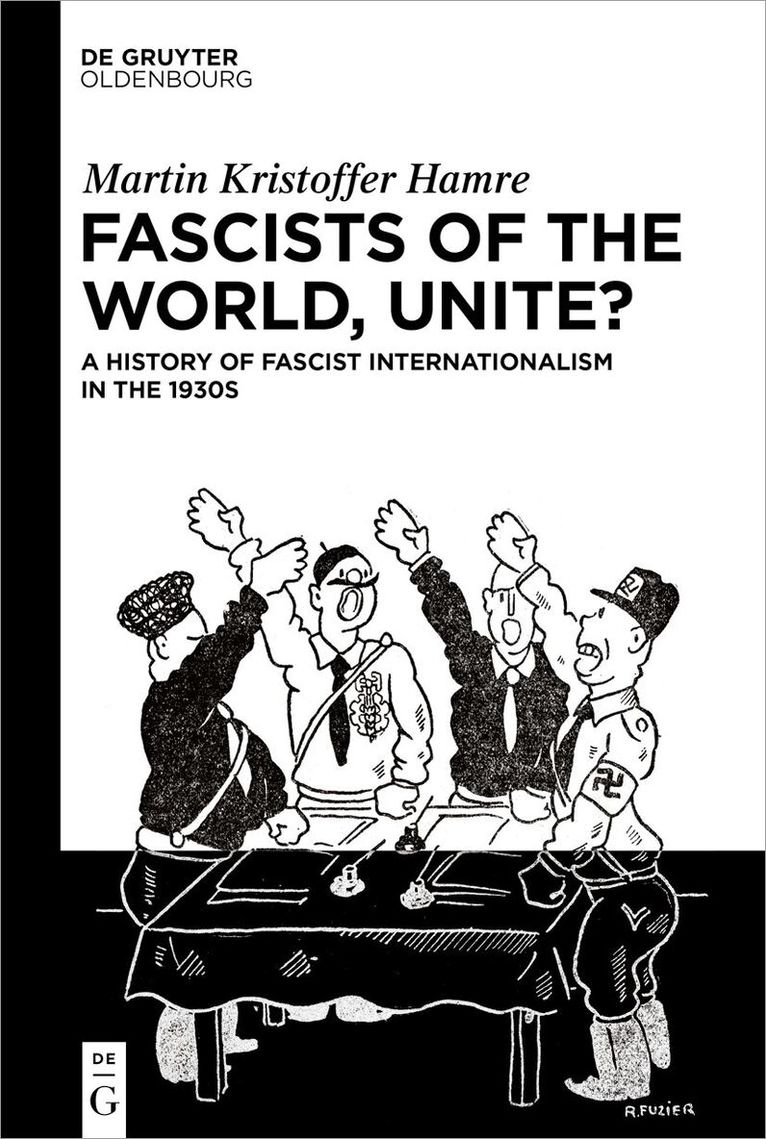
This book analyzes the ideas and forms of international cooperation between Fascist Italy, Nazi Germany, and fascist movements from Denmark, Norway, Sweden, Switzerland, Ireland, and Britain. The study examines how fascists attempted to unite across borders by forming international organizations and networks, hosting conferences and exhibitions, disseminating multilingual publications, and exchanging propaganda. Their transnational cooperation was fuelled by shared ideas of ultranationalism, anti-liberalism, anti-communism, antisemitism, racism, white supremacism, and Europeanism. The book argues that fascist internationalism, marked by contradictions, limitations, and an Italo-German rivalry, emerged in the 1930s as a counter-reaction to liberal and communist internationalism. The epilogue discusses reverberations in the Second World War and the postwar period and outlines the relevance of this history for understanding contemporary forms of far-right internationalism.
E-bok
PDF, Engelska, 2025913 kr
Läs direkt efter köp
This book analyzes the ideas and forms of international cooperation between Fascist Italy, Nazi Germany, and fascist movements from Denmark, Norway, Sweden, Switzerland, Ireland, and Britain. The study examines how fascists attempted to unite across borders by forming international organizations and networks, hosting conferences and exhibitions, disseminating multilingual publications, and exchanging propaganda. Their transnational cooperation was fuelled by shared ideas of ultranationalism, anti-liberalism, anti-communism, antisemitism, racism, white supremacism, and Europeanism. The book argues that fascist internationalism, marked by contradictions, limitations, and an Italo-German rivalry, emerged in the 1930s as a counter-reaction to liberal and communist internationalism. The epilogue discusses reverberations in the Second World War and the postwar period and outlines the relevance of this history for understanding contemporary forms of far-right internationalism.