Megan J. Elias – författare
Visar alla böcker från författaren . Handla med fri frakt och snabb leverans.
8 produkter
8 produkter
Inbunden, Engelska, 2009
713 kr
Skickas inom 10-15 vardagar
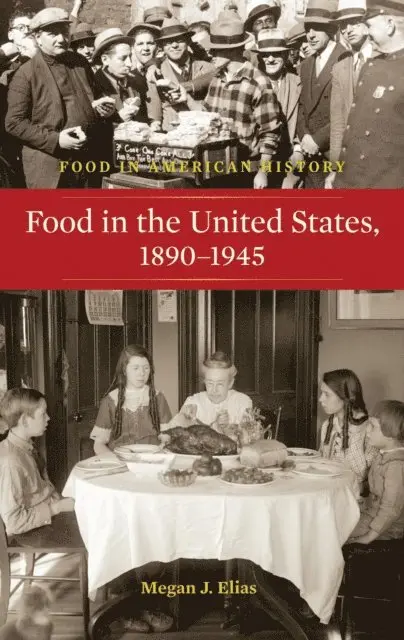
No American history or food collection is complete without this lively insight into the radical changes in daily life from the Gilded Age to World War II, as reflected in foodways.From the Gilded Age to the end of World War II, what, where, when, and how Americans ate all changed radically. Migration to urban areas took people away from their personal connection to food sources. Immigration, primarily from Europe, and political influence of the Caribbean, Latin America, and the Pacific brought us new ingredients, cuisines, and foodways. Technological breakthroughs engendered the widespread availability of refrigeration, as well as faster cooking times. The invention of the automobile augured the introduction of “road food,” and the growth of commercial transportation meant that a wider assortment of foods was available year round. Major food crises occurred during the Depression and two world wars. Food in the United States, 1890-1945 documents these changes, taking students and general readers through the period to explain what our foodways say about our society. This intriguing narrative is enlivened with numerous period anecdotes that bring America history alive through food history.25 period photos complement the textRecipes allow students to sample dishes no longer common on American tablesA timeline makes clear the changes and new technologies that occurred during the periodA selected bibliography facilitates further research
E-bok
PDF, Engelska, 2009777 kr
Läs direkt efter köp
No American history or food collection is complete without this lively insight into the radical changes in daily life from the Gilded Age to World War II, as reflected in foodways.From the Gilded Age to the end of World War II, what, where, when, and how Americans ate all changed radically. Migration to urban areas took people away from their personal connection to food sources. Immigration, primarily from Europe, and political influence of the Caribbean, Latin America, and the Pacific brought us new ingredients, cuisines, and foodways. Technological breakthroughs engendered the widespread availability of refrigeration, as well as faster cooking times. The invention of the automobile augured the introduction of "road food," and the growth of commercial transportation meant that a wider assortment of foods was available year round. Major food crises occurred during the Depression and two world wars. Food in the United States, 1890-1945 documents these changes, taking students and general readers through the period to explain what our foodways say about our society. This intriguing narrative is enlivened with numerous period anecdotes that bring America history alive through food history.
Häftad, Engelska, 2010
332 kr
Skickas inom 10-15 vardagar
For Americans who came of age in the mid-twentieth century, home economics conjures memories of burnt toast and sewing disasters. But as historian Megan Elias shows in Stir It Up, home economics began as an idealistic reform movement in higher education in the early 1900s. Leaders of this movement sought to discover and disseminate the best methods for performing domestic work while creating new professional options for women that were based on elements of home life. Home and family were treated as subjects for scientific analysis; students wore lab coats while baking bread and performed rigorous tests on the palatability of their work. The Federal Bureau of Home Economics supplied a grateful audience with informational bulletins as Americans seemed to accept the idea that home could be a site for social change.A major shift occurred in the 1950s, when new ideas about women's roles seemed to divert home economics into more traditional channels, and "home ec" became identified with the era's conformist culture. Even as home economists were redefining family dynamics and influencing government policies, such as school lunch programs, their field was becoming an object of scorn, especially to the feminists of the 1960s. Stir It Up explains what the successes and failures of home economists can tell us about American culture. The book concludes with an examination of contemporary attitudes toward domesticity, putting the phenomena of Martha Stewart, Rachael Ray, Ty Pennington, and the "Mommy Wars" into historical context.
Inbunden, Engelska, 2017
434 kr
Skickas inom 3-6 vardagar
What is American food? From barbecue to Jell-O molds to burrito bowls, its history spans a vast patchwork of traditions, crazes, and quirks. A close look at these foods and the recipes behind them unearths a vivid map of American foodways: how Americans thought about food, how they described it, and what foods were in and out of style at different times.In Food on the Page, the first comprehensive history of American cookbooks, Megan J. Elias chronicles cookbook publishing from the early 1800s to the present day. Following food writing through trends such as the Southern nostalgia that emerged in the late nineteenth century, the Francophilia of the 1940s, countercultural cooking in the 1970s, and today's cult of locally sourced ingredients, she reveals that what we read about food influences us just as much as what we taste.Examining a wealth of fascinating archival material-and rediscovering several all-American culinary delicacies and oddities in the process-Elias explores the role words play in the creation of taste on both a personal and a national level. From Fannie Farmer to The Joy of Cooking to food blogs, she argues, American cookbook writers have commented on national cuisine while tempting their readers to the table. By taking cookbooks seriously as a genre and by tracing their genealogy, Food on the Page explains where contemporary assumptions about American food came from and where they might lead.
E-bok
Engelska, 2017650 kr
Läs direkt efter köp
What is American food? From barbecue to Jell-O molds to burrito bowls, its history spans a vast patchwork of traditions, crazes, and quirks. A close look at these foods and the recipes behind them unearths a vivid map of American foodways: how Americans thought about food, how they described it, and what foods were in and out of style at different times.In Food on the Page, the first comprehensive history of American cookbooks, Megan J. Elias chronicles cookbook publishing from the early 1800s to the present day. Following food writing through trends such as the Southern nostalgia that emerged in the late nineteenth century, the Francophilia of the 1940s, countercultural cooking in the 1970s, and today's cult of locally sourced ingredients, she reveals that what we read about food influences us just as much as what we taste.Examining a wealth of fascinating archival material-and rediscovering several all-American culinary delicacies and oddities in the process-Elias explores the role words play in the creation of taste on both a personal and a national level. From Fannie Farmer to The Joy of Cooking to food blogs, she argues, American cookbook writers have commented on national cuisine while tempting their readers to the table. By taking cookbooks seriously as a genre and by tracing their genealogy, Food on the Page explains where contemporary assumptions about American food came from and where they might lead.
Häftad, Engelska, 2025
255 kr
Skickas
E-bok
Engelska, 2025160 kr
Läs direkt efter köp
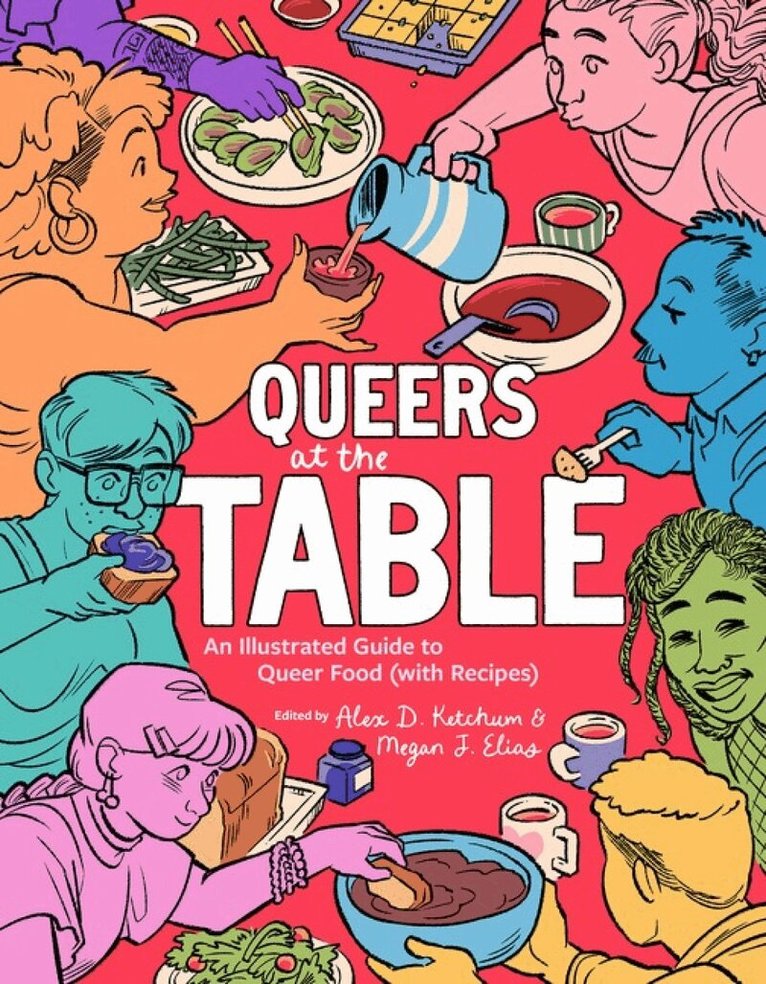
An anthology of essays, comics, and recipes that reveals the dynamic and transformative relationship between queerness and foodFood has long played an important role in queer culture. Lesbian- and queer womenrun feminist restaurants, cafes, and coffeehouses have been safe spaces for queer and trans folk where gender norms can be challenged and where female authority is legitimized. During the AIDS epidemic, gay men and their allies centered food as an expression of collective care for those who needed it most. And queer and trans folk have asserted themselves in a restaurant culture largely controlled by white cisgender men.Queers at the Table celebrates the various intersections between queers and food. In its essays, comics, and recipes, the book shows how this shared culture fosters connections, defies norms, honours legacies, and creates community. Taylor Hartson and Tristian Lee write about a queer farming community in which queerness is part of a broad network of living things to be enjoyed and shared; Danielle Kydd writes about food security issues as faced by LGBTQ2S+ folk; and Blue Delliquanti's comic on urban foraging in Minneapolis demonstrates the role of a queer friend group in a local ecosystem.In full color throughout, Queers at the Table is a diverse and enriching anthology that reveals the myriad nurturing ways that queerness informs food production and restaurant culture and how food empowers, transforms, and unites queer and trans folk.
E-bok
Engelska, 2009755 kr
Läs direkt efter köp
No American history or food collection is complete without this lively insight into the radical changes in daily life from the Gilded Age to World War II, as reflected in foodways.From the Gilded Age to the end of World War II, what, where, when, and how Americans ate all changed radically. Migration to urban areas took people away from their personal connection to food sources. Immigration, primarily from Europe, and political influence of the Caribbean, Latin America, and the Pacific brought us new ingredients, cuisines, and foodways. Technological breakthroughs engendered the widespread availability of refrigeration, as well as faster cooking times. The invention of the automobile augured the introduction of "road food," and the growth of commercial transportation meant that a wider assortment of foods was available year round. Major food crises occurred during the Depression and two world wars. Food in the United States, 1890-1945 documents these changes, taking students and general readers through the period to explain what our foodways say about our society. This intriguing narrative is enlivened with numerous period anecdotes that bring America history alive through food history.