Michèle Champenois – författare
Visar alla böcker från författaren Michèle Champenois. Handla med fri frakt och snabb leverans.
6 produkter
6 produkter
670 kr
Tillfälligt slut
Renowned in Europe as an avant-garde architect in the 1970s, the Catalan architect Ricardo Bofill was called to the French stage following the destruction of Les Halles de Baltard in 1971. Called upon to compete in 1974, the architect attempted to revive the historic forms of Parisian architecture and urban planning. Rejected in April 1978 after more than 3 years of projects and models by Jacques Chirac, the first mayor of Paris, who preferred a neutral and less monumental architecture, Bofill nevertheless played a leading role in the development of new towns in France from 1972 to 1985, with projects that were as striking as they were controversial: These included Abraxas in Marne-la-Vallée, Le Lac in Saint-Quentin-en-Yvelines, Place Majeure in Cergy-le-Haut and the Antigone district of Montpellier.Designed as a fully illustrated diary describing the close relationship between architecture and politics under Valéry Giscard d'Estaing and François Mitterand, this book is the first to look back at the emblematic Les Halles project, which is covered by a confidentiality clause until the architect's death in 2021. Through the accounts of witnesses from the time - Jack Lang, Jean-Jacques Aillagon, Paul Chemetov, Roland Catro - and the Taller archives, the author describes Bofill's prodigious rise to superstar status, and the importance of architecture, which was at the center of everyone's conversations at the time.Text in English and French.
491 kr
Skickas inom 5-8 vardagar
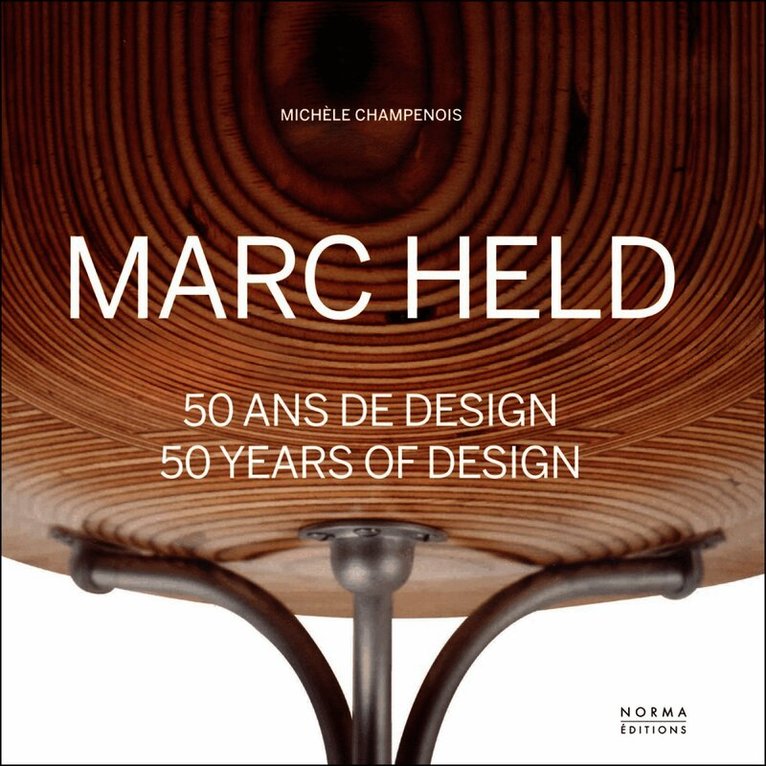
From the white plastic bed for the Prisunic catalogue (1966) to the Culbuto armchair issued by Knoll, and from the Lip watch to the private apartments of the Élysée Palace, Paris, (1983), the furniture and objects conceived by Marc Held have been emblematic of the renewal of French design, following the line of Scandinavians such as Alvar Aalto and Arne Jacobsen... With his gallery L'Échoppe on the rue de Seine, Paris, and then with his agency, the designer and architect Marc Held also took part in major projects for IBM and Renault.This book traces fifty years of design, whose success with the public at large has contributed to a great liberation in our style of life. The generosity of his vision has remained faithful to the humanist values that guided his childhood in Bagnolet, where he was born in 1932. Having settled in Greece, on the island of Skopelos, over twenty years ago, Marc Held still continues to build houses and furnish them with his creations, working closely with Greek craftsmen.Text in English and French.
610 kr
Skickas inom 5-8 vardagar
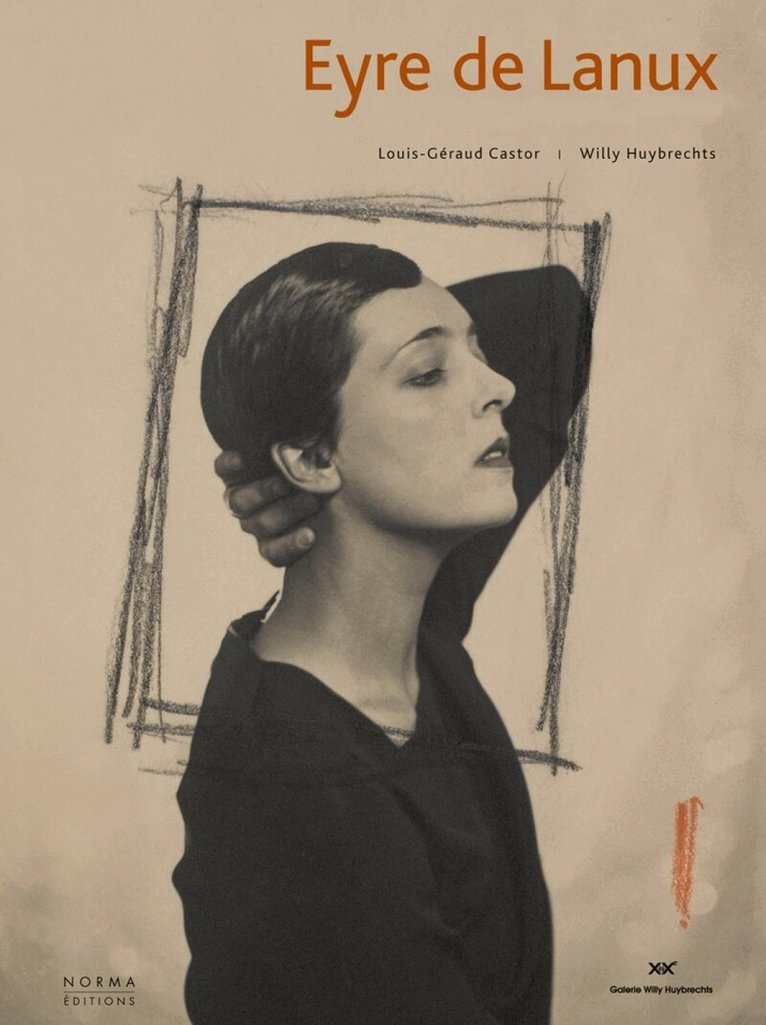
Born into the American aristocracy, Elizabeth Eyre de Lanux abandoned high society to pursue an artistic career. Starting her training with Constantin Brancusi, she then arrived in Paris in 1919, following her marriage to French diplomat and writer Pierre de Lanux. She soon met the designer Eileen Gray. Eyre took over Gray's research on laquer and continued experimenting with innovative materials not previously used in furniture, namely cork, amber and linoleum. With Evelyn Wyld, she created a literary universe in which the poetry of her rugs, blended with furniture and lamps in totally new ways, all in an environment of muted shades and modern comfort. An ambitious artist in the Surrealist Paris of the interwar years, she wanted to believe in a peaceful future. But the crash of 1929 and World War II sounded the death knell for the career of this fresh new talent, ensuring that her creations became the rarest of objects. A bridge between the pioneering Eileen Gray and the rational Charlotte Perriand, like them, Eyre de Lanux drew inspiration from Japonism. Neither poor, nor stripped bare, her rare architectured interiors have remained secret until now. Elizabeth Eyre de Lanux is a recognised name but a forgotten talent. With Eileen Gray, Eyre de Lanux, Charlotte Perriand and Maria Pergay, the four cardinal points have now been identified.
610 kr
Skickas inom 5-8 vardagar
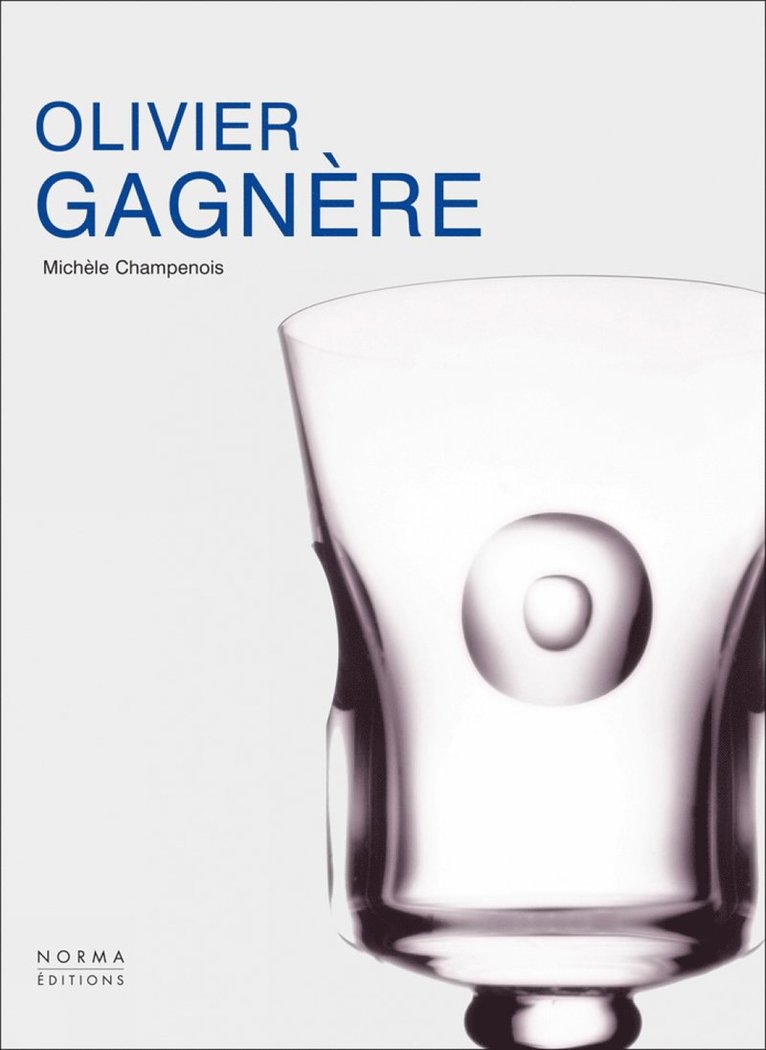
Olivier Gagnère appeared on the French design scene in the 1980s. Through his contact with the Memphis group of Ettore Sottsass in Milan, he developed his spirit of fantasy, great formal liberty, all with a touch of humour. In Japan, on the island of Kyushu, he immersed himself in the ancestral craftsmanship of the porcelain makers in the studios of Arita. He designed his earliest pieces of furniture for Artelano and Pierre Staudenmeyer's Galerie Néotù. He went on to collaborate with the Galerie Maeght to create works in Murano glass and with the Galerie Edition Limitée for works in earthenware. In 1994, his designs for the interior of the café Marly, in the Louvre, brought him great renown and have led to many collaborations with crystal works Saint-Louis, porcelain manufacturer Bernardaud, En attendant les Barbares... With Olivier Gagnère's artful mastery of every material, he is just as at ease working with porcelain as with iron, crystal, wood, leather or bronze. He blends simple and timeless forms with carefully sized volumes, in a range of bright contrasting colours. Steeped in the most classical traditions, he marks every one of his creations with a gesture, a demeanor that is a signature of his times.Text in English and French.
551 kr
Skickas inom 5-8 vardagar
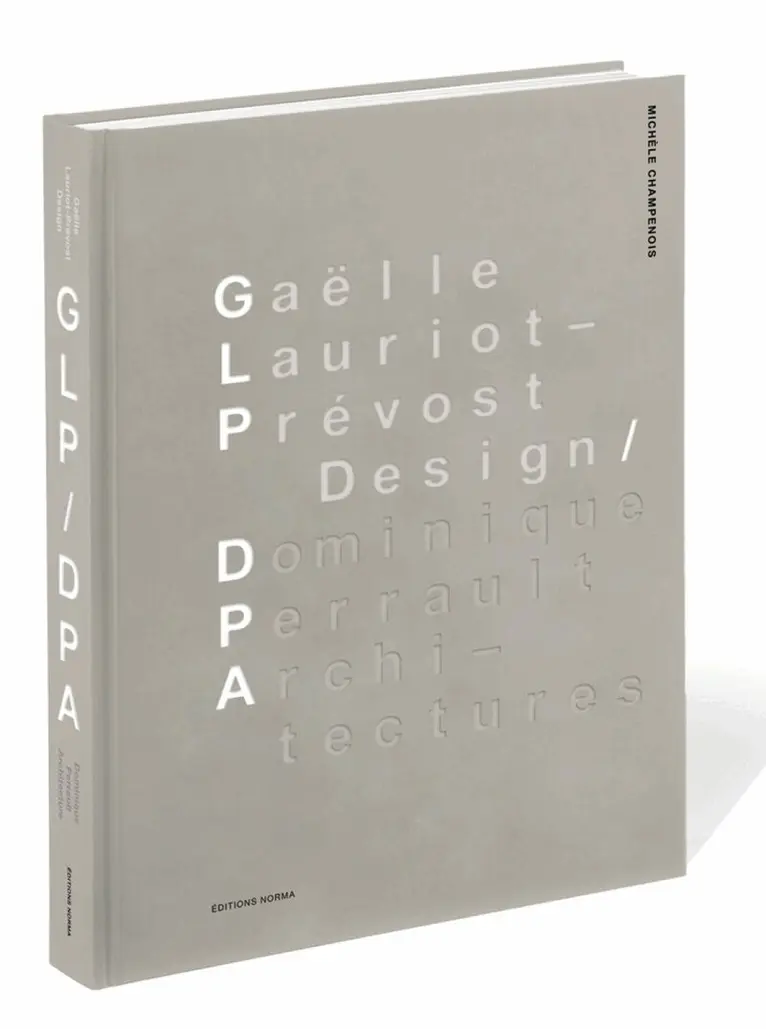
Dominique Perrault is recognised as one of the outstanding architects of the 21st century. In 2015 he was awarded the prestigious Praemium Imperiale prize. The general public knows him as the architect of the BnF François Mitterrand. He has authored major projects around the world, such as the Ewha Womans University in Seoul, Velodrome in Berlin, the Court of Justice of the European Union in Luxembourg (2008), and the Albi Grand Theater. Recently, the DPA office was selected to create a new hippodrome for Longchamp and to transform the former central office of La Poste rue du Louvre, in Paris.In 2016, the public will discover his transformation of the Dufour Pavilion in the Château of Versailles where the new ticket office, restaurant, conference rooms and bookstore will be located. Metal mesh tapestries and light fixtures here will evoke the majesty of the "Grand Siècle" in a modern language of design.For over twenty years now, Gaëlle Lauriot-Prévost, in her role as architect-designer associate of Dominique Perrault's, has been designing the interiors for his architectural projects: seating, light fixtures, partitions composed of metal mesh, etc. The work of these two designers creates environments in which architecture and furniture blend together. The objects designed by Gaëlle Lauriot-Prévost are edited by manufacturers around the globe: Fontana Arte, DCW, Silvera, Poltrona Frau, Alessi, Baccarrat, Chevalier, Sawaya & Moroni, Galerie Kréo, FSB, etc. The book offers an analysis of the influences underpinning the design of these furniture pieces and light fixtures, enabling the reader to understand the reflection preceding behind conception. It also presents possible variations in the paths they are likely to take from one project to the next.For the first time, this work presents, thanks to over 600 illustrations - plans, models and photographs - the complete range of objects Gaëlle Lauriot-Prévost has created, some of which, such as the seats for the BnF, have already become emblematic.Text in English and French.
491 kr
Skickas inom 5-8 vardagar
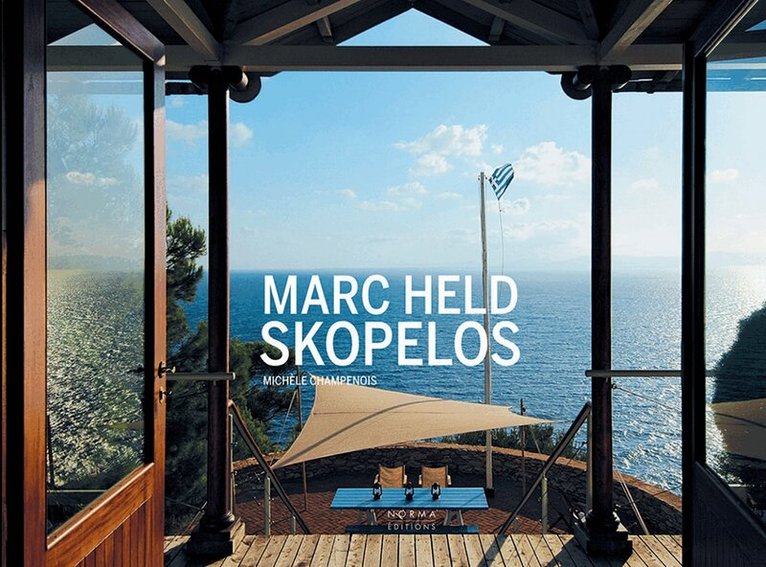
Marc Held entered history in 1965 with his famous Culbuto armchair, followed in 1966 by his furniture manufactured by Prisunic. Over a period of fifty years, he created some 150 furniture pieces, notably participating in 1983 in the interior design of the apartments in the Élysée Palace. Beginning in the 1970s, he also designed singular works of architecture, for individuals and for corporate clients such as IBM. At the end of the 1980s he chose to focus entirely on this passion of his when he settled on the Greek island of Skopelos. Interested in vernacular architecture, he dedicated a widely acknowledged book on Greece, Maisons de Skopelos, précis d'architecture vernaculaire published by Éditions Skopelos.net, in 1994, to it.It was also on Skopelos where over a period of thirty years he built eight exceptional villas: Lemonia, Maistros, Nina, Loukas, The Temple, Mourtia, Myrto and Kapsari. Each house is an architectural manifesto in its own right. These eight villas, in spectacular sites beside the sea, built with local materials and in accordance with the construction techniques of the island - all the artisans were from there - with the magical landscapes in which they are integrated, are eight lessons on the notion of genius loci, which so inspired Marc Held's architecture.Photographed by Deidi von Schaewen - with spectacular shots taken via drone-mounted cameras - his eight beautiful villas are also presented with his drawings and plans developed during their conception phases.Text in English and French.