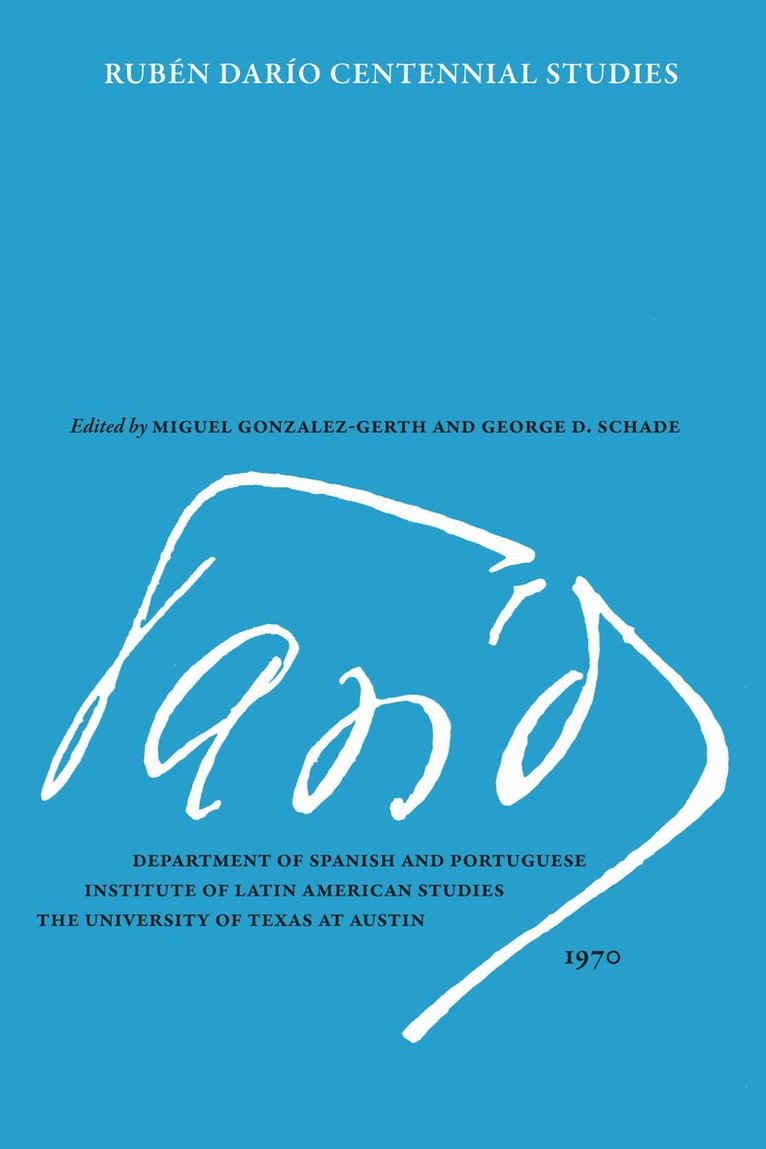
RubÉn DarÍo (1867–1916), the undisputed standard-bearer of the Modernist movement in Hispanic letters, was born in Nicaragua. In 1886 he went to Chile, where he published Azul (1888), his first important book of poems and stories. Later he lived for extended periods in Argentina, Spain, and France, and in these countries produced his best work: compelling poems of beauty, style, and dignity, especially Cantos de vida y esperanza (1905). The perfection of form, exotic essences, and rich ornamentation of his earlier work give way in his most mature poems to self-probings and doubts, the anguish so characteristic of twentieth-century literature. But the hedonistic note, the quenchless appetite for life, dominating Azul and Prosas profanas (1896) never die out, and are magnificently present in El poema del otoÑo (1910). DarÍo has had a tremendous impact on Hispanic literature. He is one of the best examples of the poet who is true to his art as determined by his innermost impulses. His poetry has fertilized a whole generation of writers in Spanish America and in Spain, and even now his influence continues to be felt.
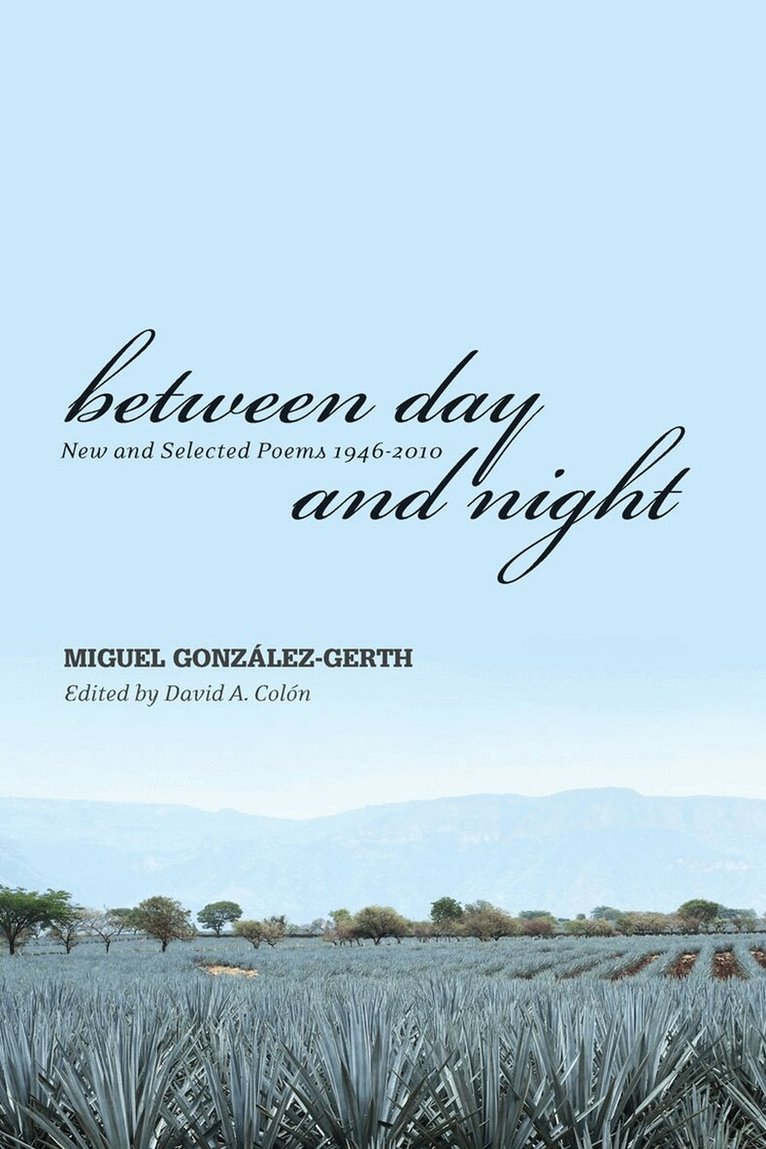
Miguel González-Gerth, an esteemed translator, poet, editor, and professor emeritus at the University of Texas at Austin, has been publishing his original English and Spanish poetry since 1946. Born in Mexico City in 1926, González-Gerth moved to the United States in 1940 and made it his permanent home. He received his B.A. from the University of Texas in 1950 and a PhD from Princeton in 1973, and taught at UT for over thirty years.Editor David Colón has compiled a selection of González-Gerth’s poems that demonstrate the range of interests, themes, and styles that span more than a century of a life dedicated to Hispanic literature studies. The poems in this collection are arranged chronologically, exhibiting “the different phases of a poet’s life as well as different historical moments and literary traditions.”Many of the poems appear with side-by-side translation, demonstrating not only the creativity born of a unique cultural perspective, but the profound understanding and commitment to the process of translation, taking a poem through its original written language, rethinking the words, allusions, connotations, and presenting it in a different language and tradition. “He has two guiding principles as a translator of poetry: to keep the languages distinct, and to approach the act of reproduction as an art form itself. In the end, the translation must work on the terms of its own language. It is more important for it to be a successful poem than a faithful copy,” writes Colón in the introduction. Between Day and Night provides a record of González-Gerth’s achievement as a poet and translator, a writer who stays true to the languages and poetic styles of Latin America and Anglo-America, and “work[s] with essentially two minds.”
RubÉn DarÍo (1867–1916), the undisputed standard-bearer of the Modernist movement in Hispanic letters, was born in Nicaragua. In 1886 he went to Chile, where he published Azul (1888), his first important book of poems and stories. Later he lived for extended periods in Argentina, Spain, and France, and in these countries produced his best work: compelling poems of beauty, style, and dignity, especially Cantos de vida y esperanza (1905). The perfection of form, exotic essences, and rich ornamentation of his earlier work give way in his most mature poems to self-probings and doubts, the anguish so characteristic of twentieth-century literature. But the hedonistic note, the quenchless appetite for life, dominating Azul and Prosas profanas (1896) never die out, and are magnificently present in El poema del otoÑo (1910). DarÍo has had a tremendous impact on Hispanic literature. He is one of the best examples of the poet who is true to his art as determined by his innermost impulses. His poetry has fertilized a whole generation of writers in Spanish America and in Spain, and even now his influence continues to be felt.
Miguel González-Gerth, an esteemed translator, poet, editor, and professor emeritus at the University of Texas at Austin, has been publishing his original English and Spanish poetry since 1946. Born in Mexico City in 1926, González-Gerth moved to the United States in 1940 and made it his permanent home. He received his B.A. from the University of Texas in 1950 and a PhD from Princeton in 1973, and taught at UT for over thirty years.Editor David Colón has compiled a selection of González-Gerth’s poems that demonstrate the range of interests, themes, and styles that span more than a century of a life dedicated to Hispanic literature studies. The poems in this collection are arranged chronologically, exhibiting “the different phases of a poet’s life as well as different historical moments and literary traditions.”Many of the poems appear with side-by-side translation, demonstrating not only the creativity born of a unique cultural perspective, but the profound understanding and commitment to the process of translation, taking a poem through its original written language, rethinking the words, allusions, connotations, and presenting it in a different language and tradition. “He has two guiding principles as a translator of poetry: to keep the languages distinct, and to approach the act of reproduction as an art form itself. In the end, the translation must work on the terms of its own language. It is more important for it to be a successful poem than a faithful copy,” writes Colón in the introduction. Between Day and Night provides a record of González-Gerth’s achievement as a poet and translator, a writer who stays true to the languages and poetic styles of Latin America and Anglo-America, and “work[s] with essentially two minds.”