Naguib Kanawati – författare
Visar alla böcker från författaren Naguib Kanawati. Handla med fri frakt och snabb leverans.
5 produkter
5 produkter
2 200 kr
Skickas inom 10-15 vardagar
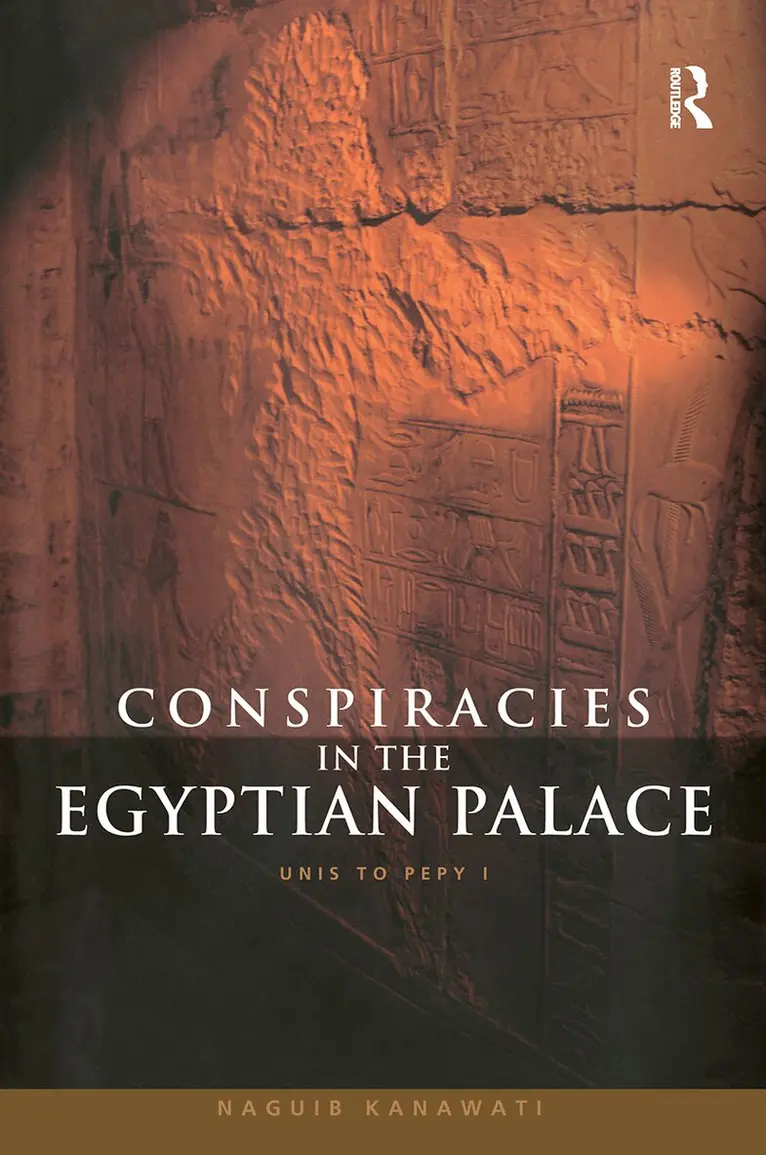
This original study examines the claims for sensational intrigues in the 6th century Egyptian palace, culminating in the possible assassination of King Teti by his own bodyguards.New evidence from the author's recent excavations is set against the written claims of the ancient historian Manetho. This offers the reader a unique opportunity to compare archaeological and historical evidence, and sheds new light on the political conspiracies and quarrels of the age.With over 80 illustrations, and clear presentation of the dynastic tomb excavations, the book also gives a rare and accessible insight into Old Kingdom society and administration under the kings Unis, Teti and Pepy I. It will be valuable to all students of Egyptian history.
842 kr
Skickas inom 10-15 vardagar
This original study examines the claims for sensational intrigues in the 6th century Egyptian palace, culminating in the possible assassination of King Teti by his own bodyguards.New evidence from the author's recent excavations is set against the written claims of the ancient historian Manetho. This offers the reader a unique opportunity to compare archaeological and historical evidence, and sheds new light on the political conspiracies and quarrels of the age.With over 80 illustrations, and clear presentation of the dynastic tomb excavations, the book also gives a rare and accessible insight into Old Kingdom society and administration under the kings Unis, Teti and Pepy I. It will be valuable to all students of Egyptian history.
1 245 kr
Tillfälligt slut
The third volume of the Beni Hassan series is devoted to the recording and study of the Twelfth Dynasty tomb of Amenemhat, great overlord of the Oryx nome. It presents a new and complete record of the tomb's scenes in drawing and coloured photographs, and comrpises the translation and interpretation of all scenes and inscriptions in the tomb, including that of Amenemhat's biography which recounts in detail his career and participation in military campaigns. The volume additionally includes new architectural drawings and an architectural report on one of the most impressive and complete tombs of Middle Kingdom Egypt.
481 kr
Skickas
The tombs, with their scenes, inscriptions, objects and human remains, represent our richest source of information for the understanding of Egyptian beliefs and practices, art and architecture and of many aspects of daily life. Detailed, scholarly reports on individual cemeteries and tombs are abundant but in this fully illustrated, more general work, reproduced in this facsimile edition, Kanawati provides an invaluable introduction to, and overview of, the key elements of Egyptian tombs from Predynastic to the Late Period. ¬The Egyptian dead enjoyed a continued existence in both the Netherworld and the land of the living – the individual possessing multiple entities that experienced different destinies after death. ¬The tomb provided an everlasting earthly dwelling and consisted of a chapel above ground where the deceased’s cult was maintained and offerings presented, and a burial chamber for the body. Either or both could be richly decorated with paintings, reliefs and inscriptions. Kanawati describes and illustrates the principal forms and features of architecture and nature and subject matter of decoration and demonstrates how tomb design and decoration changed through time.
743 kr
Kommande
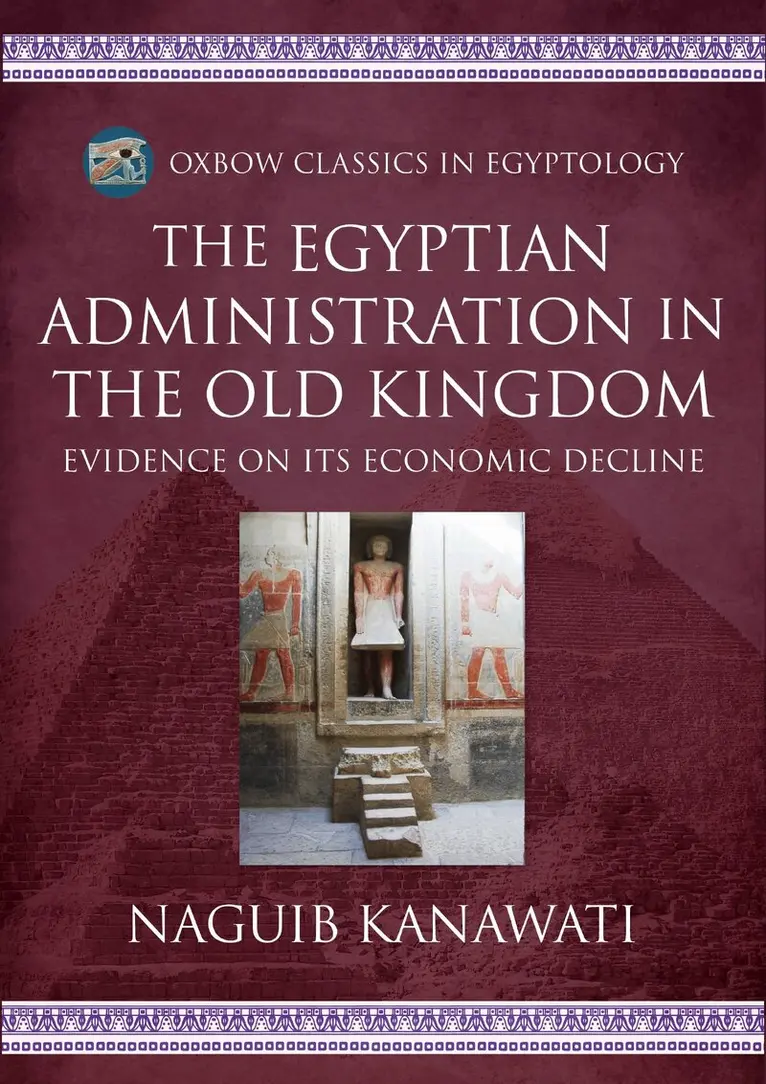
A generally held belief is that there was a downward trend in the authority and power of the king and a corresponding increase in the influence of officials over the course of the Old Kingdom in Egypt. This could be seen reflected in the increasing size, complexity and lavishness of their tombs, the cost of which was generally met by the official himself. If the tomb owner died before completing his tomb, it was either finished by his son, or a close relative, or left in an unfinished state. It was most unusual for the king to provide an official with a complete tomb. The Old Kingdom administration was divided into three tiers of officials below the rank of Vizier, and the study analysed tombs of each class looking for trends that would indicate rank on the basis of costliness, and through time. It demonstrated a general downward trend in the financial resources among officials of the lower rank, with more fluctuating fortunes in the middle rank. This facsimile reissue of Kanawati’s authoritative study shows that the trend for the higher officials initially was up, followed by a general downward trend. Overall, by the end of the Fifth Dynasty the lower officials were unable to build tombs for themselves. The same happened to the middle ones early in the Sixth Dynasty, by the end of which the higher officials, including Viziers, did not have sufficient finance to construct their own tombs.There is evidence that the administration at that time was inadequate: officials were dissatisfied and disinterested. While it is probable that it did not cause the downfall of the Old Kingdom, it resulted in a weak government, unable to cope with the wider economic and external problems of the end of the Sixth Dynasty.