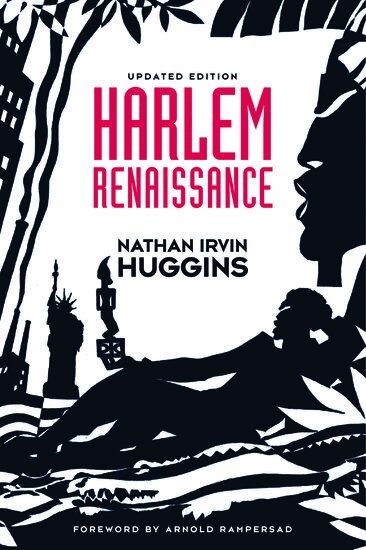
A finalist for the 1972 National Book Award, hailed by The New York Times Book Review as "brilliant" and "provocative," Nathan Huggins' Harlem Renaissance was a milestone in the study of African-American life and culture. Now this classic history is being reissued, with a new foreword by acclaimed biographer Arnold Rampersad. As Rampersad notes, "Harlem Renaissance remains an indispensable guide to the facts and features, the puzzles and mysteries, of one of the most provocative episodes in African-American and American history." Indeed, Huggins offers a brilliant account of the creative explosion in Harlem during these pivotal years. Blending the fields of history, literature, music, psychology, and folklore, he illuminates the thought and writing of such key figures as Alain Locke, James Weldon Johnson, and W.E.B. DuBois and provides sharp-eyed analyses of the poetry of Claude McKay, Countee Cullen, and Langston Hughes. But the main objective for Huggins, throughout the book, is always to achieve a better understanding of America as a whole. As Huggins himself noted, he didn't want Harlem in the 1920s to be the focus of the book so much as a lens through which readers might see how this one moment in time sheds light on the American character and culture, not just in Harlem but across the nation. He strives throughout to link the work of poets and novelists not only to artists working in other genres and media but also to economic, historical, and cultural forces in the culture at large.This superb reissue of Harlem Renaissance brings to a new generation of readers one of the great works in African-American history and indeed a landmark work in the field of American Studies.
This classic work of scholarship and empathy tells the story of the self-creation of the African-American people. It assesses the full impact of the Middle Passage -- "the most traumatizing mass human migration in modern history" -- and of North American slavery both on the enslaved and on those who enslaved them. It explores the ways in which a nominally free society perverted its own freedoms and denied the fact that an inhuman institution lies at the heart of the American experience. The authority and eloquence of this work make it essential reading for all who want to understand the American past and present.From the Trade Paperback edition.
A finalist for the 1972 National Book Award, hailed by The New York Times Book Review as "brilliant" and "provocative," Nathan Huggins' Harlem Renaissance was a milestone in the study of African-American life and culture. Now this classic history is being reissued, with a new foreword by acclaimed biographer Arnold Rampersad. As Rampersad notes, "Harlem Renaissance remains an indispensable guide to the facts and features, the puzzles and mysteries, of one of the most provocative episodes in African-American and American history." Indeed, Huggins offers a brilliant account of the creative explosion in Harlem during these pivotal years. Blending the fields of history, literature, music, psychology, and folklore, he illuminates the thought and writing of such key figures as Alain Locke, James Weldon Johnson, and W.E.B. DuBois and provides sharp-eyed analyses of the poetry of Claude McKay, Countee Cullen, and Langston Hughes. But the main objective for Huggins, throughout the book, is always to achieve a better understanding of America as a whole. As Huggins himself noted, he didn't want Harlem in the 1920s to be the focus of the book so much as a lens through which readers might see how this one moment in time sheds light on the American character and culture, not just in Harlem but across the nation. He strives throughout to link the work of poets and novelists not only to artists working in other genres and media but also to economic, historical, and cultural forces in the culture at large.This superb reissue of Harlem Renaissance brings to a new generation of readers one of the great works in African-American history and indeed a landmark work in the field of American Studies.
This classic work of scholarship and empathy tells the story of the self-creation of the African-American people. It assesses the full impact of the Middle Passage -- "the most traumatizing mass human migration in modern history" -- and of North American slavery both on the enslaved and on those who enslaved them. It explores the ways in which a nominally free society perverted its own freedoms and denied the fact that an inhuman institution lies at the heart of the American experience. The authority and eloquence of this work make it essential reading for all who want to understand the American past and present.From the Trade Paperback edition.