Nicholas Ostler – författare
Visar alla böcker från författaren . Handla med fri frakt och snabb leverans.
7 produkter
7 produkter
Häftad, Engelska, 2006
219 kr
Skickas
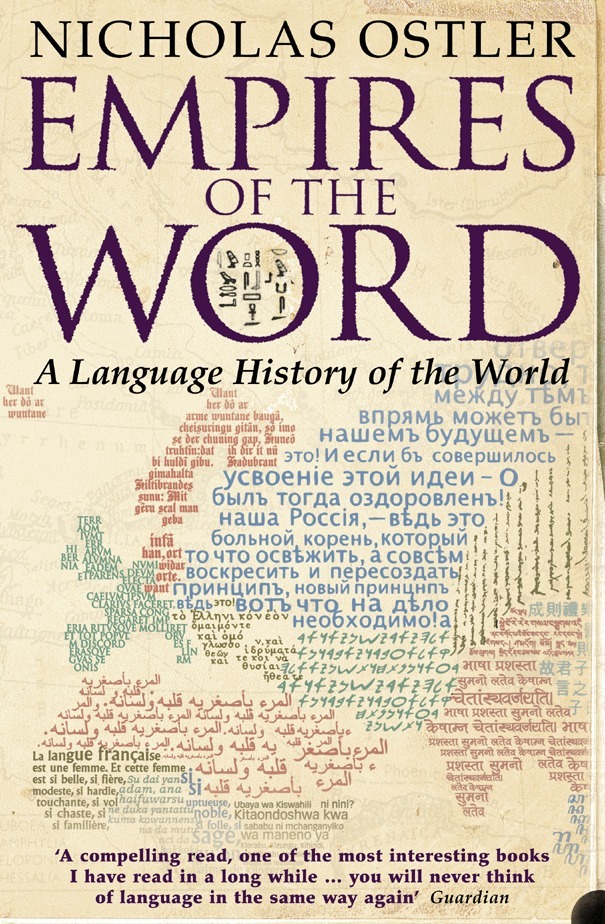
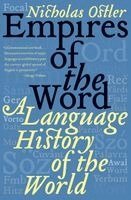
An unusual and authoritative 'natural history of languages' that narrates the ways in which one language has superseded or outlasted another at different times in history.The story of the world in the last five thousand years is above all the story of its languages. Some shared language is what binds any community together, and makes possible both the living of a common history and the telling of it.Yet the history of the world’s great languages has rarely been examined. ‘Empires of the Word’ is the first to bring together the tales in all their glorious variety: the amazing innovations – in education, culture and diplomacy – devised by speakers in the Middle East; the uncanny resilience of Chinese throughout twenty centuries of invasions; the progress of Sanskrit from north India to Java and Japan; the struggle that gave birth to the languages of modern Europe; and the global spread of English.Besides these epic achievements, language failures are equally fascinating: why did Germany get left behind? Why did Egyptian, which had survived foreign takeovers for three millennia, succumb to Mohammed’s Arabic? Why is Dutch unknown in modern Indonesia, given that the Netherlands had ruled the East Indies for as long as the British ruled India?As this book engagingly reveals, the language history of the world shows eloquently the real characters of peoples; it also shows that the language of the future will, like the languages of the past, be full of surprises.
Häftad, Engelska, 2009
156 kr
Skickas
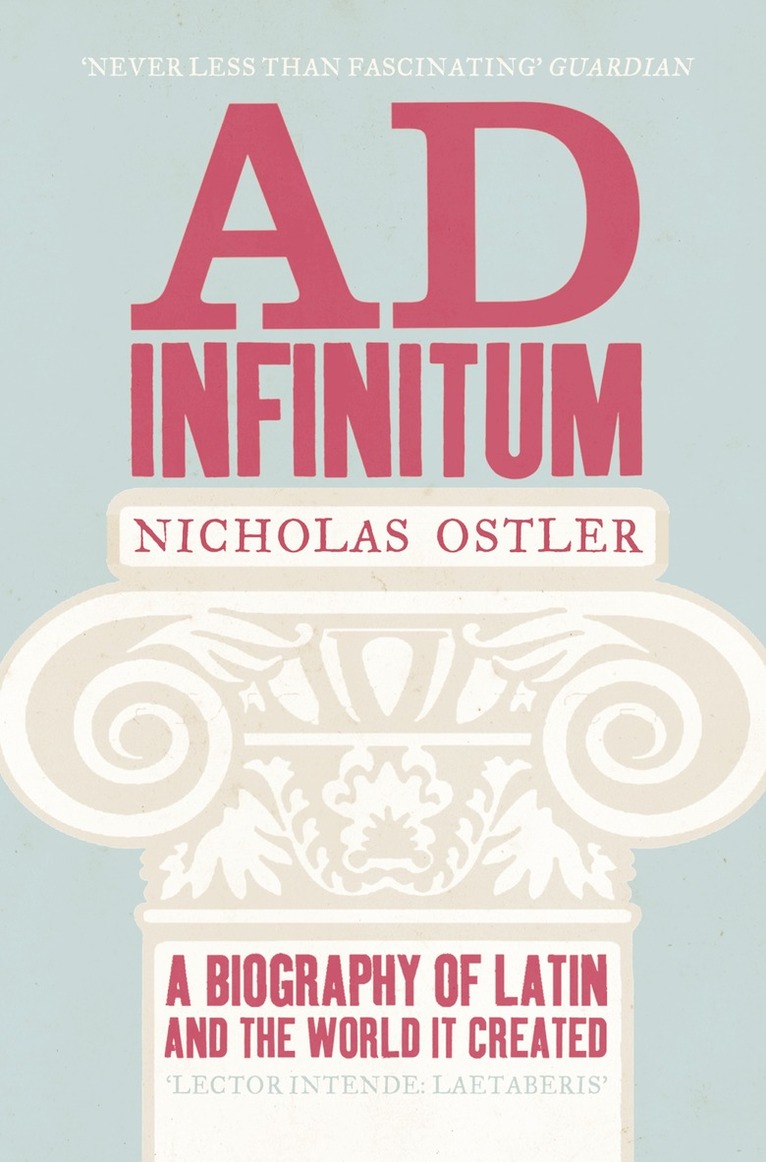
An in-depth biography of the Latin language from its very beginnings to the present day from the widely acclaimed author of ‘Empires of the Word’.The Latin language has been a constant in the cultural history of the West for over two millennia. It has shaped the way we think of ourselves and of our (central) place in the world. It has formed and united us as Europeans, has been the foundation of our education for centuries and defined the way in which we express our thoughts, our faith and our knowledge of the workings of the world. And yet, Latin began life as the cumbersome dialect of a small southern Italian city-state.Its active use lasted three times as long as Rome's Empire and its use echoes on in the law codes of half the world, in terminologies of biology and medicine, and until forty years ago in the litany of the Catholic Church, the most populous form of Christianity.In ‘Ad Infinitum’, Nicholas Ostler examines the reasons why Latin made such a long-lasting impact on language, and how it managed to stay alive for two millennia despite the cultural superiority of Greek. He will look at how Latin's sturdy roots remained untouched while empires rose and fell, the influence of religion, war and the ways it has progressed through medieval times right up until the present day.
E-bok
Engelska, 2010100 kr
Läs direkt efter köp
An in-depth biography of the Latin language from its very beginnings to the present day from the widely acclaimed author of `Empires of the Word’.The Latin language has been a constant in the cultural history of the West for over two millennia. It has shaped the way we think of ourselves and of our (central) place in the world. It has formed and united us as Europeans, has been the foundation of our education for centuries and defined the way in which we express our thoughts, our faith and our knowledge of the workings of the world. And yet, Latin began life as the cumbersome dialect of a small southern Italian city-state.Its active use lasted three times as long as Rome's Empire and its use echoes on in the law codes of half the world, in terminologies of biology and medicine, and until forty years ago in the litany of the Catholic Church, the most populous form of Christianity.In `Ad Infinitum’, Nicholas Ostler examines the reasons why Latin made such a long-lasting impact on language, and how it managed to stay alive for two millennia despite the cultural superiority of Greek. He will look at how Latin's sturdy roots remained untouched while empires rose and fell, the influence of religion, war and the ways it has progressed through medieval times right up until the present day.
E-bok
Engelska, 2010155 kr
Läs direkt efter köp
An unusual and authoritative 'natural history of languages' that narrates the ways in which one language has superseded or outlasted another at different times in history.The story of the world in the last five thousand years is above all the story of its languages. Some shared language is what binds any community together, and makes possible both the living of a common history and the telling of it.Yet the history of the world’s great languages has rarely been examined. `Empires of the Word’ is the first to bring together the tales in all their glorious variety: the amazing innovations – in education, culture and diplomacy – devised by speakers in the Middle East; the uncanny resilience of Chinese throughout twenty centuries of invasions; the progress of Sanskrit from north India to Java and Japan; the struggle that gave birth to the languages of modern Europe; and the global spread of English.Besides these epic achievements, language failures are equally fascinating: why did Germany get left behind? Why did Egyptian, which had survived foreign takeovers for three millennia, succumb to Mohammed’s Arabic? Why is Dutch unknown in modern Indonesia, given that the Netherlands had ruled the East Indies for as long as the British ruled India?As this book engagingly reveals, the language history of the world shows eloquently the real characters of peoples; it also shows that the language of the future will, like the languages of the past, be full of surprises.
Häftad, Engelska, 2006
288 kr
Skickas inom 3-6 vardagar
E-bok
Engelska, 2010166 kr
Läs direkt efter köp
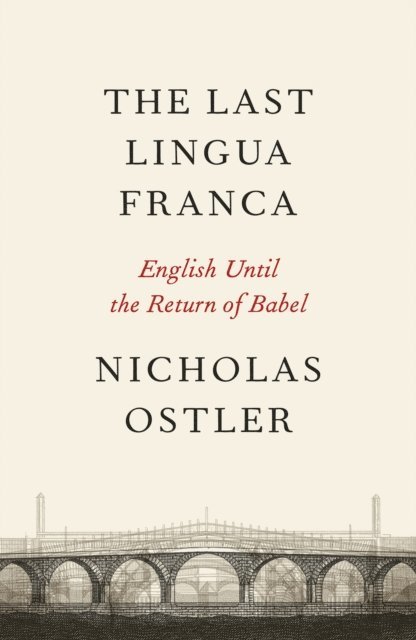
In this provocative and persuasive new book, Nicholas Ostler challenges our assumption that English will continue to dominate as the global lingua franca. Drawing on his encyclopaedic knowledge of world languages and their history, Ostler reveals that just as past great languages like Latin and Sanskrit have died out, so English will follow.The influence of English now is hard to exaggerate - it is the world's preferred medium for business, science and entertainment, and is claimed to be a basic educational tool like mathematics or computing. So is it here to stay? For the last four centuries, the dominant world power has been English-speaking, but the global balance of power is shifting. And in countries like Brazil, Russia and China, English plays no part in the national tradition. Although globalization has helped the rise of English, trade, migration, economic development and technological innovation are now changing the way we access and use language. Ostler shows how we are headed towards a much more multilingual and diverse future. And as English retreats, no single language will take its place.We can embrace this future but first we need to accept it: the last competitive advantage of native English-speakers will soon be consigned to history.
Häftad, Engelska, 2011
133 kr
Skickas
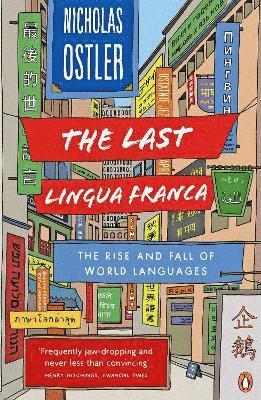
A revelatory and exhilarating tour de force, Nicholas Ostler's The Last Lingua Franca: The Rise and Fall of World Languages explores the rise of a linguistic diversity we could never before have imagined.In the twenty-first century, can we really take the dominance of English for granted?In their time, Greek, Latin, Arabic, Sanskrit and Persian have each been world languages, sweeping the globe for centuries at a time. And yet they have all been displaced, just as Nicholas Ostler predicts English will be. What forces drive these linguistic currents? What characteristics do lingua francas share? And most importantly, how do they lose their power?'Frequently jaw-dropping and never less than convincing'Henry Hitchings, Financial Times'Sweepingly learned and engagingly garrulous'Sunday Times'A much-needed challenge to conventional wisdom'GuardianA linguist of astonishing voracity ... the predictions are striking'EconomistNicholas Ostler is the author of Empires of the Word: A Language History of the World and Ad Infinitum: A Biography of Latin. He studied Greek, Latin and Philosophy at the University of Oxford and holds a Ph.D. in Linguistics from MIT. With a working knowledge of twenty-six languages, Nicholas now runs an institute for the protection of endangered languages.