Omar G. Encarnación – författare
Visar alla böcker från författaren Omar G. Encarnación. Handla med fri frakt och snabb leverans.
7 produkter
7 produkter
436 kr
Skickas inom 5-8 vardagar
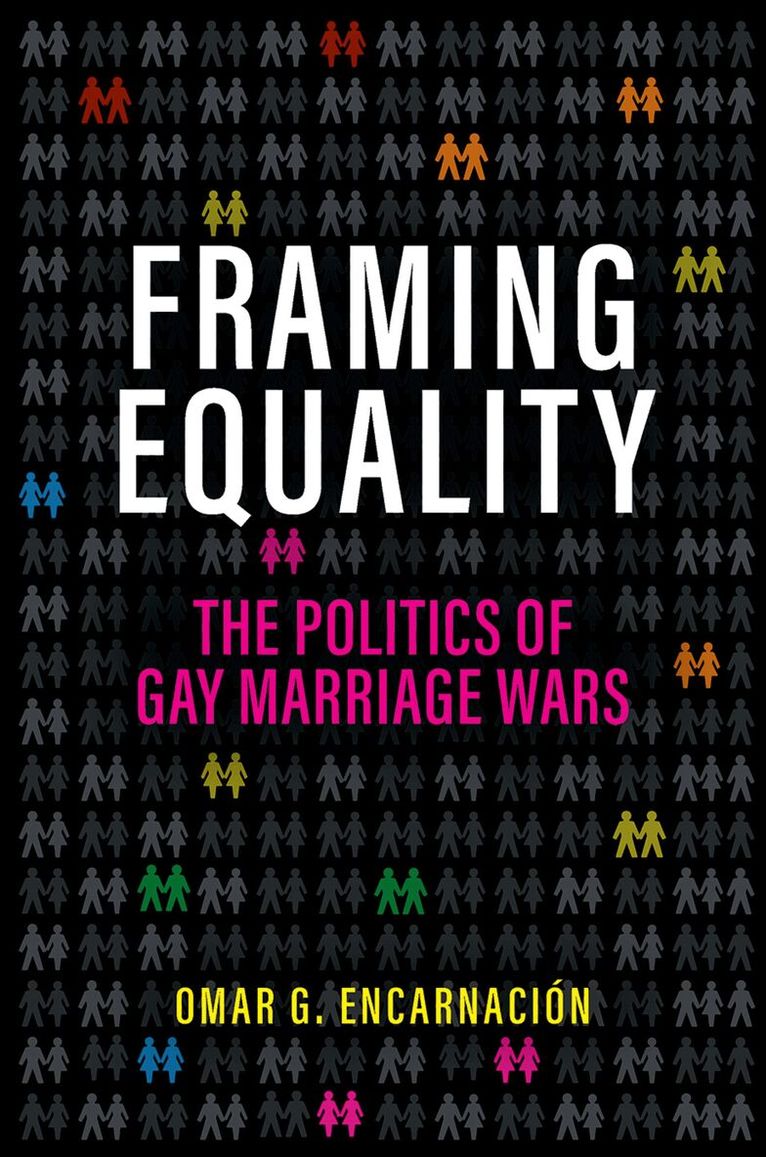
Although a lot has been said about the stunning success of the marriage equality movement, not much is known about why the global struggle over gay marriage has varied across countries with respect to the severity of the conservative backlash and the legacy for LGBTQ equality. In this book, Omar Encarnación presents a cross-national exploration of the politics of “gay marriage wars” by looking at how gay marriage has been framed in three nations. Drawing on the campaign for same-sex marriage in Spain, the United States, and Brazil, Encarnación conceptualizes three types of framing models-legal, moral, and political. He argues that while all three models can bring the campaign to a successful conclusion, the moral framing-which views gay marriage as a gateway to “full citizenship” for gay and lesbian couples-is the most consequential for mitigating backlash and bolstering equality. Moreover, this study shows that, despite the prominence of transnationalism in the dynamics of gay rights activism, the main factors influencing the framing of gay marriage are all homegrown, including the political environment, the foundational ideals of the gay rights movement, and the activism of the forces opposing gay marriage.
252 kr
Skickas
A compelling and timely vision for gay reparations in the United StatesIn the last two decades many nations have adopted "gay reparations," or policies intended to make amends for a history of discrimination, stigmatization, and violence on the basis of sexual orientation and gender identity. Far from being a homogenous or uniform phenomenon, gay reparations encompass a small constellation of approaches including a formal apology to the LGBT community for past wrongdoing, financial compensation for victims of anti-LGBT laws and actions, and the erection of monuments to the memory of those who suffered because of structural homophobia. The United States, however, has been reluctant to embrace gay reparations, making the country something of an outlier among Western democracies.Beyond making the case for gay reparations in the United States, this book explores a wide range of questions provoked by the rise of the gay reparations movement. Among these questions, three stand out for what they reveal about the puzzling and complex nature of this new front in the struggle for LGBT equality. Why, after centuries of attempts to marginalize, dehumanize, and even eradicate LGBT people, are governments coming around to confront this dark and painful historical legacy? How do we make sense of the diversity of gay reparations being implemented by governments around the world? And, finally, what would an American policy of gay reparations look like?Omar G. Encarnación draws upon the rich history of reparations to confront the legacies of genocide, slavery, and political repression and argue that gay reparations are a moral obligation intended to restore dignity to those whose human rights have been violated because of their sexual orientation and gender identity. Reparations are also necessary to close painful chapters of anti-LGBT discrimination and violence and to remind future generations of past struggles for LGBT equality. To this end, he traces America's dark and painful LGBT history--from colonial-era laws criminalizing homosexual conduct, to a postwar ban on homosexuals working in the federal bureaucracy, to the government's support of the junk-science underpinning the practice of "gay conversion" therapy promoted by the Christian Right.The book also examines how other Western democracies notorious for their repression of homosexuals--specifically Spain, Britain, and Germany--have implemented gay reparations. These foreign experiences reveal potential pathways for gay reparations in the United States. More importantly, they show that while there is no universal approach to gay reparations it is never too late for countries to seek to right past wrongs.
1 661 kr
Skickas inom 5-8 vardagar
Known around the world as a bastion of machismo and Catholicism, Latin America in recent decades has emerged as the undisputed gay rights leader of the Global South. More surprising yet, nations such as Argentina have surpassed more "developed" nations like the United States and many European states in extending civil rights to the homosexual population. Setting aside the role of external factors and conditions in pushing gay rights from the Developed North to the Global South -- such as the internationalization of human rights norms and practices, the globalization of gay identities, and the diffusion of policies such as "gay marriage" -- Out in the Periphery aims to "decenter" gay rights politics in Latin America by putting the domestic context front and center. The intention is not to show how the "local" has triumphed the "global" in Latin America. Rather the book suggests how the domestic context has interacted with the outside world to make Latin America an unusually receptive environment for the development of gay rights. Omar Encarnación focuses particularly on the role of local gay rights organizations, a long-neglected social movement in Latin America, in filtering and adapting international gay rights ideas. Inspired by the outside world but firmly embedded in local politics, Latin American gay activists have succeeded in bringing radical change to the law with respect to homosexuality and, in some cases, as in Argentina, in transforming society and the culture at large.
413 kr
Skickas inom 5-8 vardagar
Known around the world as a bastion of machismo and Catholicism, Latin America in recent decades has emerged as the undisputed gay rights leader of the Global South. More surprising yet, nations such as Argentina have surpassed more "developed" nations like the United States and many European states in extending civil rights to the homosexual population. Setting aside the role of external factors and conditions in pushing gay rights from the Developed North to the Global South -- such as the internationalization of human rights norms and practices, the globalization of gay identities, and the diffusion of policies such as "gay marriage" -- Out in the Periphery aims to "decenter" gay rights politics in Latin America by putting the domestic context front and center. The intention is not to show how the "local" has triumphed the "global" in Latin America. Rather the book suggests how the domestic context has interacted with the outside world to make Latin America an unusually receptive environment for the development of gay rights. Omar Encarnación focuses particularly on the role of local gay rights organizations, a long-neglected social movement in Latin America, in filtering and adapting international gay rights ideas. Inspired by the outside world but firmly embedded in local politics, Latin American gay activists have succeeded in bringing radical change to the law with respect to homosexuality and, in some cases, as in Argentina, in transforming society and the culture at large.
862 kr
Skickas inom 5-8 vardagar
Since the demise of the Franco dictatorship in 1977 Spain has emerged as one of the worlds most successful new democracies. But what accounts for the remarkable process of democratization in Spain, a country infamous for its long history of civil wars, military coups and ethnic conflicts? In this book, Omar Encarnación shows how a post-transition settlement, anchored on inter-party consensus and collaboration, made possible Spain's smooth transition from authoritarian to democratic rule, a string of stable governments from the Center, Left and Right, a modern and competitive economy, and a new national multi-cultural identity.Each chapter in the book is devoted to a different aspect of the post-transition settlement, from its origins in the political traumas of Spanish history, to its implications for the evolution of the party system, the state, civil society and the economy, and finally, the consequences of its deterioration under the socialist administration of José Luis Rodríguez Zapatero. Controversial policies such as same-sex marriages, negotiations with the Basque terrorist organization ETA, expanded powers to regional governments, and accountability for human rights abuses committed during the Spanish Civil War and the Franco regime, explain the widespread claim that Zapatero has shattered the political status quo of the post-Franco era.This book will be essential reading for students and scholars of contemporary Spanish politics and comparative democratization.
311 kr
Skickas inom 5-8 vardagar
Since the demise of the Franco dictatorship in 1977 Spain has emerged as one of the worlds most successful new democracies. But what accounts for the remarkable process of democratization in Spain, a country infamous for its long history of civil wars, military coups and ethnic conflicts? In this book, Omar Encarnación shows how a post-transition settlement, anchored on inter-party consensus and collaboration, made possible Spain's smooth transition from authoritarian to democratic rule, a string of stable governments from the Center, Left and Right, a modern and competitive economy, and a new national multi-cultural identity.Each chapter in the book is devoted to a different aspect of the post-transition settlement, from its origins in the political traumas of Spanish history, to its implications for the evolution of the party system, the state, civil society and the economy, and finally, the consequences of its deterioration under the socialist administration of José Luis Rodríguez Zapatero. Controversial policies such as same-sex marriages, negotiations with the Basque terrorist organization ETA, expanded powers to regional governments, and accountability for human rights abuses committed during the Spanish Civil War and the Franco regime, explain the widespread claim that Zapatero has shattered the political status quo of the post-Franco era.This book will be essential reading for students and scholars of contemporary Spanish politics and comparative democratization.
747 kr
Skickas inom 10-15 vardagar
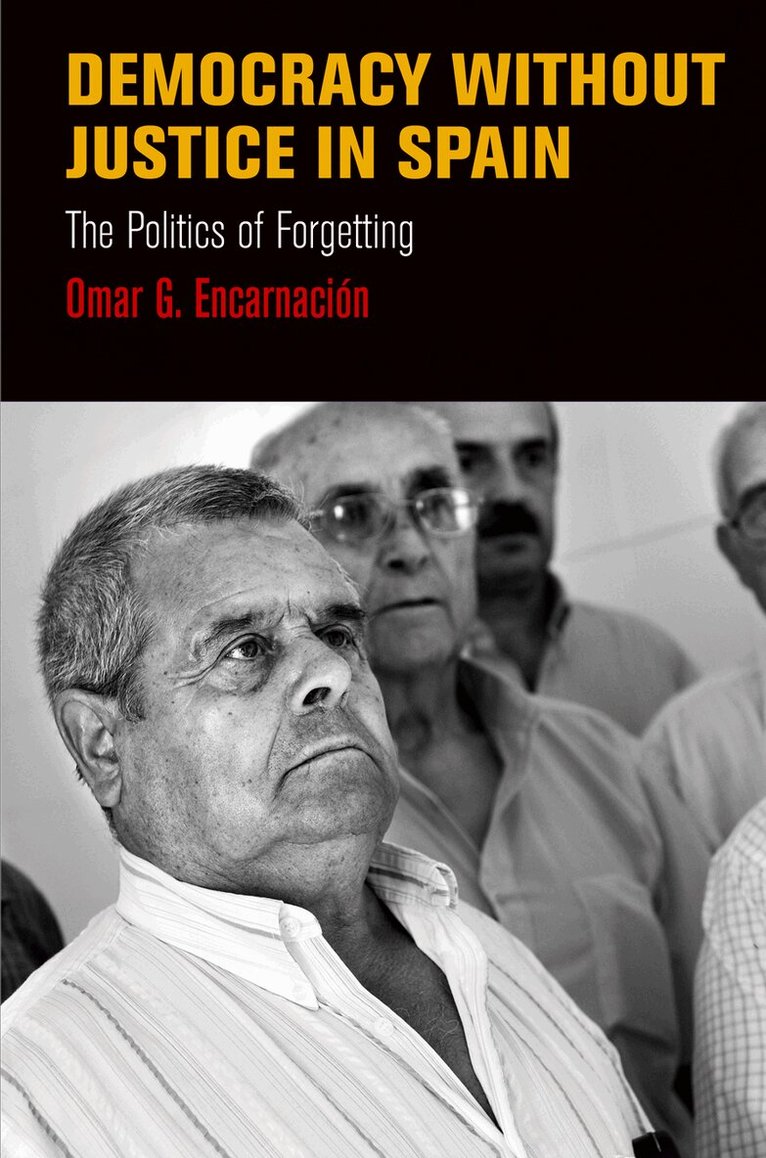
Spain is a notable exception to the implicit rules of late twentieth-century democratization: after the death of General Francisco Franco in 1975, the recovering nation began to consolidate democracy without enacting any of the mechanisms promoted by the international transitional justice movement. There were no political trials, no truth and reconciliation commissions, no formal attributions of blame, and no apologies. Instead, Spain's national parties negotiated the Pact of Forgetting, an agreement intended to place the bloody Spanish Civil War and the authoritarian excesses of the Franco dictatorship firmly in the past, not to be revisited even in conversation. Formalized by an amnesty law in 1977, this agreement defies the conventional wisdom that considers retribution and reconciliation vital to rebuilding a stable nation. Although not without its dark side, such as the silence imposed upon the victims of the Civil War and the dictatorship, the Pact of Forgetting allowed for the peaceful emergence of a democratic state, one with remarkable political stability and even a reputation as a trailblazer for the national rights and protections of minority groups.Omar G. EncarnaciÓn examines the factors in Spanish political history that made the Pact of Forgetting possible, tracing the challenges and consequences of sustaining the agreement until its dramatic reversal with the 2007 Law of Historical Memory. The combined forces of a collective will to avoid revisiting the traumas of a difficult and painful past and the reliance on the reformed political institutions of the old regime to anchor the democratic transition created a climate conducive to forgetting. At the same time, the political movement to forget encouraged the embrace of a new national identity as a modern and democratic European state. Demonstrating the surprising compatibility of forgetting and democracy, Democratization Without Justice in Spain offers a crucial counterexample to the transitional justice movement. The refusal to confront and redress the past did not inhibit the rise of a successful democracy in Spain; on the contrary, by leaving the past behind, Spain chose not to repeat it.