Pablo Villalobos Dintrans – författare
Visar alla böcker från författaren Pablo Villalobos Dintrans. Handla med fri frakt och snabb leverans.
4 produkter
4 produkter
E-bok
PDF, Engelska, 20213 178 kr
Läs direkt efter köp
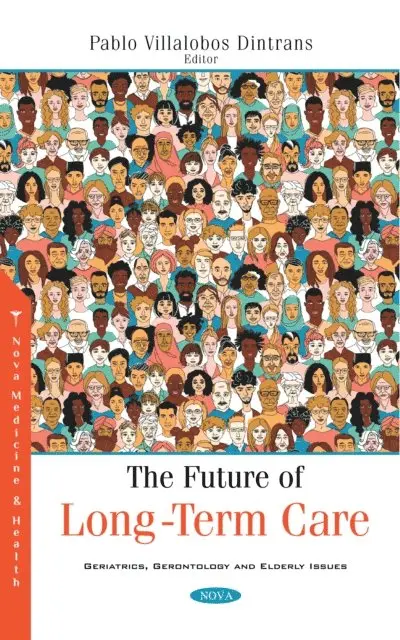
Population aging is challenging countries around the globe to adapt their public policy responses to the new world. Long-term care is a relevant topic today both because of the rapid growth in long-term care needs in every country and the lack of responses from governments. The Future of Long-term Care explores some issues related to the implementation of long-term care responses in different countries. Looking at six different cases, the book highlights the need to foster an urgent debate in the area, as well as emphasizing the need for action in the coming years. The examples analyzed show common problems faced by countries trying to respond to their people’s needs, as well as the dissimilar stages, contexts, and paths followed by each one in the endeavour for providing long-term care services to the population. Whether the analysis is carried out in countries with well-established long-term care systems or in places where the debate is just starting, the book proves that this is an area in which many challenges remain. Learning lessons from others is important but providing a space for countries to frame their problems and propose their solutions is crucial. This book contributes to fill this gap and contribute to a debate that is just starting in many places around the world.
Inbunden, Engelska, 2023
1 113 kr
Skickas inom 10-15 vardagar
This timely book provides an understanding of how an ageing population can maintain health in the ageing process in their preferred homes and neighbourhoods while coping with global crises of climate change events, infectious diseases, systemic violence, and radical or extreme industrialisation. It is the first-known volume to consider the four crises as health and social threats to healthy longevity from a sustainability perspective. The book is a collection of commentaries, theoretical frameworks, case studies, and empirical evidence that: (1) provides an analysis of how the crises affect neighbourhood attributes and the ability of residents to use them to maintain health while living in their preferred neighbourhoods, and (2) suggests potential interventions for enabling residents to utilise these attributes for health while living at home in contexts experiencing the crises. Contributions are authored by scholars and practitioners from various disciplines including public health, health care, architecture, engineering, human resources development, information technology, and finance. Among the topics covered:The Impact of Crises on Older Adults’ Health and Function: An Intergenerational Perspective A Behavioural Approach to Sustainable Neighbourhoods: A Philosophical Construction of a Friendly NeighbourhoodAssistive Technologies for Ageing in Place: A Theoretical Proposition of Human Development Postulates “Sustainable Ageing” in a World of CrisesSustainable Neighbourhoods for Ageing in Place: An Interdisciplinary Voice Against Global Crises serves as both a primary and secondary text particularly suited for post-graduate level study (e.g., MSc, PhD). Each chapter richly describes events, phenomena and models in a way that fits contemporary curricula for students and instructors in sociology, gerontology, architecture, environmental science studies, sustainability, ageing studies, and public health. Researchers in a broad range of disciplines can use the book as a research guide to design their studies based on models and insights described in its contents. With theoretical frameworks and recommendations from this book, stakeholders can understand what a sustainable neighbourhood is in the context of crises by presenting problems and solutions from different countries and disciplines.
E-bok
Engelska, 2023950 kr
Läs direkt efter köp
This timely book provides an understanding of how an ageing population can maintain health in the ageing process in their preferred homes and neighbourhoods while coping with global crises of climate change events, infectious diseases, systemic violence, and radical or extreme industrialisation. It is the first-known volume to consider the four crises as health and social threats to healthy longevity from a sustainability perspective. The book is a collection of commentaries, theoretical frameworks, case studies, and empirical evidence that: (1) provides an analysis of how the crises affect neighbourhood attributes and the ability of residents to use them to maintain health while living in their preferred neighbourhoods, and (2) suggests potential interventions for enabling residents to utilise these attributes for health while living at home in contexts experiencing the crises. Contributions are authored by scholars and practitioners from various disciplines including public health, health care, architecture, engineering, human resources development, information technology, and finance. Among the topics covered:The Impact of Crises on Older Adults’ Health and Function: An Intergenerational Perspective A Behavioural Approach to Sustainable Neighbourhoods: A Philosophical Construction of a Friendly NeighbourhoodAssistive Technologies for Ageing in Place: A Theoretical Proposition of Human Development Postulates “Sustainable Ageing” in a World of CrisesSustainable Neighbourhoods for Ageing in Place: An Interdisciplinary Voice Against Global Crises serves as both a primary and secondary text particularly suited for post-graduate level study (e.g., MSc, PhD). Each chapter richly describes events, phenomena and models in a way that fits contemporary curricula for students and instructors in sociology, gerontology, architecture, environmental science studies, sustainability, ageing studies, and public health. Researchers in a broad range of disciplines can use the book as a research guide to design their studies based on models and insights described in its contents. With theoretical frameworks and recommendations from this book, stakeholders can understand what a sustainable neighbourhood is in the context of crises by presenting problems and solutions from different countries and disciplines.
Häftad, Engelska, 2024
781 kr
Skickas inom 5-8 vardagar
This timely book provides an understanding of how an ageing population can maintain health in the ageing process in their preferred homes and neighbourhoods while coping with global crises of climate change events, infectious diseases, systemic violence, and radical or extreme industrialisation. It is the first-known volume to consider the four crises as health and social threats to healthy longevity from a sustainability perspective. The book is a collection of commentaries, theoretical frameworks, case studies, and empirical evidence that: (1) provides an analysis of how the crises affect neighbourhood attributes and the ability of residents to use them to maintain health while living in their preferred neighbourhoods, and (2) suggests potential interventions for enabling residents to utilise these attributes for health while living at home in contexts experiencing the crises. Contributions are authored by scholars and practitioners from various disciplines including public health, health care, architecture, engineering, human resources development, information technology, and finance. Among the topics covered:The Impact of Crises on Older Adults’ Health and Function: An Intergenerational Perspective A Behavioural Approach to Sustainable Neighbourhoods: A Philosophical Construction of a Friendly NeighbourhoodAssistive Technologies for Ageing in Place: A Theoretical Proposition of Human Development Postulates “Sustainable Ageing” in a World of CrisesSustainable Neighbourhoods for Ageing in Place: An Interdisciplinary Voice Against Global Crises serves as both a primary and secondary text particularly suited for post-graduate level study (e.g., MSc, PhD). Each chapter richly describes events, phenomena and models in a way that fits contemporary curricula for students and instructors in sociology, gerontology, architecture, environmental science studies, sustainability, ageing studies, and public health. Researchers in a broad range of disciplines can use the book as a research guide to design their studies based on models and insights described in its contents. With theoretical frameworks and recommendations from this book, stakeholders can understand what a sustainable neighbourhood is in the context of crises by presenting problems and solutions from different countries and disciplines.