Paolo Mazzarello – författare
Visar alla böcker från författaren . Handla med fri frakt och snabb leverans.
2 produkter
2 produkter
Inbunden, Engelska, 2009
1 567 kr
Skickas inom 7-10 vardagar
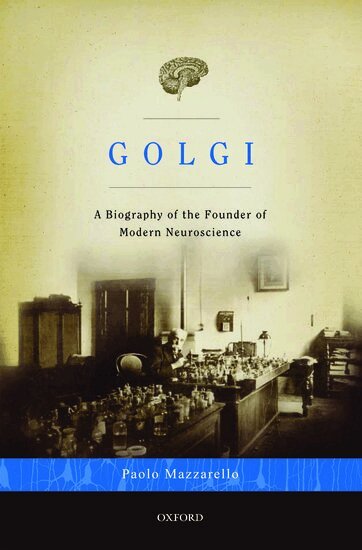
This book is a complete biography of Camillo Golgi one of the most prominent European researcher between the Nineteenth and the Twentieth century, a period of dramatic scientific development. The life of Golgi was an extraordinary intellectual adventure in three major fields of biology and medicine, namely the neuroscience, the emerging cell biology and the new science of medical microbiology.In 1873 Golgi published the description of a revolutionary histological technique which allowed, for the first time, to visualize a single nerve cell with all its ramification which could be followed and analyzed even at a great distance from the cell bodies, the so called "black reaction" (later named the "Golgi method"). This invention provided the spark to a truly scientific revolution which allowed the morphology and the basic architecture of the cerebral tissue to be evidenced in all its complexity, thus contributing to the foundation of the modern neuroscience. It has been written that, in the same way Galileo Galilei was able to find new stars observing with his telescope any sky region, Golgi was able to find new nervous structures and nerve cells by applying his black reaction to any brain region. Finally, the details of the most complex structure in the known universe, the brain, could be characterized. Golgi also strongly contributed to the development of cell biology with the discovery of one of the major organelles of the cell, the "internal reticular apparatus" (later named the "Golgi apparatus" or the "Golgi complex" or simply "the Golgi") and to medical microbiology with his description of the human malaria parasitic development inside the red blood cells (Golgi cycle). He was also a prominent political figure who deeply influenced the Nineteenth century development of science in Italy.
Inbunden, Engelska, 1999
3 478 kr
Skickas inom 7-10 vardagar
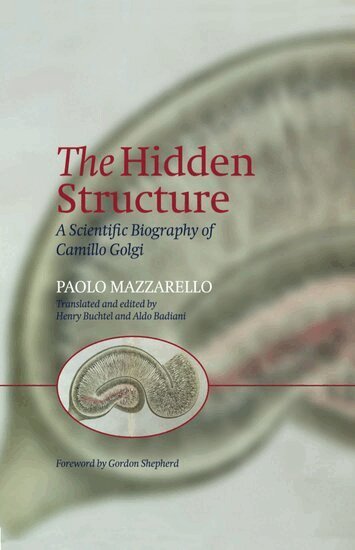
Camillo Golgi (1843-1926) is widely regarded as one of the founders of modern neuroscience. In 1873 he discovered the 'reazione nera' - the black reaction - a histological stain which was to prove to be a revolutionary method for studying the structure of the nervous system. To this day, the Golgi stain is still widely used. For every student of medicine or biology, Golgi's name is synonymous with one of the basic structures in the cell: Golgi Apparatus, a cellular structure involved in protein glycosylation and transport. Golgi discovered the apparatus in 1898, and as a result of which, he is probably the most widely cited biologist in the scientific literature. But this is only one of Golgi's many contributions to scientific research. Amongst other things, he devised a system for the classification of neurons on the basis of axonal distribution, and identified a type of cell in the cerebellum. He identified and described the malarial cycle in the human. His discoveries were both basic, and rich with therapeutic implications. His remarkable achievements earned him a Nobel Prize for Medicine in 1906. It is enough to open any book of biology or medicine to realize that Golgi is one of the giants of 19th Century scientific endeavour. Despite this, Golgi remains a relatively unknown figure in the history of neuroscience and cell biology. This long-awaited biography, in a new translation from the Italian, is a fascinating analysis of Golgi's experiments, ideas, and personal life. It will be welcomed by anyone who has ever wondered about this brilliant Italian scientist and his seminal contributions to the fields of neuroscience, cytology and cell biology, pathology, and biochemistry today.