Park S. Nobel – författare
Visar alla böcker från författaren Park S. Nobel. Handla med fri frakt och snabb leverans.
6 produkter
6 produkter
993 kr
Skickas inom 10-15 vardagar
Physicochemical and Environmental Plant Physiology, Fourth Edition, is the updated version of an established and successful reference for plant scientists. The author has taken into consideration extensive reviews performed by colleagues and students who have touted this book as the ultimate reference for research and learning.The original structure and philosophy of the book continue in this new edition, providing a genuine synthesis of modern physicochemical and physiological thinking, while entirely updating the detailed content. This version contains more than 40% new coverage; five brand new equations and four new tables, with updates to 24 equations and six tables; and 30 new figures have been added with more than three-quarters of figures and legends improved. Key concepts in plant physiology are developed with the use of chemistry, physics, and mathematics fundamentals.The book is organized so that a student has easy access to locate any biophysical phenomenon in which he or she is interested. More than 40% new coverage Incorporates student-recommended changes from the previous edition�Five brand new equations and four new tables, with updates to 24 equations and six tables30 new figures added with more than three-quarters of figures and legends improvedOrganized so that a student has easy access to locate any biophysical phenomenon in which he or she is interestedPer-chapter key equation tablesProblems with solutions presented in the back of the bookAppendices with conversion factors, constants/coefficients, abbreviations and symbols
1 089 kr
Skickas inom 10-15 vardagar
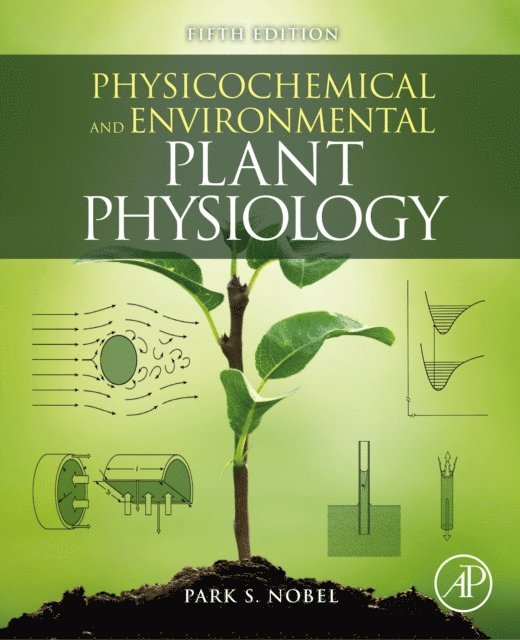
Physicochemical and Environmental Plant Physiology, Fifth Edition, is the updated version of an established and successful text and reference for plant scientists. This work represents the seventh book in a 50-year series by Park Nobel beginning in 1970. The original structure and philosophy of the book continue in this new edition, providing a genuine synthesis of modern physicochemical and physiological thinking, while updating the content. Key concepts in plant physiology are developed with the use of chemistry, physics, and mathematics fundamentals.The book contains plant physiology basics while also including many equations and often their derivation to quantify the processes and explain why certain effects and pathways occur, helping readers to broaden their knowledge base. New topics included in this edition are advances in plant hydraulics, other plant-water relations, and the effects of climate change on plants. This series continues to be the gold standard in environmental plant physiology.Describes the chemical and the physical principles behind plant physiological processesProvides key equations for each chapter and solutions for the problems on each topicIncludes features that enhances the utility of the book for self-study such as problems after each chapter and the 45-page section "Solution to Problems" at the end of the bookIncludes appendices with conversation factors, constants/coefficients, abbreviations, and symbols
New to this edition:
The scientific fields and the nationalities of the more than 115 scientists mentioned in the book, providing a nice personal touchWhile adding over 100 new or updated references, reference of special importance historically are retained, showing how science has advanced over the agesThe often challenging problems at the end of each chapter provide an important test of the mastery of the topics covered. Moreover, the solutions to the problems are presented in detail at the end of the book. The book can thus be used in courses but also especially useful for students or other persons studying this often difficult material on their ownFinally and most important, the fifth edition continues the emphasis of a quantitative approach begun fifty years ago by Park Nobel (1970) with the publication of his first book in the series. Over the next fifty years from 1970 to 2020, the author has gained considerable experience on how to present quantitative and often abstract material to students. This edition is most likely the final version in the series, which not only covers some of his unique contributions but also has helped countless students and colleagues appreciate the power and insight gained into biology from calculations!850 kr
Skickas inom 5-8 vardagar
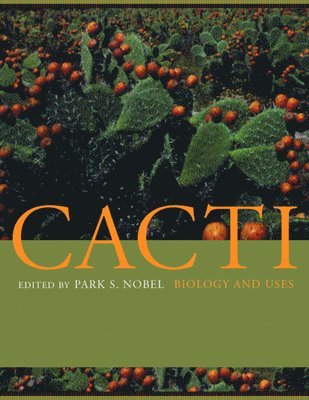
The Cactaceae family, with about sixteen hundred species, is cultivated worldwide for fruits, forage, fodder, and even as a vegetable. Cacti are recognized for their attractive flowers, special stem shapes, and ability to tolerate drought. Because of their efficient use of water and other adaptations, biological and agronomic interest in cacti has soared. These fascinating plants also have much to teach us about biodiversity and conservation. Yet a current, synthetic, wide-ranging reference on cacti has not been available until now. This comprehensive book, compiled by a well-known cactus biologist, includes authoritative, up-to-date chapters by thirty-five contributors from around the world on topics ranging from evolution to biotechnology. It is the first book of its kind to compile information on cactus biology, ecology, and uses in one convenient place. The first half of the book provides a thorough overview of cactus biology and morphology and discusses the environmental and conservation issues that affect the plants. It includes a discussion of the evolution of the family, paying particular attention to new genetic and molecular approaches.The second half of the book focuses on the practical concerns of cultivating cacti, such as pest control and diseases, horticultural and forage applications, and techniques for agronomy. Other chapters cover the different markets for cacti and products that are made from them. This unique volume will be a reliable and informative reference for ecologists and environmentalists, agriculturists, plant biologists, and anyone seriously interested in these remarkable plants.
937 kr
Skickas inom 7-10 vardagar
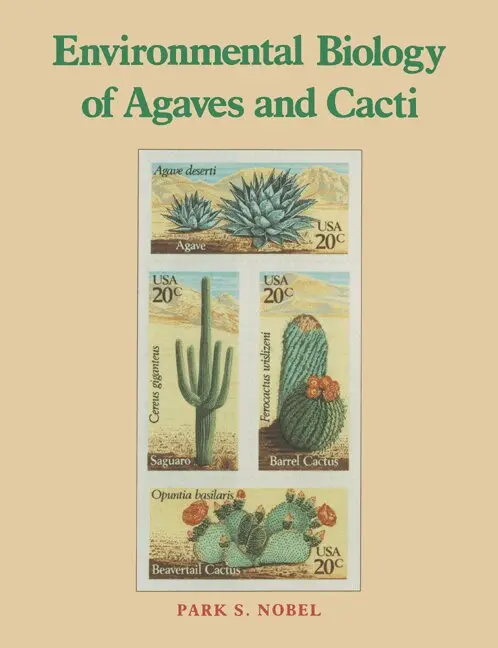
The Environmental Biology of Agaves and Cacti constitutes the first comprehensive review of how these two interesting and economically important desert succulent taxa respond, in what turn out to be remarkably similar ways, to specific environmental factors such as water, temperature, photosynthetically active radiation, and nutrients, which affect the exchange of carbon dioxide and water vapor with the environment. Park Nobel first summarizes early environmental research as well as the many ethnobotanical uses of agaves and cacti. He then develops the main themes by considering the three most studied species in detail. Much of the relevant research has been carried out in his own laboratory since the mid-1970s. The book's clear style, many photographs and line drawings, and comprehensive data summaries make it accessible to professionals and interested laypeople alike. Every scientific term is defined the first time it is used. Agaves and cacti are shown to be highly productive compared to other plant groups, and this productivity helps account for their many uses for beverages, food, and animal fodder. Plant ecologists and physiologists, agronomists, environmental biologists, modelers, ethnobotanists, students, amateur succulent enthusiasts, and those responsible for land use and agricultural policy in arid and semiarid regions will all find this book an invaluable resource.
861 kr
Tillfälligt slut
169 kr
Skickas inom 5-8 vardagar