Patrick KA¶llner – författare
Visar alla böcker från författaren Patrick KA¶llner. Handla med fri frakt och snabb leverans.
3 produkter
3 produkter
E-bok
Engelska, 2018447 kr
Läs direkt efter köp
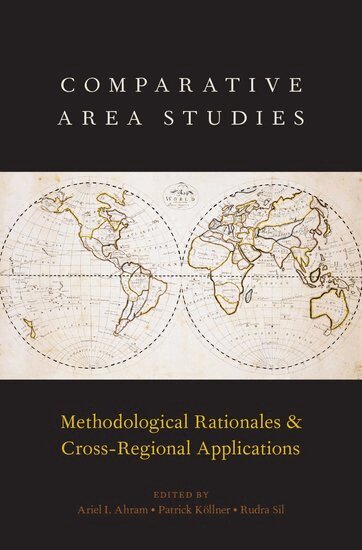
In the post-World War II era, the emergence of ''area studies'' marked a signal development in the social sciences. As the social sciences evolved methodologically, however, many dismissed area studies as favoring narrow description over general theory. Still, area studies continues to plays a key, if unacknowledged, role in bringing new data, new theories, and valuable policy-relevant insights to social sciences. In Comparative Area Studies, three leading figures in the field have gathered an international group of scholars in a volume that promises to be a landmark in a resurgent field. The book upholds two basic convictions: that intensive regional research remains indispensable to the social sciences and that this research needs to employ comparative referents from other regions to demonstrate its broader relevance. Comparative Area Studies (CAS) combines the context-specific insights from traditional area studies and the logic of cross- and inter-regional empirical research. This first book devoted to CAS explores methodological rationales and illustrative applications to demonstrate how area-based expertise can be fruitfully integrated with cutting-edge comparative analytical frameworks.
E-bok
Engelska, 2025372 kr
Läs direkt efter köp
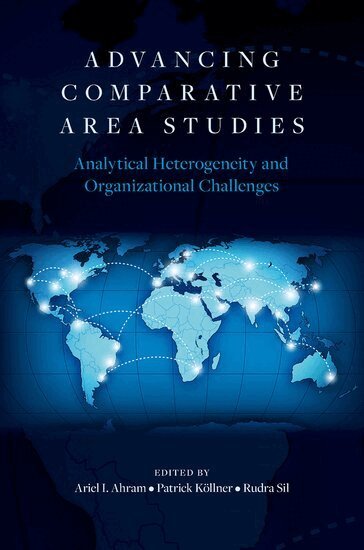
The book Comparative Area Studies (2018) laid out the distinctive features and value-added of "e;comparative area studies"e; (CAS) against the backdrop of ongoing methodological debates in the social sciences. Since that time, the editors of the first volume and other scholars doing comparative research have been exploring the scope and usefulness of the CAS framework in relation to their own work. Others have raised important questions about the epistemological flexibility of CAS and about the institutional pressures that could limit further extensions of CAS, especially given current trends in the academy.This new volume tackles these questions and showcases how CAS can accommodate a wider range of scholarship predicated on more varied methodological and epistemological principles. This includes not only contextualized comparisons of countries from different regions but also interpretive work, comparisons of sub-national units, as well as inter-regional comparisons addressing topics such as global human rights and the rise of regional powers that go beyond comparative politics (the focus of the first volume). This book also offers practical, realistic discussions of how our current institutional architecture can be adapted to support cross-regional comparative research and to better connect different area studies communities--while acknowledging the long-standing value of deep area expertise.
E-bok
PDF, Engelska, 2025372 kr
Läs direkt efter köp
The book Comparative Area Studies (2018) laid out the distinctive features and value-added of "e;comparative area studies"e; (CAS) against the backdrop of ongoing methodological debates in the social sciences. Since that time, the editors of the first volume and other scholars doing comparative research have been exploring the scope and usefulness of the CAS framework in relation to their own work. Others have raised important questions about the epistemological flexibility of CAS and about the institutional pressures that could limit further extensions of CAS, especially given current trends in the academy.This new volume tackles these questions and showcases how CAS can accommodate a wider range of scholarship predicated on more varied methodological and epistemological principles. This includes not only contextualized comparisons of countries from different regions but also interpretive work, comparisons of sub-national units, as well as inter-regional comparisons addressing topics such as global human rights and the rise of regional powers that go beyond comparative politics (the focus of the first volume). This book also offers practical, realistic discussions of how our current institutional architecture can be adapted to support cross-regional comparative research and to better connect different area studies communities--while acknowledging the long-standing value of deep area expertise.