Paul Bolton – författare
Visar alla böcker från författaren Paul Bolton. Handla med fri frakt och snabb leverans.
5 produkter
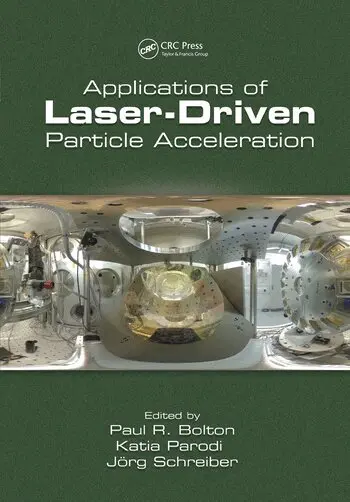
Applications of Laser-Driven Particle Acceleration
Av Paul Bolton, Katia Parodi m. fl.
Häftad, 2020
845 kr
Lägg i varukorg
The first book of its kind to highlight the unique capabilities of laser-driven acceleration and its diverse potential, Applications of Laser-Driven Particle Acceleration presents the basic understanding of acceleration concepts and envisioned prospects for selected applications. As the main focus, …
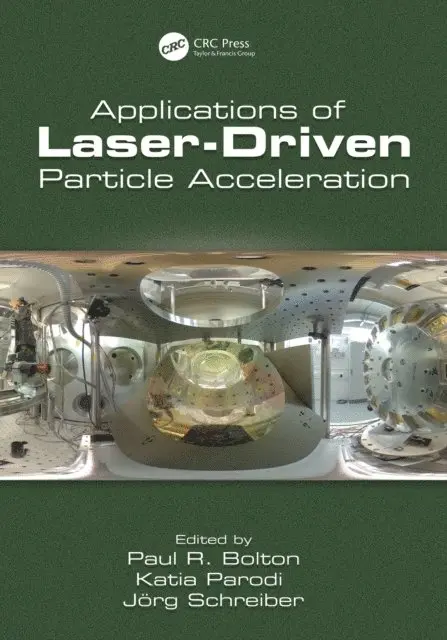
Applications of Laser-Driven Particle Acceleration
Av Jorg Schreiber, Katia Parodi m. fl.
E-bok, 2018
999 kr
Lägg i varukorg
The first book of its kind to highlight the unique capabilities of laser-driven acceleration and its diverse potential, Applications of Laser-Driven Particle Acceleration presents the basic understanding of acceleration concepts and envisioned prospects for selected applications. As the main focus, …
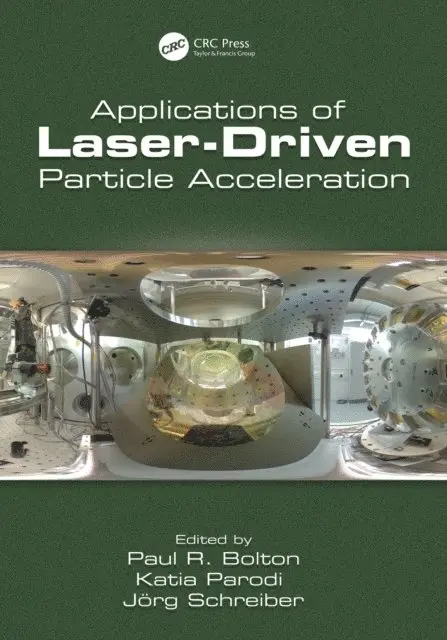
Applications of Laser-Driven Particle Acceleration
Av Jorg Schreiber, Katia Parodi m. fl.
E-bok, 2018
977 kr
Lägg i varukorg
The first book of its kind to highlight the unique capabilities of laser-driven acceleration and its diverse potential, Applications of Laser-Driven Particle Acceleration presents the basic understanding of acceleration concepts and envisioned prospects for selected applications. As the main focus, …
Applications of Laser-Driven Particle Acceleration
Av Paul Bolton, Katia Parodi m. fl.
Inbunden, 2018
3898 kr
Lägg i varukorg
The first book of its kind to highlight the unique capabilities of laser-driven acceleration and its diverse potential, Applications of Laser-Driven Particle Acceleration presents the basic understanding of acceleration concepts and envisioned prospects for selected applications. As the main focus, …
NUCLEAR PHYSICS AND GAMMA-RAY SOURCES FOR NUCLEAR SECURITY AND NONPROLIFERATION - PROCEEDINGS OF THE INTERNATIONAL SYMPOSIUM
Av Al Takehito Hayakawa Et, Takehito Hayakawa m. fl.
Inbunden, 2014
1845 kr
Lägg i varukorg
Nuclear nonproliferation is a critical global issue. A key technological challenge to ensuring nuclear nonproliferation and security is the detection of long-lived radioisotopes and fissionable nuclides in a non-destructive manner. This technological challenge requires new methods for detecting …