Philip N. Jefferson – författare
Visar alla böcker från författaren . Handla med fri frakt och snabb leverans.
5 produkter
5 produkter
E-bok
PDF, Engelska, 201889 kr
Läs direkt efter köp
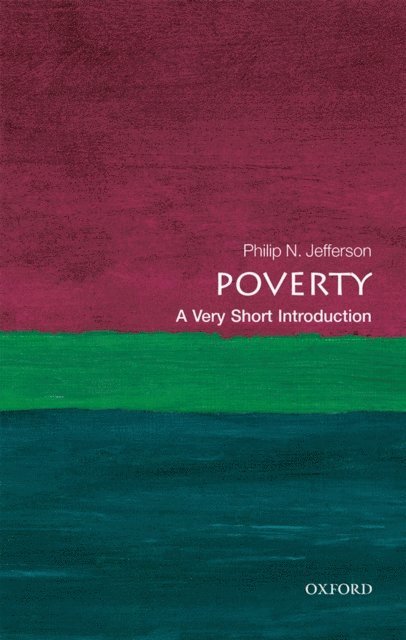
No one wants to live in poverty. Few people would want others to do so. Yet, millions of people worldwide live in poverty. According to the World Bank, over 700 million people lived on less than US $2 a day in 2013. Why is that? What has been done about it in the past? And what is being done about it now? In this Very Short Introduction Philip N. Jefferson explores how the answers to these questions lie in the social, political, economic, educational, and technological processes that impact all of us throughout our lives. The degree of vulnerability is all that differentiates us. He shows how a person''s level of vulnerability to adverse changes in their life is very much dependent on the circumstances of their birth, including where their family lived, the schools they attended, whether it was peacetime or wartime, whether they had access to clean water, and whether they are male or female. Arguing that whilst poverty is ancient and enduring, the conversation about it is always new and evolving, Jefferson looks at the history of poverty, and the practical and analytical efforts we have made to eradicate it, and the prospects for further poverty alleviation in the future. ABOUT THE SERIES: The Very Short Introductions series from Oxford University Press contains hundreds of titles in almost every subject area. These pocket-sized books are the perfect way to get ahead in a new subject quickly. Our expert authors combine facts, analysis, perspective, new ideas, and enthusiasm to make interesting and challenging topics highly readable.
E-bok
Engelska, 201889 kr
Läs direkt efter köp
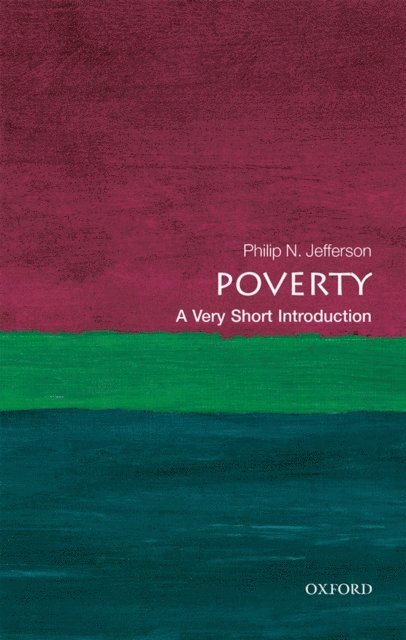
No one wants to live in poverty. Few people would want others to do so. Yet, millions of people worldwide live in poverty. According to the World Bank, over 700 million people lived on less than US $2 a day in 2013. Why is that? What has been done about it in the past? And what is being done about it now? In this Very Short Introduction Philip N. Jefferson explores how the answers to these questions lie in the social, political, economic, educational, and technological processes that impact all of us throughout our lives. The degree of vulnerability is all that differentiates us. He shows how a person''s level of vulnerability to adverse changes in their life is very much dependent on the circumstances of their birth, including where their family lived, the schools they attended, whether it was peacetime or wartime, whether they had access to clean water, and whether they are male or female. Arguing that whilst poverty is ancient and enduring, the conversation about it is always new and evolving, Jefferson looks at the history of poverty, and the practical and analytical efforts we have made to eradicate it, and the prospects for further poverty alleviation in the future. ABOUT THE SERIES: The Very Short Introductions series from Oxford University Press contains hundreds of titles in almost every subject area. These pocket-sized books are the perfect way to get ahead in a new subject quickly. Our expert authors combine facts, analysis, perspective, new ideas, and enthusiasm to make interesting and challenging topics highly readable.
Inbunden, Engelska, 2012
2 988 kr
Skickas inom 5-8 vardagar
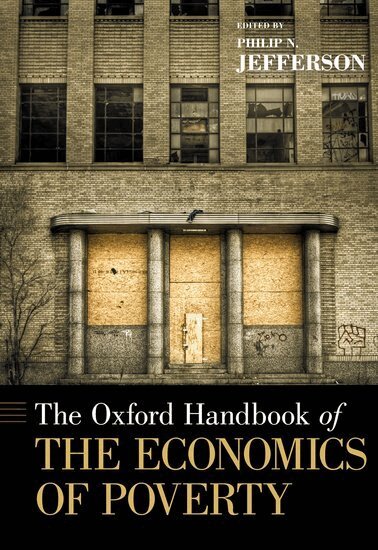
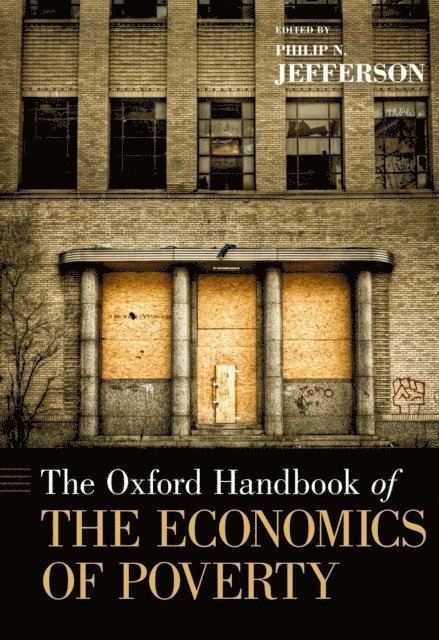
Poverty is a pressing and persistent problem. While its extent varies across countries, its presence always represents the diminution of human capacity. Therefore, it seems natural to want to do something about it. Have countries made progress in mitigating poverty? How do we determine who is poor and who is not poor? What intuitions or theories guide the design of anti-poverty policy? Is overall labor market performance the key to keeping the poverty rate low? Or, does it matter how well- connected an individual is to those who know about the availability of jobs? Does being an immigrant increase the odds of being poor? Are there anti-poverty policies that work? For whom do they work? If I'm poor, will I have access to health care and housing? Am I more likely to be obese, polluted upon, incarcerated, un-banked, and without assets if I'm poor? Is poverty too hard a problem for economic analysis? These are some of the questions that a distinguished group of scholars have come together to confront in this handbook. The Handbook is written in a highly accessible style that encourages the reader to think critically about poverty. Theories are presented in a rigorous but not overly technical way; concise and straightforward empirical analyses enlighten key policy issues. The volume has six parts: Poverty in the 21st Century; Labor Market Factors; Poverty Policy; Poverty Dynamics; Dimensions of Poverty; and Trends and Issues in Anti-Poverty Policy. A goal of the handbook is to stimulate further research on poverty. To that end, several chapters challenge conventional thinking about poverty and in some cases present specific proposals for the reform of economic and social policy.
Häftad, Engelska, 2018
110 kr
Skickas inom 5-8 vardagar
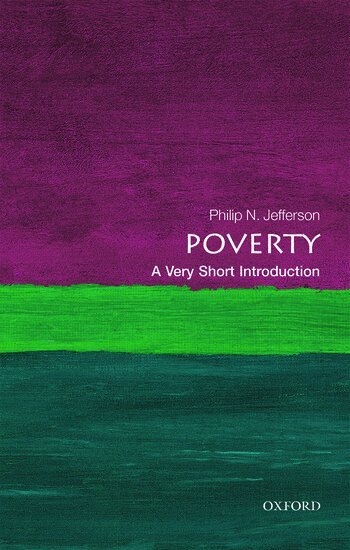
No one wants to live in poverty. Few people would want others to do so. Yet, millions of people worldwide live in poverty. According to the World Bank, over 700 million people lived on less than US $2 a day in 2013. Why is that? What has been done about it in the past? And what is being done about it now?In this Very Short Introduction Philip N. Jefferson explores how the answers to these questions lie in the social, political, economic, educational, and technological processes that impact all of us throughout our lives. The degree of vulnerability is all that differentiates us. He shows how a person's level of vulnerability to adverse changes in their life is very much dependent on the circumstances of their birth, including where their family lived, the schools they attended, whether it was peacetime or wartime, whether they had access to clean water, and whether they are male or female. Arguing that whilst poverty is ancient and enduring, the conversation about it is always new and evolving, Jefferson looks at the history of poverty, and the practical and analytical efforts we have made to eradicate it, and the prospects for further poverty alleviation in the future.ABOUT THE SERIES: The Very Short Introductions series from Oxford University Press contains hundreds of titles in almost every subject area. These pocket-sized books are the perfect way to get ahead in a new subject quickly. Our expert authors combine facts, analysis, perspective, new ideas, and enthusiasm to make interesting and challenging topics highly readable.
E-bok
PDF, Engelska, 20121 683 kr
Läs direkt efter köp
Poverty is a pressing and persistent problem. While its extent varies across countries, its presence always represents the diminution of human capacity. Therefore, it seems natural to want to do something about it. Have countries made progress in mitigating poverty? How do we determine who is poor and who is not poor? What intuitions or theories guide the design of anti-poverty policy? Is overall labor market performance the key to keeping the poverty rate low? Or, does it matter how well-connected an individual is to those who know about the availability of jobs? Does being an immigrant increase the odds of being poor? Are there anti-poverty policies that work? For whom do they work? If I''m poor, will I have access to health care and housing? Am I more likely to be obese, polluted upon, incarcerated, un-banked, and without assets if I''m poor? Is poverty too hard a problem for economic analysis? These are some of the questions that a distinguished group of scholars have come together to confront in this Handbook.The Handbook is written in a highly-accessible style that encourages the reader to think critically about poverty. Theories are presented in a rigorous but not overly-technical way; concise and straightforward empirical analyses enlighten key policy issues. The volume has six parts: Poverty in the 21st Century; Labor Market Factors; Poverty Policy; Poverty Dynamics; Dimensions of Poverty; and Trends and Issues in Anti-Poverty Policy. A goal of the Handbook is to stimulate further research on poverty. To that end, several chapters challenge conventional thinking about poverty and in some cases present specific proposals for the reform of economic and social policy.