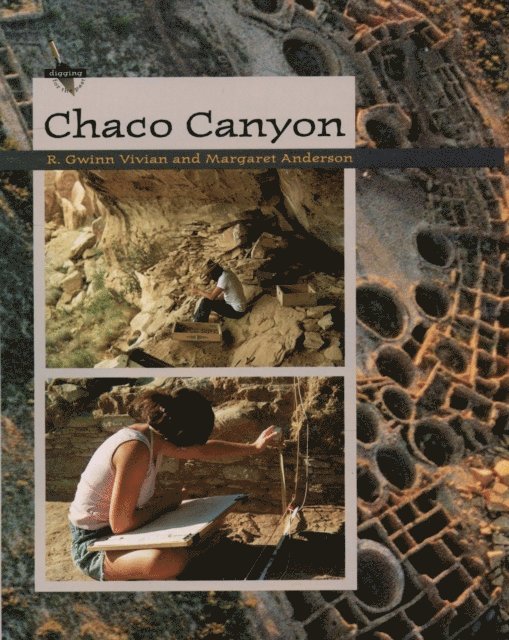
New Mexico, northwestern corner. Here, amidst the greasewood bushes and clouds of dry, sandy soil, are the silent ruins of colossal mud and wooden houses, a mysterious remnant of an ancient civilization. In Chaco Canyon, readers learn about the discovery of these amazing structures and follow generations of archaeologists as they uncover the secrets of the canyon''s past. A veritable early Native American detective story, the book includes numerous sidebars on archaeological techniques, timelines, related sites, photographs and illustrations of the sites and artifacts, and a fascinating interview with archaeologist Gwinn Vivian who grew up in the canyon. Series copy: Buried treasure, high adventure, lost civilizations--Join archaeologists as they dig for the past at exciting sites around the world. From the first excitement of the original find to the excavation and scientific breakthrough, these richly illustrated books team professional archaeologists with established science writers to bring the fascinating world of the archaeological process to life.
Chaco Canyon in northwestern New Mexico contains a remarkable set of Ancestral Puebloan buildings. Occupied between AD 850 and 1150, Chaco appears to have been the cultural and political centre for much of what is now the Four Corners region. Many sites in the Chaco Culture National Historical Park have been continuously studied for more than a century. Vivian and Hilpert wrote this encyclopedic handbook to help organise the extensive amount of information available for Chaco, as well as to stimulate speculation and encourage further exploration. The result is a highly accessible but thorough reference. The Chaco Handbook includes more than 270 cross-referenced, alphabetical entries, more than 100 illustrations and maps, plus histories of Chaco’s development and ensuing archaeological research. Entries address important Chacoan and related sites, place-names, archaeological and ethnographic terms, objects and architectural features, and institutions and individuals. This second edition includes a new preface, a new chapter on professional explanations for the “Chaco Phenomena,” additional entries, and revisions to existing entries. Useful to anyone with an interest in the Ancestral Puebloans, including specialists, this handbook will guide readers to greater exploration of Chacoan culture and the Chaco world.
An esteemed archaeologist's lifetime of work on water use in Chaco CanyonThe ability of the inhabitants of Chaco Canyon to sustain themselves through farming in an arid environment has long been a topic of debate among scholars. Building upon the work of his father, Gordon, R. Gwinn Vivian dedicated his lifetime of archaeological work to investigating water management and practices at Chaco. These efforts provide compelling evidence of the extensive use of canal irrigation systems and other water management techniques employed by the Ancestral Puebloan people by the ninth century and continuing through recent periods by Navajo farmers.Rich with archaeological data, ethnographic evidence, maps, and photographs, this volume challenges long-standing assumptions about Chaco Canyon's agricultural potential. By highlighting the adaptability and ingenuity of the canyon's early inhabitants, the book offers a fresh perspective on the role of water management in the development of Chaco Canyon as a sociopolitical center in the northern Southwest.
New Mexico, northwestern corner. Here, amidst the greasewood bushes and clouds of dry, sandy soil, are the silent ruins of colossal mud and wooden houses, a mysterious remnant of an ancient civilization. In Chaco Canyon, readers learn about the discovery of these amazing structures and follow generations of archaeologists as they uncover the secrets of the canyon''s past. A veritable early Native American detective story, the book includes numerous sidebars on archaeological techniques, timelines, related sites, photographs and illustrations of the sites and artifacts, and a fascinating interview with archaeologist Gwinn Vivian who grew up in the canyon. Series copy: Buried treasure, high adventure, lost civilizations--Join archaeologists as they dig for the past at exciting sites around the world. From the first excitement of the original find to the excavation and scientific breakthrough, these richly illustrated books team professional archaeologists with established science writers to bring the fascinating world of the archaeological process to life.
Chaco Canyon in northwestern New Mexico contains a remarkable set of Ancestral Puebloan buildings. Occupied between AD 850 and 1150, Chaco appears to have been the cultural and political centre for much of what is now the Four Corners region. Many sites in the Chaco Culture National Historical Park have been continuously studied for more than a century. Vivian and Hilpert wrote this encyclopedic handbook to help organise the extensive amount of information available for Chaco, as well as to stimulate speculation and encourage further exploration. The result is a highly accessible but thorough reference. The Chaco Handbook includes more than 270 cross-referenced, alphabetical entries, more than 100 illustrations and maps, plus histories of Chaco’s development and ensuing archaeological research. Entries address important Chacoan and related sites, place-names, archaeological and ethnographic terms, objects and architectural features, and institutions and individuals. This second edition includes a new preface, a new chapter on professional explanations for the “Chaco Phenomena,” additional entries, and revisions to existing entries. Useful to anyone with an interest in the Ancestral Puebloans, including specialists, this handbook will guide readers to greater exploration of Chacoan culture and the Chaco world.
An esteemed archaeologist's lifetime of work on water use in Chaco CanyonThe ability of the inhabitants of Chaco Canyon to sustain themselves through farming in an arid environment has long been a topic of debate among scholars. Building upon the work of his father, Gordon, R. Gwinn Vivian dedicated his lifetime of archaeological work to investigating water management and practices at Chaco. These efforts provide compelling evidence of the extensive use of canal irrigation systems and other water management techniques employed by the Ancestral Puebloan people by the ninth century and continuing through recent periods by Navajo farmers.Rich with archaeological data, ethnographic evidence, maps, and photographs, this volume challenges long-standing assumptions about Chaco Canyon's agricultural potential. By highlighting the adaptability and ingenuity of the canyon's early inhabitants, the book offers a fresh perspective on the role of water management in the development of Chaco Canyon as a sociopolitical center in the northern Southwest.