R. Taggart Murphy – författare
Visar alla böcker från författaren . Handla med fri frakt och snabb leverans.
7 produkter
7 produkter
Inbunden, Engelska, 2015
341 kr
Skickas inom 5-8 vardagar
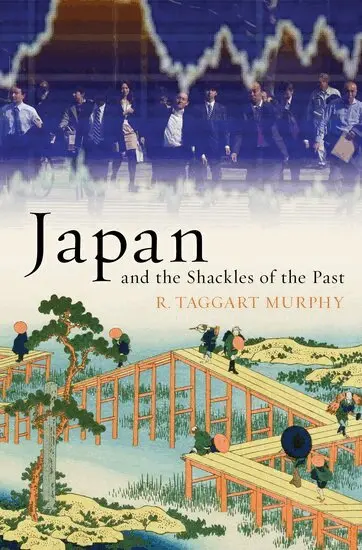
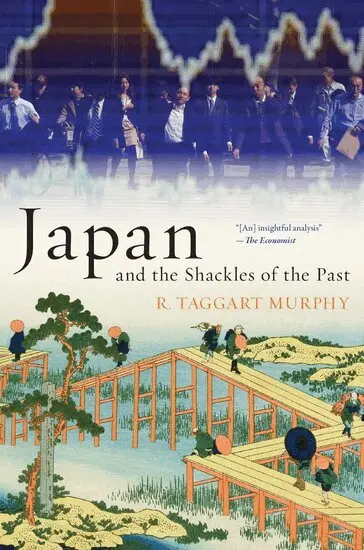
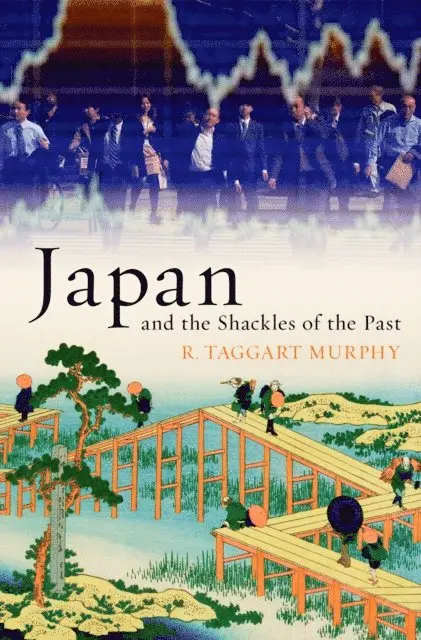
Should we care about Japan anymore? It has a long history and a rich artistic heritage; kids today can't seem to get enough of its popular culture; and it is supposed to be America's number one ally in Asia-Pacific. But Washington treats the place with something between absent-mindedness and contempt, and while some fret that Tokyo could drag the US into an unwanted confrontation with China, it has otherwise essentially disappeared from the American radar screen. A quarter-century ago, Tokyo's stock exchange was bigger than New York's and the Japanese industrial juggernaut seemed destined to sweep all before it. Now, Japan is seen as a has-been with a sluggish economy, an aging population, dysfunctional politics, and a business landscape dominated by yesterday's champions. Does it even matter today except as an object lesson in how not to run a country?R. Taggart Murphy argues that yes, we should care about Japan and, yes, the country matters-it matters very much. Murphy concedes that with the exception of its pop culture, Japan has indeed been out of sight and out of mind in recent decades. But he argues that this is already changing. Political and economic developments in Japan today risk upheaval in the pivotal arena of Northeast Asia; parallels with Europe on the eve of the First World War are not misplaced. America's half-completed effort to remake Japan in the late 1940s is unraveling in ways that will not be to Washington's liking-ironic, since the American foreign policy and defense establishment is directly culpable for what has happened.Murphy traces the roots of these events far back into Japanese history and argues that the seeming exception of the vitality of its pop culture to the country's supposed malaise is no exception at all but rather provides critical clues to what is going on now. Along the way, he shares insights into everything from Japan's politics and economics to the texture of daily life, gender relations, the changing business landscape, and both popular and high culture. He places particular emphasis on the story of the fraught, quasi-pathological US-Japan relationship, arguing that it is central to understanding Japan today - and to the prospects for continued American global hegemony.
E-bok
Engelska, 2014171 kr
Läs direkt efter köp
Japan is one of the world''s wealthiest and most technologically advanced nations, and its rapid ascent to global power status after 1853 remains one of the most remarkable stories in modern world history. Yet it has not been an easy path; military catastrophe, political atrophy, and economic upheavals have made regular appearances from the feudal era to the present. Today, Japan is seen as a has-been with a sluggish economy, an aging population, dysfunctional politics, and a business landscape dominated by yesterday''s champions. Though it is supposed to be America''s strongest ally in the Asia-Pacific region, it has almost entirely disappeared from the American radar screen. In Japan and the Shackles of the Past, R. Taggart Murphy places the current troubles of Japan in a sweeping historical context, moving deftly from early feudal times to the modern age that began with the Meiji Restoration. Combining fascinating analyses of Japanese culture and society over the centuries with hard-headed accounts of Japan''s numerous political regimes, Murphy not only reshapes our understanding of Japanese history, but of Japan''s place in the contemporary world. He concedes that Japan has indeed been out of sight and out of mind in recent decades, but contends that this is already changing. Political and economic developments in Japan today risk upheaval in the pivotal arena of Northeast Asia, inviting comparisons with Europe on the eve of the First World War. America''s half-completed effort to remake Japan in the late 1940s is unraveling, and the American foreign policy and defense establishment is directly culpable for what has happened. The one apparent exception to Japan''s malaise is the vitality of its pop culture, but it''s actually no exception at all; rather, it provides critical clues to what is going on now. With insights into everything from Japan''s politics and economics to the texture of daily life, gender relations, the changing business landscape, and popular and high culture, Japan and the Shackles of the Past is the indispensable guide to understanding Japan in all its complexity.
Häftad, Engelska, 2016
250 kr
Skickas
Japan is one of the world's wealthiest and most technologically advanced nations, and its rapid ascent to global power status after 1853 remains one of the most remarkable stories in modern world history. Yet it has not been an easy path; military catastrophe, political atrophy, and economic upheavals have made regular appearances from the feudal era to the present. Today, Japan is seen as a has-been with a sluggish economy, an aging population, dysfunctional politics, and a business landscape dominated by yesterday's champions. Though it is supposed to be America's strongest ally in the Asia-Pacific region, it has almost entirely disappeared from the American radar screen. In Japan and the Shackles of the Past, R. Taggart Murphy places the current troubles of Japan in a sweeping historical context, moving deftly from early feudal times to the modern age that began with the Meiji Restoration. Combining fascinating analyses of Japanese culture and society over the centuries with hard-headed accounts of Japan's numerous political regimes, Murphy not only reshapes our understanding of Japanese history, but of Japan's place in the contemporary world. He concedes that Japan has indeed been out of sight and out of mind in recent decades, but contends that this is already changing. Political and economic developments in Japan today risk upheaval in the pivotal arena of Northeast Asia, inviting comparisons with Europe on the eve of the First World War. America's half-completed effort to remake Japan in the late 1940s is unraveling, and the American foreign policy and defense establishment is directly culpable for what has happened. The one apparent exception to Japan's malaise is the vitality of its pop culture, but it's actually no exception at all; rather, it provides critical clues to what is going on now. With insights into everything from Japan's politics and economics to the texture of daily life, gender relations, the changing business landscape, and popular and high culture, Japan and the Shackles of the Past is the indispensable guide to understanding Japan in all its complexity.
E-bok
PDF, Engelska, 2014171 kr
Läs direkt efter köp
Japan is one of the world''s wealthiest and most technologically advanced nations, and its rapid ascent to global power status after 1853 remains one of the most remarkable stories in modern world history. Yet it has not been an easy path; military catastrophe, political atrophy, and economic upheavals have made regular appearances from the feudal era to the present. Today, Japan is seen as a has-been with a sluggish economy, an aging population, dysfunctional politics, and a business landscape dominated by yesterday''s champions. Though it is supposed to be America''s strongest ally in the Asia-Pacific region, it has almost entirely disappeared from the American radar screen. In Japan and the Shackles of the Past, R. Taggart Murphy places the current troubles of Japan in a sweeping historical context, moving deftly from early feudal times to the modern age that began with the Meiji Restoration. Combining fascinating analyses of Japanese culture and society over the centuries with hard-headed accounts of Japan''s numerous political regimes, Murphy not only reshapes our understanding of Japanese history, but of Japan''s place in the contemporary world. He concedes that Japan has indeed been out of sight and out of mind in recent decades, but contends that this is already changing. Political and economic developments in Japan today risk upheaval in the pivotal arena of Northeast Asia, inviting comparisons with Europe on the eve of the First World War. America''s half-completed effort to remake Japan in the late 1940s is unraveling, and the American foreign policy and defense establishment is directly culpable for what has happened. The one apparent exception to Japan''s malaise is the vitality of its pop culture, but it''s actually no exception at all; rather, it provides critical clues to what is going on now. With insights into everything from Japan''s politics and economics to the texture of daily life, gender relations, the changing business landscape, and popular and high culture, Japan and the Shackles of the Past is the indispensable guide to understanding Japan in all its complexity.
Häftad, Engelska, 1997
306 kr
Skickas inom 5-8 vardagar
In eight years from 1980 to 1988, America fell from financial grace, becoming the world's largest debtor. This happened because the United States spent and Japan saved. In the early 1980s, Reagan's Washington discovered that Japan would cheerfully lend their vast savings to the United States by buying U.S. government bonds.How the Japanese money accumulated, the system that created it, and American fumbling that led to crippling debt service, a loss of much of our manufacturing base, and our economy's diminishing good jobs. The Weight of the Yen explains it all, in an intriguing, jargon-free analysis of the past fifteen years and the problems between America and Japan that are yet to come.
Häftad, Engelska, 2003
296 kr
Skickas inom 10-15 vardagar
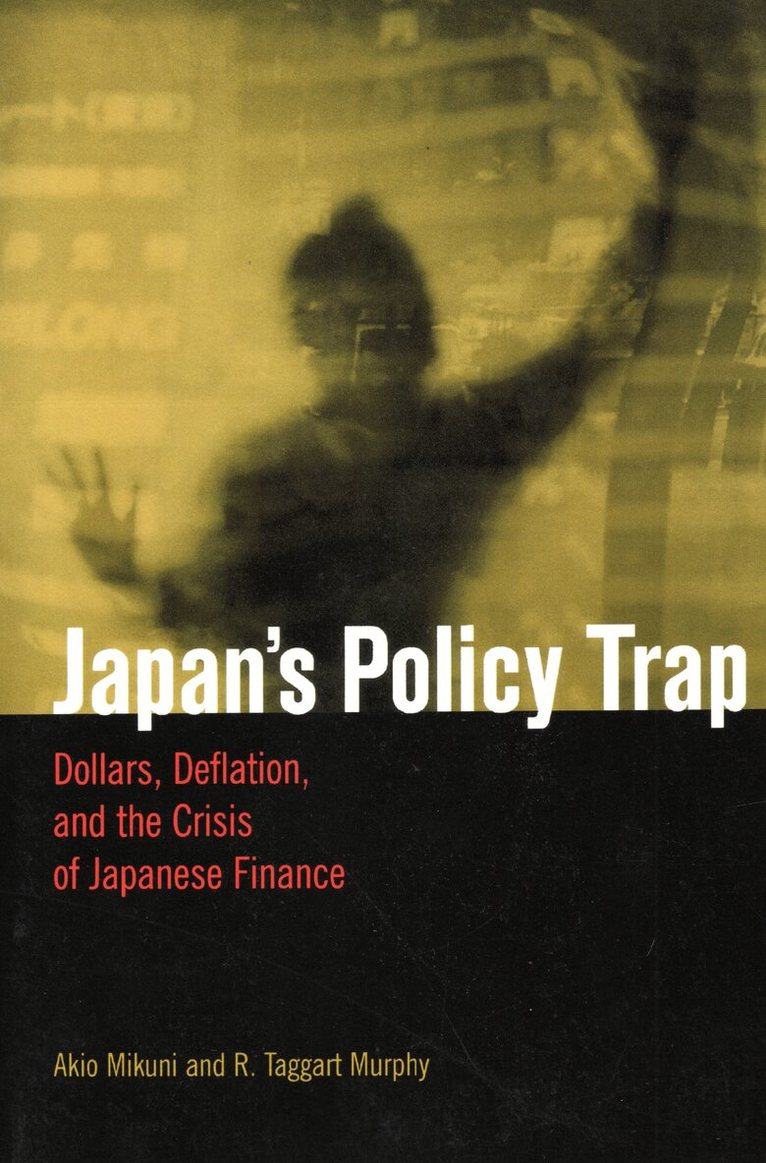
Until quite recently, the Japanese inspired a kind of puzzled awe. They had pulled themselves together from the ruin of war, built at breakneck speed a formidable array of export champions, and emerged as the world's number-two economy and largest net creditor nation. And they did it by flouting every rule of economic orthodoxy. But today only the puzzlement remainsat Japan's inability to arrest its economic decline, at its festering banking crisis, and at the dithering of its policymakers. Why can't the Japanese government find the political will to fix the country's problems? Japan's Policy Trap offers a provocative new analysis of the country's protracted economic stagnation. Japanese insider Akio Mikuni and long-term Japan resident R. Taggart Murphy contend that the country has landed in a policy trap that defies easy solution. The authors, who have together spent decades at the heart of Japanese finance, expose the deep-rooted political arrangements that have distorted Japan's monetary policy in a deflationary direction. They link Japan's economic difficulties to the Achilles' heel of the U.S. economy: the U.S. trade and current accounts deficits. For the last twenty years, Japan's dollar-denominated trade surplus has outstripped official reserves and currency in circulation. These huge accumulated surpluses have long exercised a growing and perverse influence on monetary policy, forcing Japan's authorities to support a build-up of deflationary dollars. Mikuni and Murphy trace the origins of Japan's policy trap far back into history, in the measures taken by Japan's officials to preserve their economic independence in what they saw as a hostile world. Mobilizing every resource to accumulate precious dollars, the authorities eventually found themselves coping with a hoard they could neither use nor exchange. To counteract the deflationary impact, Japanese authorities resorted to the creation of yen liabilities unrelated to production via the large
E-bok
PDF, Engelska, 2004328 kr
Läs direkt efter köp
Until quite recently, the Japanese inspired a kind of puzzled awe. They had pulled themselves together from the ruin of war, built at breakneck speed a formidable array of export champions, and emerged as the world's number-two economy and largest net creditor nation. And they did it by flouting every rule of economic orthodoxy. But today only the puzzlement remainsat Japan's inability to arrest its economic decline, at its festering banking crisis, and at the dithering of its policymakers. Why can't the Japanese government find the political will to fix the country's problems? Japan's Policy Trap offers a provocative new analysis of the country's protracted economic stagnation. Japanese insider Akio Mikuni and long-term Japan resident R. Taggart Murphy contend that the country has landed in a policy trap that defies easy solution. The authors, who have together spent decades at the heart of Japanese finance, expose the deep-rooted political arrangements that have distorted Japan's monetary policy in a deflationary direction. They link Japan's economic difficulties to the Achilles' heel of the U.S. economy: the U.S. trade and current accounts deficits. For the last twenty years, Japan's dollar-denominated trade surplus has outstripped official reserves and currency in circulation. These huge accumulated surpluses have long exercised a growing and perverse influence on monetary policy, forcing Japan's authorities to support a build-up of deflationary dollars. Mikuni and Murphy trace the origins of Japan's policy trap far back into history, in the measures taken by Japan's officials to preserve their economic independence in what they saw as a hostile world. Mobilizing every resource to accumulate precious dollars, the authorities eventually found themselves coping with a hoard they could neither use nor exchange. To counteract the deflationary impact, Japanese authorities resorted to the creation of yen liabilities unrelated to production via the large