R. V. Bensasson – författare
Visar alla böcker från författaren R. V. Bensasson. Handla med fri frakt och snabb leverans.
4 produkter
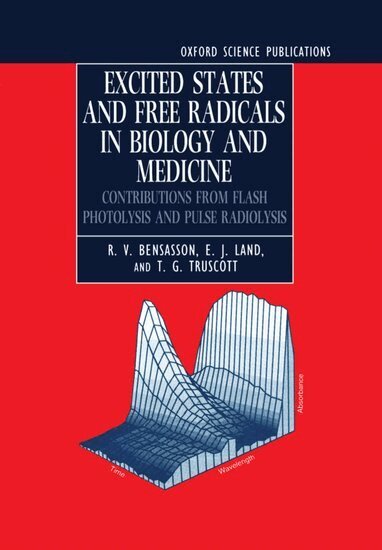
Excited States and Free Radicals in Biology and Medicine
Contributions from Flash Photolysis and Pulse Radiolysis
Av R. V. Bensasson, E. J. Land m. fl.
Inbunden, 1993
1853 kr
Lägg i varukorg
Excited states and free radicals are involved in the normal physiology of living systems; in pathological processes including lipid peoxidation, inflammation, Parkinson's disease, cancer, and ageing; in the mechanism of action of drugs, such as quinone antitumour agents, and in the …
Primary Photo-Processes in Biology and Medicine
E-bok, 2013
723 kr
Lägg i varukorg
Recently there have been major developments in the experimental techniques available for the study of the primary events following the absorption of ultra-violet and visible radiation by biological systems. These techniques, which include absorption, emission, resonance Raman, electron spin …
Primary Photo-Processes in Biology and Medicine
Häftad, 2013
542 kr
Lägg i varukorg
Recently there have been major developments in the experimental techniques available for the study of the primary events following the absorption of ultra-violet and visible radiation by biological systems. These techniques, which include absorption, emission, resonance Raman, electron spin …
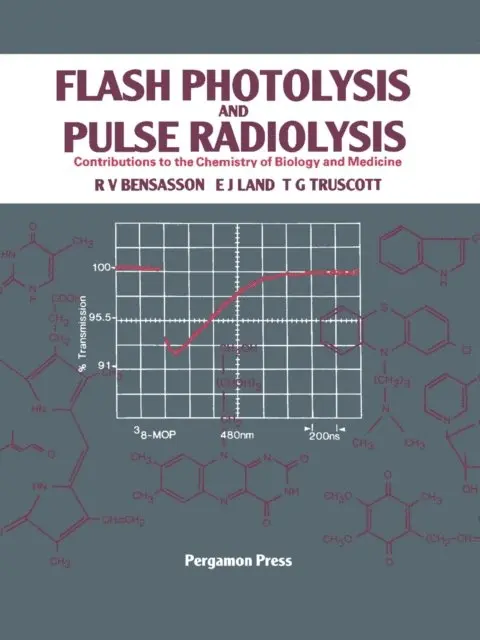
Flash Photolysis and Pulse Radiolysis
Contributions to the Chemistry of Biology and Medicine
Av T. G. Truscott, E. J. Land m. fl.
E-bok, 2013
807 kr
Lägg i varukorg
Flash Photolysis and Pulse Radiolysis: Contributions to the Chemistry of Biology and Medicine presents the interaction of radiation with biomolecules, which is either beneficial o deleterious to life. This book discusses the biochemical reactions that are not radiation-induced by selectively …