Rachel Basinger – författare
239 kr
Läs direkt efter köp
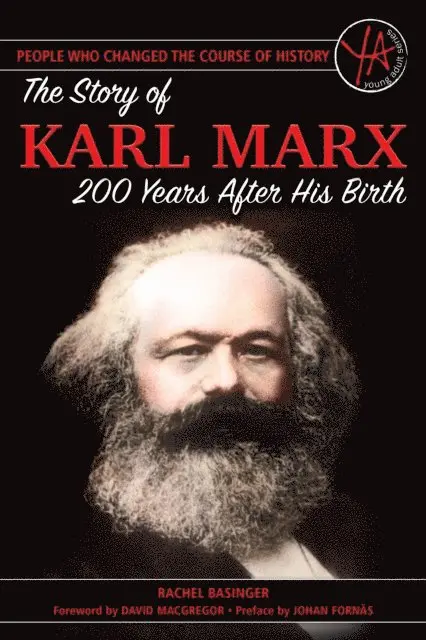
What if you could be a student in the morning, an accountant in the afternoon, and a physical therapist in the evening — then try three completely different trades the following day? This was Karl Marx’s vision for the world.
Marx, a 19th century German philosopher, believed the proletariat, or the working class, was enslaved by the bourgeoisie, or ruling class. Despite being a small percentage of the population, the bourgeoisie controlled the vast majority of the world’s wealth and all means of production. But what if all the workers of the world got together. Could they oust the ruling class?
Within a few decades of his death, Marx’s ideas swept across Europe and dramatically influenced the events of the 20th century. Millions perished at the hands of Russian dictator Joseph Stalin and other communist leaders, who followed their interpretations of Marx’s philosophy to its unintended ends. But long before Stalin assumed power or the Iron Curtain fell across Europe, there was a boy born into a German middle-class family in 1818. You will learn about Marx’s marriage to a young baroness, his seven children, and his longstanding relationship with fellow philosopher Friedrich Engels, one of the few people who could decipher Marx’s messy handwriting.
When you are done reading this book, you may not exclaim, “Workers of the world, unite!” (as Marx famously did at the end of “The Communist Manifesto”), but you’ll understand more of what he meant by that — and more about the man behind the statement.
219 kr
Läs direkt efter köp
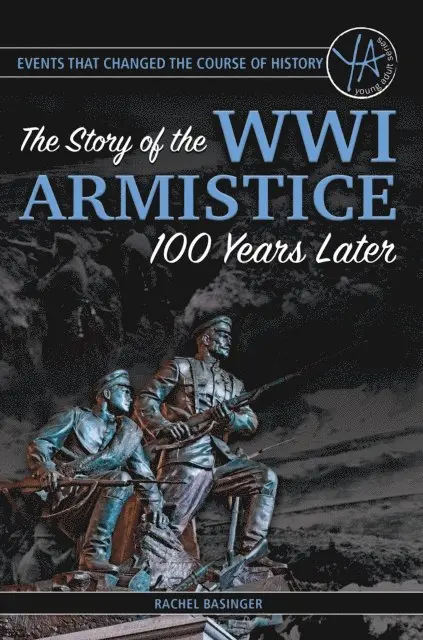
On the 11th hour of the 11th day of the 11th month in 1918, the whole world sighed with relief.
The city of London could turn on all the lights. The men along the Western Front could think about going home someday soon. Excited crowds could swell the streets across Europe. The most extensive war ever -- what we now call World War I -- had concluded. Earlier that morning in a forest in France, Marshal Ferdinand Foch, the supreme Allied commander, met with leading Germans to sign the armistice. After Foch''s second all-nighter of the war, an agreement was reached at 5:12 a.m. Foch sent a telegram to Allied leaders: "Hostilities will cease at 11 a.m."
In this book, you''ll learn the story of the armistice agreement itself: how the German leaders protested the harshness of the terms and how Foch agreed to a few concessions. But you''ll also learn how the armistice affected the lives of world leaders and ordinary people on that fateful day.
Civilians and politicians celebrated on the morning on November 11, but peace did not come soon enough for some. In the intervening hours between the signing of the armistice and 11 a.m., several thousand men died or were wounded in final assaults against the Germans.
Amidst the collective relief was a note of sorrow. The conclusion of the war made everyone think over its course -- the massive destruction of city and countryside, and the staggering loss of life. The war was over -- but life would never be the same.
282 kr
Tillfälligt slut
266 kr
Tillfälligt slut