Rebecca M. Basta – författare
Visar alla böcker från författaren . Handla med fri frakt och snabb leverans.
5 produkter
5 produkter
Inbunden, Engelska, 2026
1 348 kr
Skickas inom 5-8 vardagar
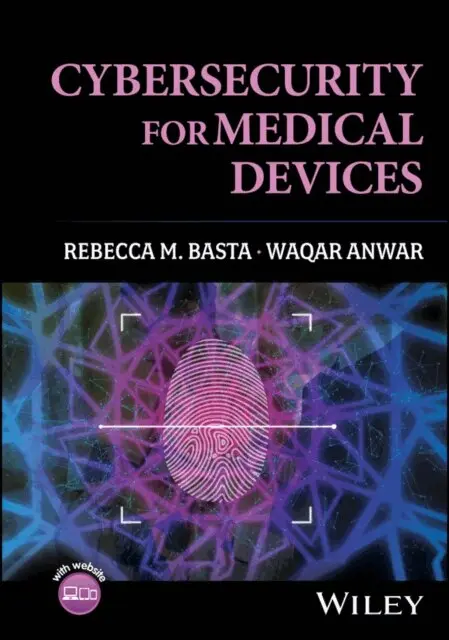
Protect medical devices with lifecycle security strategies that safeguard patients Connected medical devices from pacemakers to diagnostic imaging systems present unique cybersecurity vulnerabilities that directly impact patient safety. Cybersecurity for Medical Devices provides healthcare cybersecurity professionals and medical device engineers with actionable guidance on embedding security throughout the device lifecycle. Written by a Certified Health Data Analyst and cybersecurity specialist, this book integrates clinical realities with technical security frameworks. The book delivers step-by-step instruction in risk assessment, threat modeling, device architecture review, regulatory compliance, and incident response. It addresses how security measures must integrate with fast-paced healthcare delivery environments while establishing cybersecurity as an ethical imperative. Real-world examples ground theoretical concepts in documented incidents, tracing the evolution from security through obscurity to sophisticated threat models. The book also provides: Comprehensive frameworks for embedding security from device conception through decommission, addressing each phase of the medical device lifecycle systematicallyDetailed threat modeling approaches specific to networked medical equipment including implantable devices, diagnostic systems, and hospital network infrastructureGuidance on navigating regulatory compliance requirements while maintaining operational efficiency in high-pressure clinical environments and healthcare delivery settingsEthical frameworks positioning cybersecurity as a patient safety imperative rather than merely a technical checkbox or compliance requirementHistorical context explaining how medical device security evolved alongside increasingly sophisticated cyberattack methodologies targeting healthcare systemsHealthcare cybersecurity professionals, medical device engineers, regulatory compliance officers, and clinical IT managers will find this book connects security expertise with medical device engineering realities. Researchers and advanced students studying healthcare technology security gain practical frameworks applicable to emerging connected device challenges.
E-bok
Engelska, 20261 229 kr
Läs direkt efter köp
Protect medical devices with lifecycle security strategies that safeguard patients Connected medical devices from pacemakers to diagnostic imaging systems present unique cybersecurity vulnerabilities that directly impact patient safety. Cybersecurity for Medical Devices provides healthcare cybersecurity professionals and medical device engineers with actionable guidance on embedding security throughout the device lifecycle. Written by a Certified Health Data Analyst and cybersecurity specialist, this book integrates clinical realities with technical security frameworks. The book delivers step-by-step instruction in risk assessment, threat modeling, device architecture review, regulatory compliance, and incident response. It addresses how security measures must integrate with fast-paced healthcare delivery environments while establishing cybersecurity as an ethical imperative. Real-world examples ground theoretical concepts in documented incidents, tracing the evolution from security through obscurity to sophisticated threat models. The book also provides: Comprehensive frameworks for embedding security from device conception through decommission, addressing each phase of the medical device lifecycle systematically Detailed threat modeling approaches specific to networked medical equipment including implantable devices, diagnostic systems, and hospital network infrastructure Guidance on navigating regulatory compliance requirements while maintaining operational efficiency in high-pressure clinical environments and healthcare delivery settings Ethical frameworks positioning cybersecurity as a patient safety imperative rather than merely a technical checkbox or compliance requirement Historical context explaining how medical device security evolved alongside increasingly sophisticated cyberattack methodologies targeting healthcare systems Healthcare cybersecurity professionals, medical device engineers, regulatory compliance officers, and clinical IT managers will find this book connects security expertise with medical device engineering realities. Researchers and advanced students studying healthcare technology security gain practical frameworks applicable to emerging connected device challenges.
Inbunden, Engelska, 2027
1 344 kr
Kommande
Inbunden, Engelska, 2027
1 358 kr
Kommande
Inbunden, Engelska, 2027
1 443 kr
Kommande
Apply evolutionary biology to AI-driven cybersecurity attack and defense Offensive AI now discovers vulnerabilities, generates adversarial examples that defeat defensive models, and adapts in real time. Adversarial Symbiosis in Cybersecurity: Co-evolving AI for Attack, Defense and Governance reconceptualizes this landscape as a living ecosystem where defensive AI, offensive AI, and human operators continuously co-evolve through adaptive learning loops, with each side's adaptations shaping the other's trajectory. Drawing on predator-prey dynamics and biological co-evolution, the book delivers quantitative models, simulation methods, and practical design principles for building AI systems that adapt dynamically rather than merely detect threats. Later chapters address offensive AI capabilities including automated exploit discovery and adversarial example generation, while governance models balance innovation with ethics, safety, and regulatory compliance. The book also covers: Human-centered approaches integrating cognitive science, decision support design, and trust calibration into AI-augmented security operations workflowsReal-world case studies demonstrating co-evolutionary patterns in advanced persistent threat campaigns, phishing ecosystems, and IoT botnetsPractical architectures for designing adaptive defense systems that respond to evolving offensive techniques through continuous learning loopsMulti-agent reinforcement learning and meta-learning frameworks applied to emergent behaviors within adversarial cybersecurity environmentsGovernance and policy frameworks addressing ethical deployment of offensive AI capabilities alongside regulatory compliance requirementsWritten for security operations center analysts and managers, threat intelligence specialists, and incident response teams, this book also serves security architects, engineers, and CISOs seeking a rigorous co-evolutionary framework for understanding and operationalizing AI-driven cybersecurity strategy.