Richard Dawid – författare
Visar alla böcker från författaren Richard Dawid. Handla med fri frakt och snabb leverans.
5 produkter
String Theory and the Scientific Method
Inbunden, 2013
2149 kr
Lägg i varukorg
String theory has played a highly influential role in theoretical physics for nearly three decades and has substantially altered our view of the elementary building principles of the Universe. However, the theory remains empirically unconfirmed, and is expected to remain so for the foreseeable …
String Theory and the Scientific Method
Häftad, 2014
667 kr
Lägg i varukorg
String theory has played a highly influential role in theoretical physics for nearly three decades and has substantially altered our view of the elementary building principles of the Universe. However, the theory remains empirically unconfirmed, and is expected to remain so for the foreseeable …
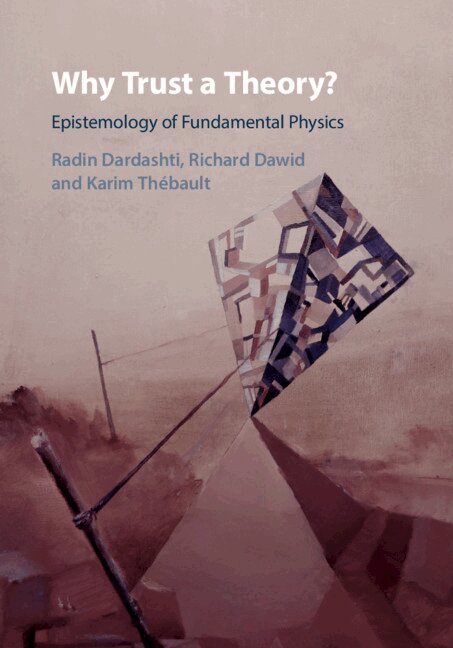
Why Trust a Theory?
Epistemology of Fundamental Physics
Av Radin Dardashti, Richard Dawid m. fl.
Inbunden, 2019
1200 kr
Lägg i varukorg
Do we need to reconsider scientific methodology in light of modern physics? Has the traditional scientific method become outdated, does it need to be defended against dangerous incursions, or has it always been different from what the canonical view suggests? To what extent should we accept …
Why Trust a Theory?
Epistemology of Fundamental Physics
Av Karim Thebault, Richard Dawid m. fl.
E-bok, 2019
1434 kr
Lägg i varukorg
Do we need to reconsider scientific methodology in light of modern physics? Has the traditional scientific method become outdated, does it need to be defended against dangerous incursions, or has it always been different from what the canonical view suggests? To what extent should we accept …