Richard Girling – författare
Visar alla böcker från författaren Richard Girling. Handla med fri frakt och snabb leverans.
9 produkter
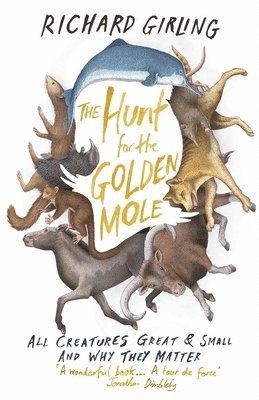
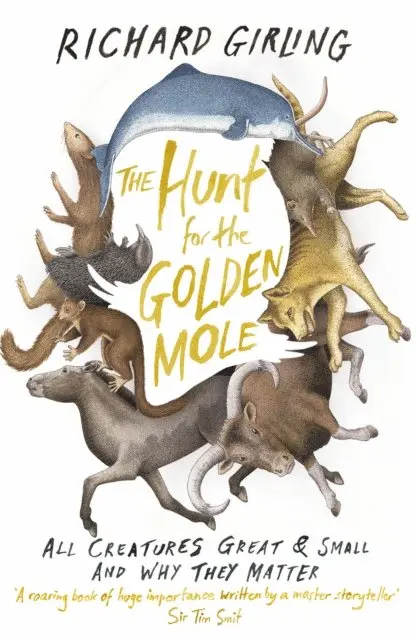
Hunt for the Golden Mole
All Creatures Great and Small, and Why They Matter
Häftad, 2015
187 kr
Lägg i varukorg
This story is a quest for an animal so rare that a sighting has never been recorded. The Somali golden mole was first described in 1964, but the sole evidence for its existence is a tiny fragment of jawbone found in an owl pellet. Intrigued by this elusive creature, and what it can tell us about …
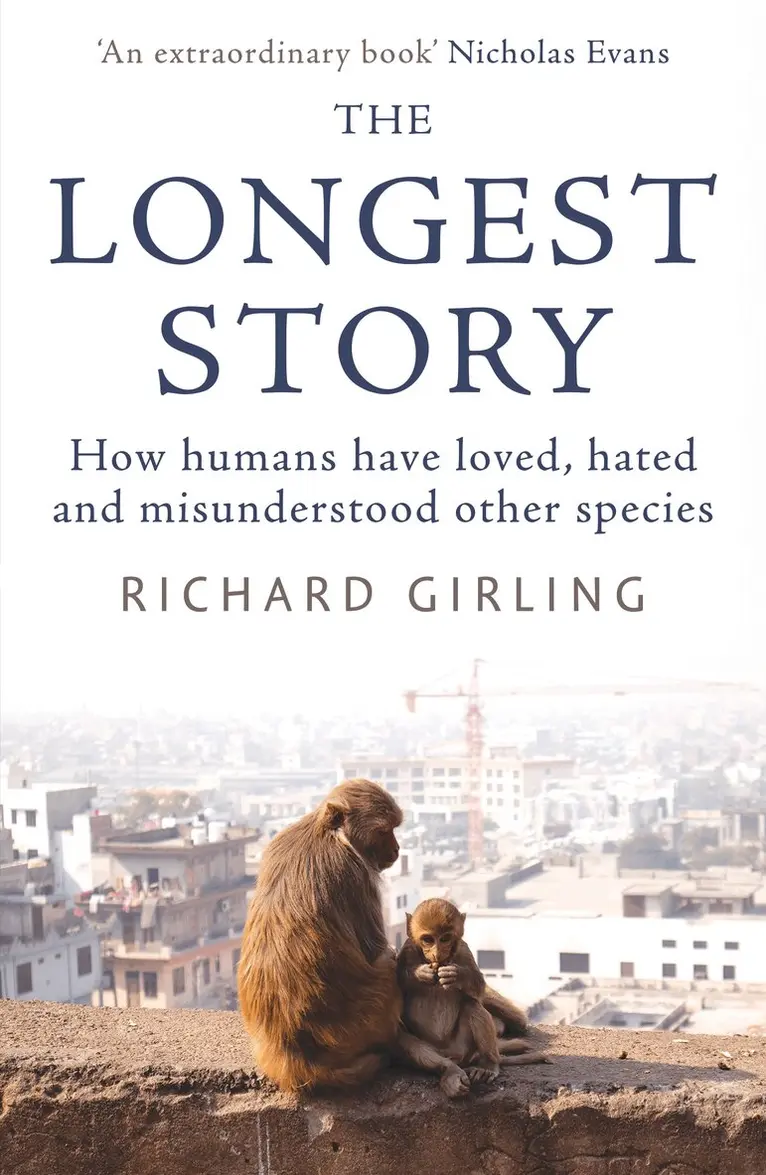
Longest Story
How humans have loved, hated and misunderstood other species
Häftad, 2022
149 kr
Lägg i varukorg
‘Lucid, informed and persuasive’ Evening Standard‘Thought-provoking’ Daily Mail‘An extraordinary book’ Nicholas Evans, author of The Horse WhispererThe history of humanity’s relationship with other species is baffling.Without animals there would be no us. We are all fellow travellers on the same …
Rubbish!
Dirt On Our Hands And Crisis Ahead
E-bok, 2011
147 kr
Lägg i varukorg
We can no longer cope with our waste. Every hour in the UK we throw away enough rubbish to fill the Albert hall - a statistic quoted so often that perhaps we've stopped imagining what it means. And every year the flow accelerates.This is the story of our rubbish - from the first human bowel …
Sea Change
Britain's Coastal Catastrophe
E-bok, 2011
147 kr
Lägg i varukorg
We have a special relationship with the sea. It is the single most powerful driver of our economy, our lifestyle and our politics. It affects what we eat, how we use the land, how we relate to our neighbours, how we travel, even the thickness of our coats. Yet we go on treating it, with childlike …
Hunt for the Golden Mole
All Creatures Great and Small, and Why They Matter
E-bok, 2014
144 kr
Lägg i varukorg
This story is a quest for an animal so rare that a sighting has never been recorded. The Somali golden mole was first described in 1964, but the sole evidence for its existence is a tiny fragment of jawbone found in an owl pellet. Intrigued by this elusive creature, and what it can tell us about …
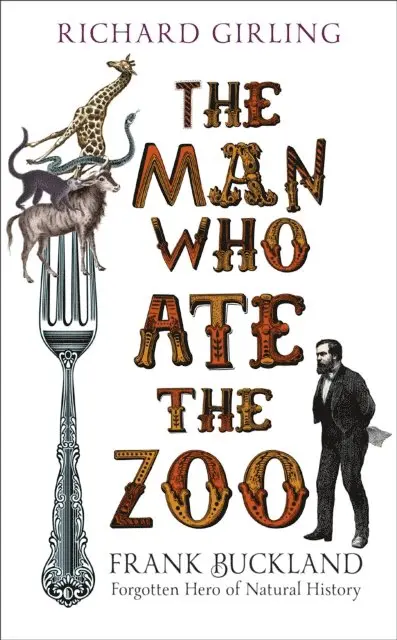
Man Who Ate the Zoo
Frank Buckland, forgotten hero of natural history
E-bok, 2016
147 kr
Lägg i varukorg
Frank Buckland was an extraordinary man – surgeon, natural historian, popular lecturer, bestselling writer, museum curator, and a conservationist before the concept even existed. Eccentric, revolutionary, prolific, he was one of the nineteenth century’s most improbable geniuses. His lifelong …
The Hunt for the Golden Mole: All Creatures Great & Small and Why They Matter
Häftad, 2015
257 kr
Lägg i varukorg
Man Who Ate the Zoo
Frank Buckland, forgotten hero of natural history
Häftad, 2017
187 kr
Lägg i varukorg
Frank Buckland was an extraordinary man – surgeon, natural historian, popular lecturer, bestselling writer, museum curator, and a conservationist before the concept even existed. Eccentric, revolutionary, prolific, he was one of the nineteenth century’s most improbable geniuses. His lifelong …
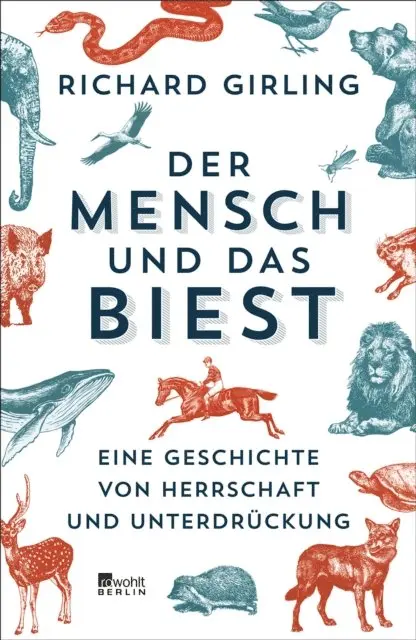
Der Mensch und das Biest
Eine Geschichte von Herrschaft und Unterdrückung
E-bok, 2021
283 kr
Lägg i varukorg
Einst waren sie sich so nah – bis sich ihre Wege unheilvoll trennten. Richard Girling erzählt die Geschichte des Verhältnisses von Mensch und Tier, global und durch alle Zeiten hindurch, wenn man so will: die längste Beziehungsgeschichte seit Menschengedenken. In einem Gang durch die Jahrhunderte, …