Richard J. Chasdi - Böcker
Visar alla böcker från författaren Richard J. Chasdi. Handla med fri frakt och snabb leverans.
6 produkter
6 produkter
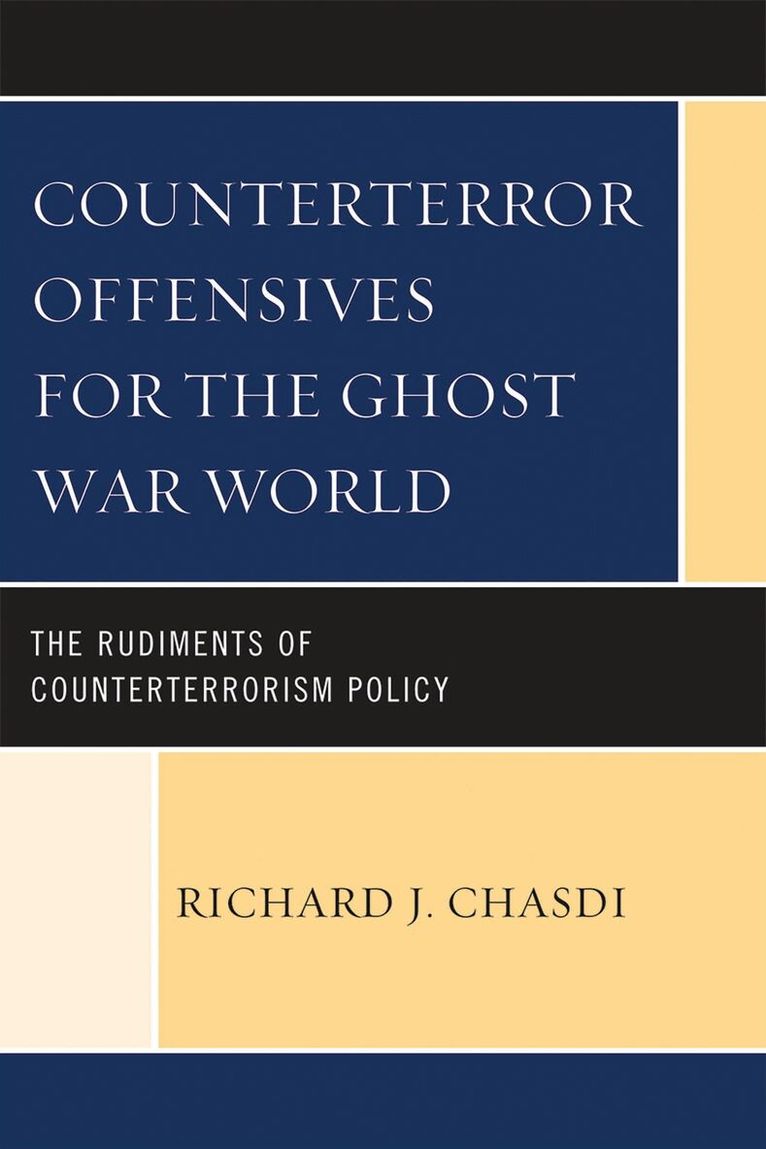
Counterterror Offensives for the Ghost War World
The Rudiments of Counterterrorism Policy
Inbunden, Engelska, 2010
2 648 kr
Skickas inom 5-8 vardagar
In Counterterror Offensives for the Ghost War World: The Rudiments of Counterterrorism Policy, Richard J. Chasdi has written a groundbreaking quantitative analysis that provides new insight into which types of counterterror practices work best and which types perform poorly in particular operational environments and circumstances. For Chasdi, "effectiveness" is defined as the capacity of counterterror practices to work with "stealth"-namely, without eliciting high amounts of related follow-up terrorist assaults. He moves beyond individual country analyses to tackle an analysis of counterterror practice effectiveness based on the type of political system of the country carrying out counterterror offensives and the power level of that country within the international political system. Chasdi furthermore provides essential qualitative descriptions of national security institutions, stakeholders, and processes to frame his quantitative results in ways that tie those findings to historical and contemporary political developments.
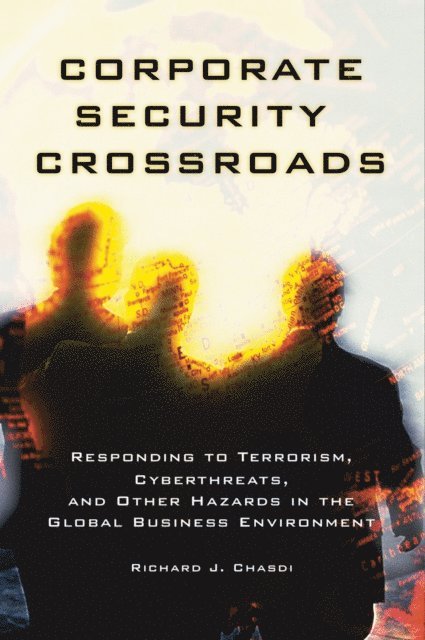
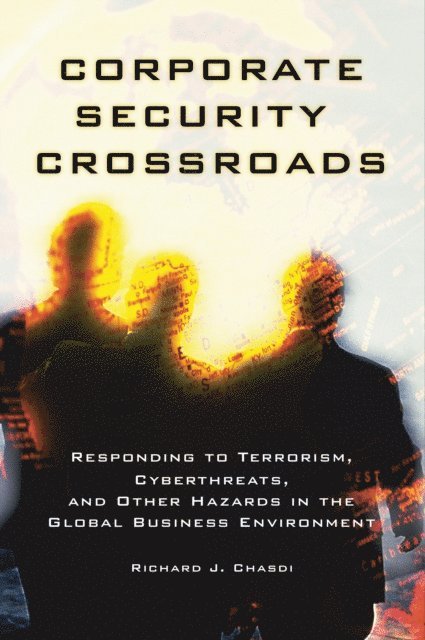
Corporate Security Crossroads
Responding to Terrorism, Cyberthreats, and Other Hazards in the Global Business Environment
Inbunden, Engelska, 2017
695 kr
Skickas inom 10-15 vardagar
Even though terrorism poses an increasing threat to multinational companies, corporate leaders can thwart attacks by learning to navigate the complexities of foreign governments, social unrest, and cultural dissonance.Multinational corporations are on the front lines of terrorism and cyberattacks—two of the world's biggest threats to global security. How can corporate leaders mitigate their organizations' risks and develop an infrastructure that detects and deters a security menace before it happens? This timely reference lays out essential political context and historical background to help executives identify contemporary threats and understand the interconnections between threat dynamics in an increasingly dangerous international environment.This compelling work is organized into seven chapters. The beginning chapters profile the specific risks for multinational companies and detail which global—and regional—factors might propagate violence targeted at American-based businesses. Next, two historical case studies on terrorist assaults at Tigantourine and Mombasa illustrate how counterterrorism can successfully thwart potential attacks against business targets. The final part describes industrial espionage and criminal activity and then outlines a corporate counterterror blueprint to combat the prospect of terrorism, providing specific recommendations for preventative measures.
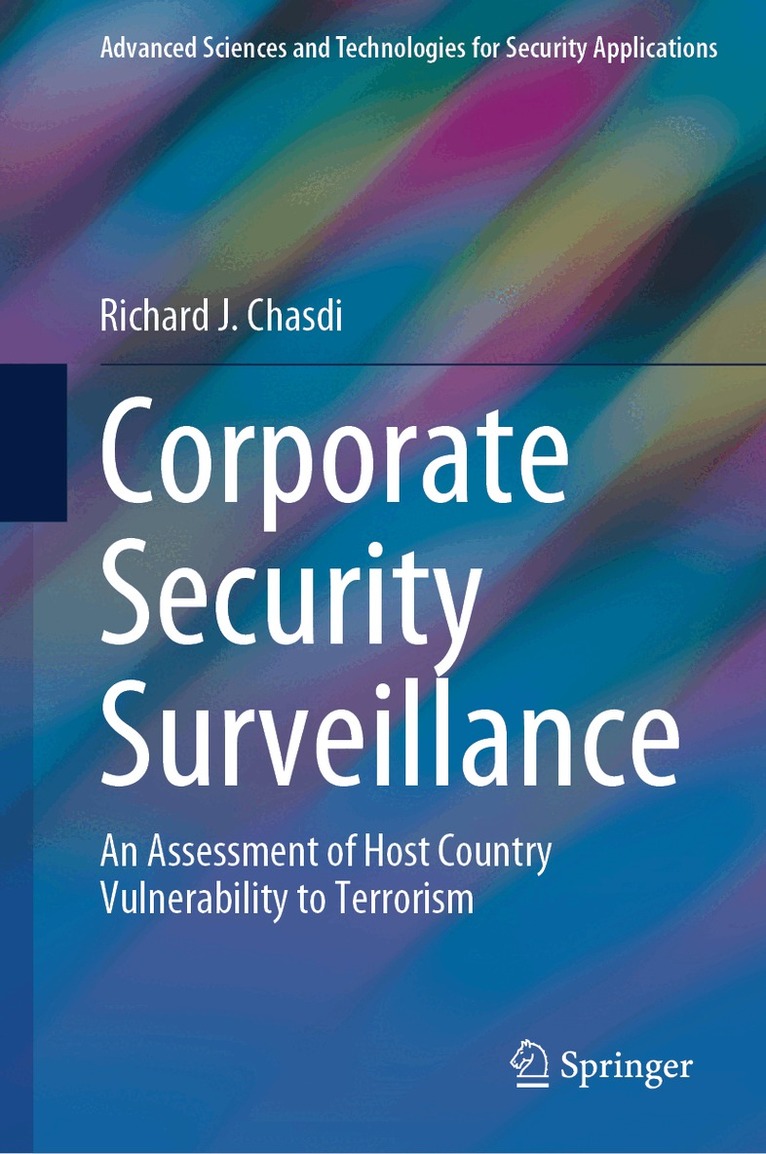
Corporate Security Surveillance
An Assessment of Host Country Vulnerability to Terrorism
Inbunden, Engelska, 2024
1 267 kr
Skickas inom 10-15 vardagar
In a world of globalization and technological change, terrorism continues to pose grave threats not only to more traditional targets such as civilians and government targets, but according to many experts, increasingly to multinational corporations and other international economic enterprises. This book broadens the understanding of the threats posed to the private sector thereby helping business executives in charge of security affairs prepare for new threats and unconventional threats in a continuously evolving world. Chasdi's Terrorist Assault Business Vulnerability Index (TABVI) now provides C-class executives with a way to measure (potential) host country and host country industry vulnerability and thus contributes a critical new standard to help appraise where and when MNCs and other international enterprises should marshal Foreign Direct Investment (FDI) and other resources. In addition, his statistical findings about different country operational environments work to frame TABVI findings and provide in-depth understandings of risk in several different (potential) host countries. While the focus is on traditional terrorist groups and criminal syndicalist organizations that use terrorism in particular developing world host countries, Chasdi's research also informs the business community about the context of political issues of contention defined by terrorist groups and their constituent supporters. Business leaders, government officials at national and local government levels, the academic community, and the media benefit from ideas proposed in this book.Brian M. Jenkins writes a carefully reasoned, comprehensive, and insightful Foreword that describes the importance of this topic; about Chasdi, he writes, "...I am an admirer of his uniquely imaginative approaches and always rigorous analysis. His work is invariably intellectually challenging and thought provoking. Read on."
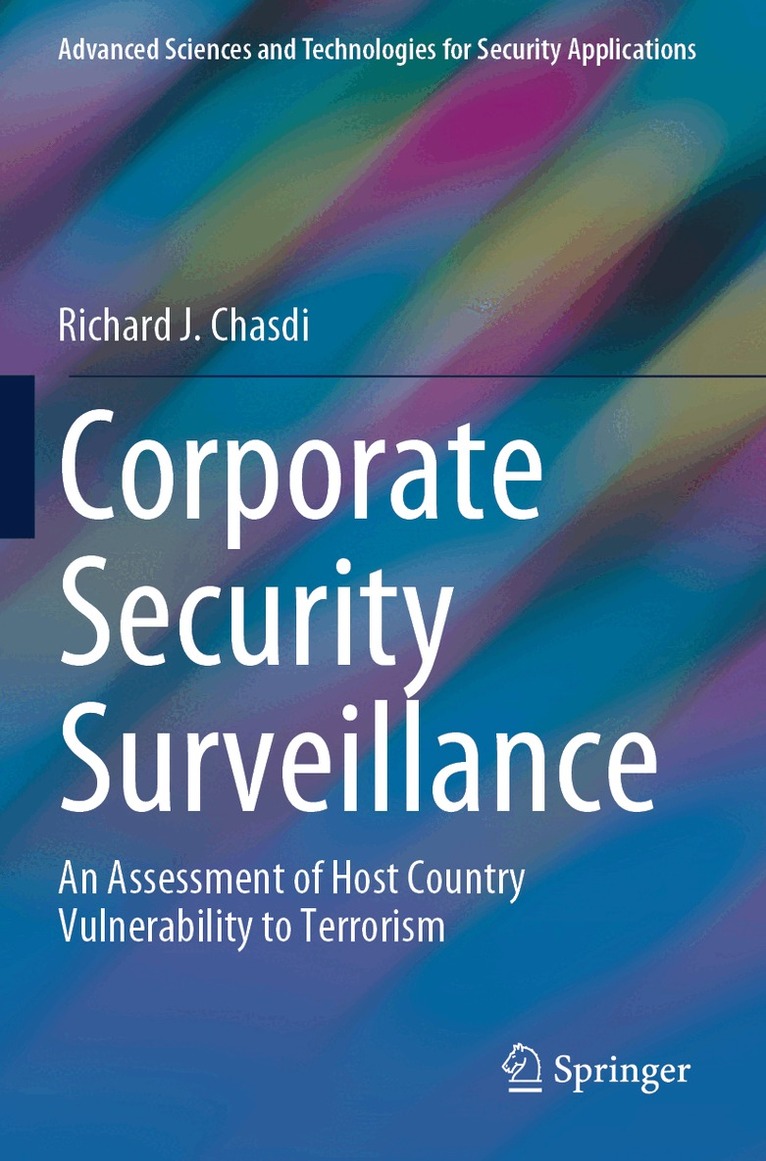
Corporate Security Surveillance
An Assessment of Host Country Vulnerability to Terrorism
Häftad, Engelska, 2025
1 267 kr
Skickas inom 10-15 vardagar
In a world of globalization and technological change, terrorism continues to pose grave threats not only to more traditional targets such as civilians and government targets, but according to many experts, increasingly to multinational corporations and other international economic enterprises. This book broadens the understanding of the threats posed to the private sector thereby helping business executives in charge of security affairs prepare for new threats and unconventional threats in a continuously evolving world. Chasdi's Terrorist Assault Business Vulnerability Index (TABVI) now provides C-class executives with a way to measure (potential) host country and host country industry vulnerability and thus contributes a critical new standard to help appraise where and when MNCs and other international enterprises should marshal Foreign Direct Investment (FDI) and other resources. In addition, his statistical findings about different country operational environments work to frame TABVI findings and provide in-depth understandings of risk in several different (potential) host countries. While the focus is on traditional terrorist groups and criminal syndicalist organizations that use terrorism in particular developing world host countries, Chasdi's research also informs the business community about the context of political issues of contention defined by terrorist groups and their constituent supporters. Business leaders, government officials at national and local government levels, the academic community, and the media benefit from ideas proposed in this book.Brian M. Jenkins writes a carefully reasoned, comprehensive, and insightful Foreword that describes the importance of this topic; about Chasdi, he writes, "...I am an admirer of his uniquely imaginative approaches and always rigorous analysis. His work is invariably intellectually challenging and thought provoking. Read on."
1 482 kr
Skickas inom 10-15 vardagar
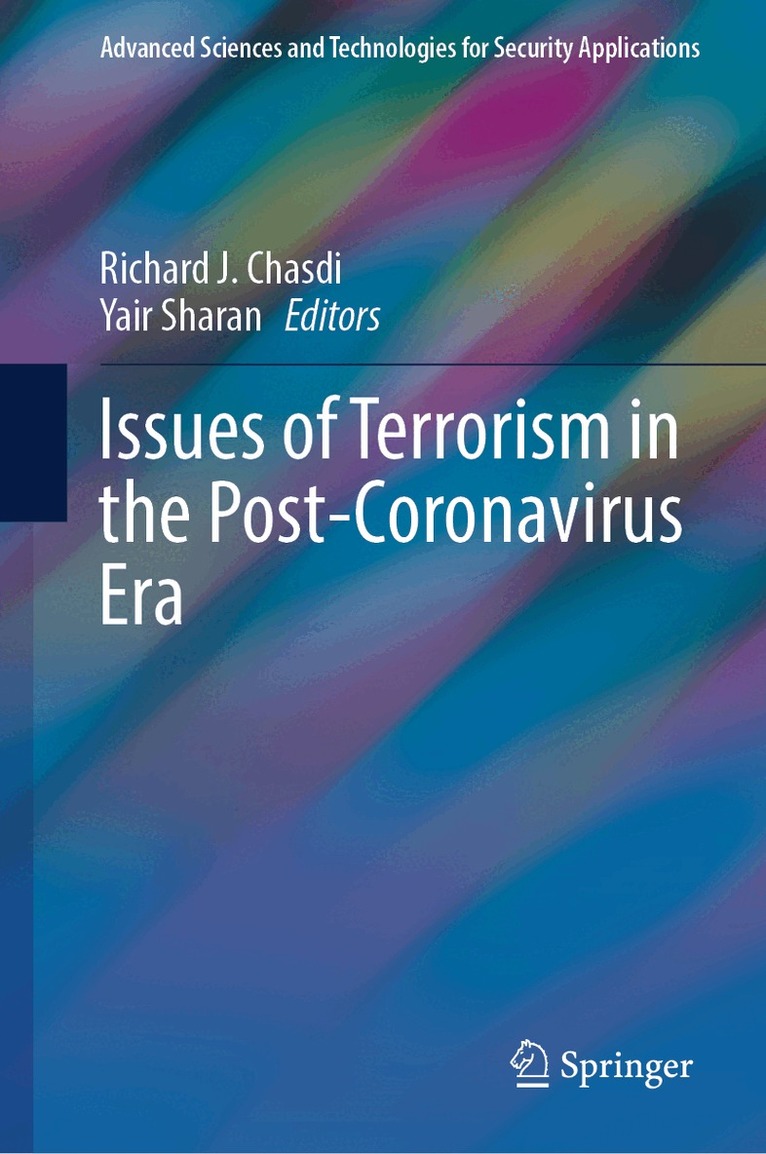
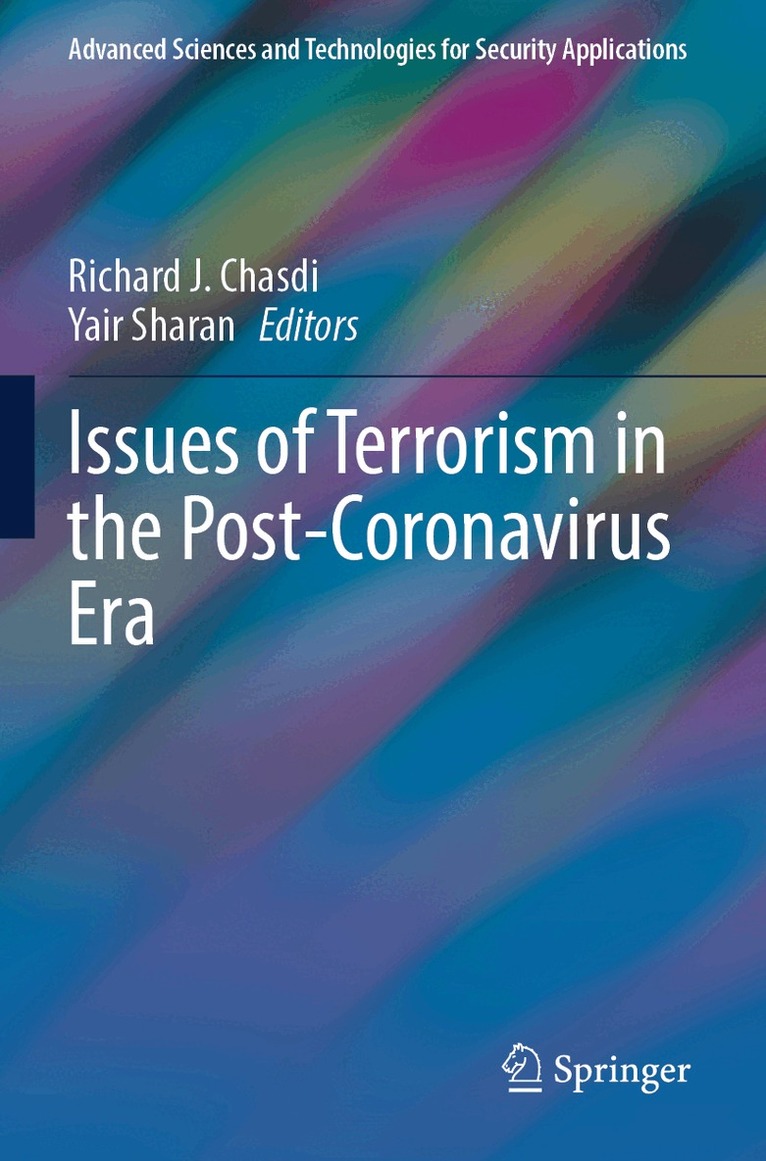
This edited compilation was written in the latter part of the Coronavirus pandemic of 2020, a watershed event in world history that illustrated wide-ranging systems and structural vulnerabilities worldwide. The book provides a framework for thinking about the environmental context of unconventional political conflict and intrinsic issues of continuity and change; it highlights significant potential terror threats, trajectories, and potential inflection points for consideration by policymakers, security experts, and counterterrorism practitioners.The book focuses on unfolding threats that will affect our security worldwide, including the consequences of the COVID-19 pandemic, the continuously evolving condition of environmental degradation and global warming, the probability of increased “enhanced terrorism” use, future technologies like gene editing and “Crisper,” and more. The book frames empirical links between the consequences of the COVID-19 pandemic, terrorism, and other international system factors within the context of our contemporary globalized world, to scope out basic uncertainties, and the subtleties and nuances of complexity that pose challenges and opportunities for policymakers. It discusses looming challenges to decisionmakers who must attempt to counter terror and crime and their expected convergence in the coming era. The use of novel foresight tools in the context of anticipatory defense, science communication methodologies, knowledge sharing, its dissemination, and management to overcome threat potential is presented.As one of the first books to delve into post-coronavirus consequences and to examine the linkages between these wide-ranging impacts, Issues of Terrorism in the Post-Coronavirus Era provides essential food for thought for decision-makers, policymakers, academics, global business leaders, students, and lay readers who are concerned about the future of humankind.
1 482 kr
Skickas inom 10-15 vardagar
This edited compilation was written in the latter part of the Coronavirus pandemic of 2020, a watershed event in world history that illustrated wide-ranging systems and structural vulnerabilities worldwide. The book provides a framework for thinking about the environmental context of unconventional political conflict and intrinsic issues of continuity and change; it highlights significant potential terror threats, trajectories, and potential inflection points for consideration by policymakers, security experts, and counterterrorism practitioners.The book focuses on unfolding threats that will affect our security worldwide, including the consequences of the COVID-19 pandemic, the continuously evolving condition of environmental degradation and global warming, the probability of increased “enhanced terrorism” use, future technologies like gene editing and “Crisper,” and more. The book frames empirical links between the consequences of the COVID-19 pandemic, terrorism, and other international system factors within the context of our contemporary globalized world, to scope out basic uncertainties, and the subtleties and nuances of complexity that pose challenges and opportunities for policymakers. It discusses looming challenges to decisionmakers who must attempt to counter terror and crime and their expected convergence in the coming era. The use of novel foresight tools in the context of anticipatory defense, science communication methodologies, knowledge sharing, its dissemination, and management to overcome threat potential is presented.As one of the first books to delve into post-coronavirus consequences and to examine the linkages between these wide-ranging impacts, Issues of Terrorism in the Post-Coronavirus Era provides essential food for thought for decision-makers, policymakers, academics, global business leaders, students, and lay readers who are concerned about the future of humankind.