Richard Potts – författare
Visar alla böcker från författaren Richard Potts. Handla med fri frakt och snabb leverans.
4 produkter
4 produkter
1 132 kr
Tillfälligt slut
The earliest sites at Olduvai Gorge in Tanzania are among the best documented and most important for studies of human evolution. This book investigates the behavior of hominids at Olduvai using data of stone tools and animal bones, as well as the results of work in taphonomy (how animals become fossils), the behavior of mammals, and a wide range of ecological theory and data. By illustrating the ways in which modern and prehistoric evidence is used in making interpretations, the author guides the reader through the geological, ecological, and archeological areas involved in the study of humans.Based on his study of the Olduvai excavations, animal life, and stone tools, the author carefully examines conventional views and proposals about the early Olduvai sites. First, the evidence of site geology, tool cut marks, and other clues to the formation of the Olduvai sites are explored. On this basis, the large mammal communities in which early hominids lived are investigated, using methods which compare sites produced mainly by hominids with others made by carnivores. Questions about hominid hunting, scavenging, and the importance of eating meat are then scrutinized. The leading alternative positions on each issue are discussed, providing a basis for understanding some of the most contentious debates in paleo-anthropology today.The dominant interpretive model for the artifact and bone accumulations at Olduvai and other Plio-Pleistocene sites has been that they represent "home bases," social foci similar to the campsites of hunter-gatherers. Based on paleo-ecological evidence and ecological models, the author critically analyzes the home base interpretation and proposes alternative views. A new view of the Olduvai sites - that they represent stone caches where hominids processed carcasses for food - is shown to have important implications for our understanding of hominid social behavior and evolution.
705 kr
Skickas inom 10-15 vardagar
The earliest sites at Olduvai Gorge in Tanzania are among the best documented and most important for studies of human evolution. This book investigates the behavior of hominids at Olduvai using data of stone tools and animal bones, as well as the results of work in taphonomy (how animals become fossils), the behavior of mammals, and a wide range of ecological theory and data. By illustrating the ways in which modern and prehistoric evidence is used in making interpretations, the author guides the reader through the geological, ecological, and archeological areas involved in the study of humans.Based on his study of the Olduvai excavations, animal life, and stone tools, the author carefully examines conventional views and proposals about the early Olduvai sites. First, the evidence of site geology, tool cut marks, and other clues to the formation of the Olduvai sites are explored. On this basis, the large mammal communities in which early hominids lived are investigated, using methods which compare sites produced mainly by hominids with others made by carnivores. Questions about hominid hunting, scavenging, and the importance of eating meat are then scrutinized. The leading alternative positions on each issue are discussed, providing a basis for understanding some of the most contentious debates in paleo-anthropology today.The dominant interpretive model for the artifact and bone accumulations at Olduvai and other Plio-Pleistocene sites has been that they represent "home bases," social foci similar to the campsites of hunter-gatherers. Based on paleo-ecological evidence and ecological models, the author critically analyzes the home base interpretation and proposes alternative views. A new view of the Olduvai sites - that they represent stone caches where hominids processed carcasses for food - is shown to have important implications for our understanding of hominid social behavior and evolution.
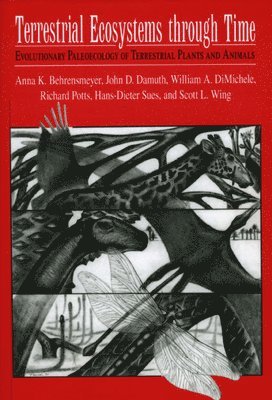
Terrestrial Ecosystems Through Time
Evolutionary Paleoecology of Terrestrial Plants and Animals
Inbunden, Engelska, 1992
1 332 kr
Skickas inom 5-8 vardagar
Breathtaking in scope, this is the first survey of the entire ecological history of life on land--from the earliest traces of terrestrial organisms over 400 million years ago to the beginning of human agriculture. By providing myriad insights into the unique ecological information contained in the fossil record, it establishes a new and ambitious basis for the study of evolutionary paleoecology of land ecosystems. A joint undertaking of the Evolution of Terrestrial Ecosystems Consortium at the National Museum of Natural History, Smithsonian Institution, and twenty-six additional researchers, this book begins with four chapters that lay out the theoretical background and methodology of the science of evolutionary paleoecology. Included are a comprehensive review of the taphonomy and paleoenvironmental settings of fossil deposits as well as guidelines for developing ecological characterizations of extinct organisms and the communities in which they lived.The remaining three chapters treat the history of terrestrial ecosystems through geological time, emphasizing how ecological interactions have changed, the rate and tempo of ecosystem change, the role of exogenous "forcing factors" in generating ecological change, and the effect of ecological factors on the evolution of biological diversity. The six principal authors of this volume are all associated with the Evolution of Terrestrial Ecosystems program at the National Museum of Natural History, Smithsonian Institution.
Terrestrial Ecosystems Through Time
Evolutionary Paleoecology of Terrestrial Plants and Animals
Häftad, Engelska, 1992
499 kr
Skickas inom 5-8 vardagar
Breathtaking in scope, this is the first survey of the entire ecological history of life on land—from the earliest traces of terrestrial organisms over 400 million years ago to the beginning of human agriculture. By providing myriad insights into the unique ecological information contained in the fossil record, it establishes a new and ambitious basis for the study of evolutionary paleoecology of land ecosystems. A joint undertaking of the Evolution of Terrestrial Ecosystems Consortium at the National Museum of Natural History, Smithsonian Institution, and twenty-six additional researchers, this book begins with four chapters that lay out the theoretical background and methodology of the science of evolutionary paleoecology. Included are a comprehensive review of the taphonomy and paleoenvironmental settings of fossil deposits as well as guidelines for developing ecological characterizations of extinct organisms and the communities in which they lived. The remaining three chapters treat the history of terrestrial ecosystems through geological time, emphasizing how ecological interactions have changed, the rate and tempo of ecosystem change, the role of exogenous "forcing factors" in generating ecological change, and the effect of ecological factors on the evolution of biological diversity. The six principal authors of this volume are all associated with the Evolution of Terrestrial Ecosystems program at the National Museum of Natural History, Smithsonian Institution.