Robert F. Weir – författare
Visar alla böcker från författaren Robert F. Weir. Handla med fri frakt och snabb leverans.
5 produkter
Selective Nontreatment of Handicapped Newborns
Moral Dilemmas in Neonatal Medicine
Häftad, 1988
442 kr
Lägg i varukorg
Who decides, and on what basis, how to treat a child with severe birth defects? Any decisions made on such cases are painful and complex, and have far-reaching consequences for society at large. Addressing the medical, legal, and ethical aspects of the issue, Robert Weir presents the first serious …
The Stored Tissue Issue
Biomedical research, ethics and law in the era of genomic medicine
Av Robert F Weir, Robert S Olick
Inbunden, 2004
997 kr
Lägg i varukorg
This book provides a thorough, well-balanced analysis of common research practices with banked tissues, DNA, and genetic data. Describing many examples of beneficial tissue research, the authors focus on problematic research practices, controversial cases, and federal and institutional policies …
Stored Tissue Issue
Biomedical Research, Ethics, and Law in the Era of Genomic Medicine
Av Robert S. Olick, Robert F. Weir
E-bok, 2004
548 kr
Lägg i varukorg
Genetics research with stored human tissues provides many benefits and holds much promise. Yet how this critical research is conducted sometimes raises serious ethical, legal, and social concerns, and it is difficult to balance the promise of biomedical research with our time-honored commitments to …
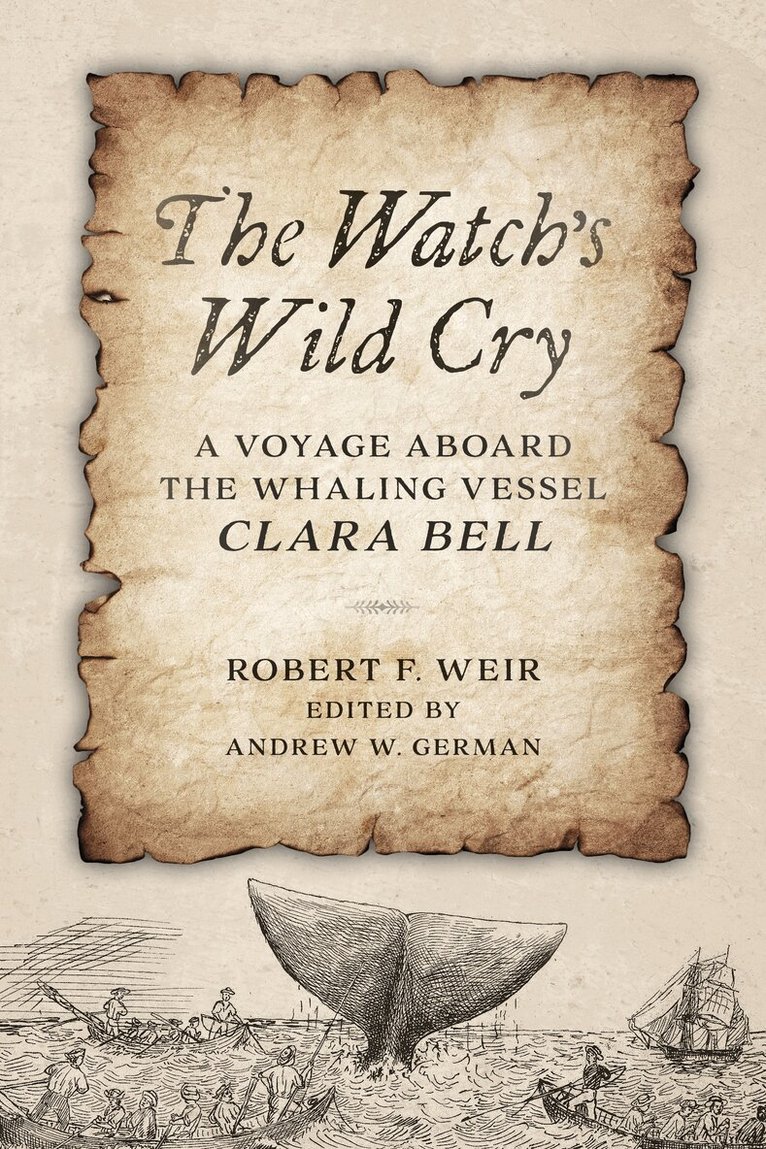
Watch's Wild Cry
A Voyage Aboard the Whaling Vessel Clara Bell
Av Robert F. Weir, Andrew W. German
Inbunden, 2024
398 kr
Lägg i varukorg
At the age of nineteen, Robert F. Weir of West Point, New York, ran away to sea, where he spent the next ten years. Assuming the pseudonym Robert Wallace, Weir sailed aboard the bark Clara Bell out of Mattapoisett, Massachusetts, in 1855 for a voyage to the whaling grounds of the Atlantic and …
Watch's Wild Cry
A Voyage Aboard the Whaling Vessel Clara Bell
Av Robert F. Weir, Andrew W. German
E-bok, 2024
339 kr
Lägg i varukorg
At the age of nineteen, Robert F. Weir of West Point, New York, ran away to sea, where he spent the next ten years of his life. Assuming the pseudonym Robert Wallace, Weir sailed aboard the bark Clara Bell out of New Bedford, Massachusetts, in 1855 for a voyage to the whaling grounds of the …