Robert R. Cargill – författare
Visar alla böcker från författaren Robert R. Cargill. Handla med fri frakt och snabb leverans.
5 produkter
5 produkter
E-bok
Engelska, 2016126 kr
Läs direkt efter köp
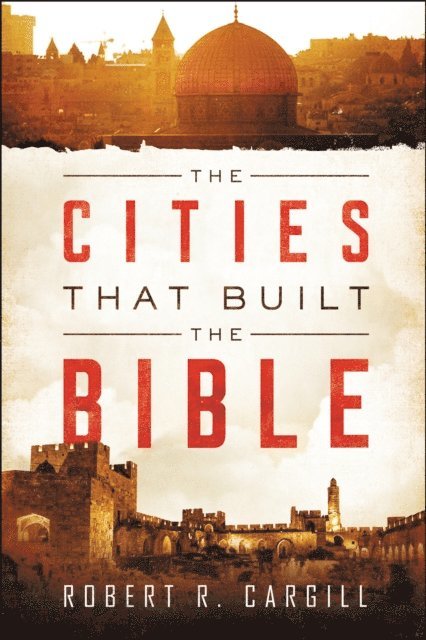
“An expert guide and teacher . . . delves into difficult topics with humor and ease. . . . Well worth reading.” —Biblical ArcheologyFor many, the names Bethlehem, Babylon, and Jerusalem are known as the setting for epic stories from the Bible. What often gets missed is that these cities are far more than just the setting for the Bible and its characters—they were instrumental to the creation of the Bible as we know it today.Robert Cargill, archeologist, Bible scholar, and host of the History Channel series Bible Secrets Revealed, blends archaeology, biblical history, and personal journey as he explores ancient cities and their role in the creation of the Bible. He reveals surprising facts such as what the Bible says about the birth of Jesus and how Mary’s Virgin Birth caused problems for the early church. We’ll also see how the God of the Old Testament was influenced by other deities, and how far more books were left out of the Bible than were let in during the canonization process.The Cities That Built the Bible is a magnificent tour through fourteen cities: the Phoenicia cities of Tyre, Sidon, and Byblos, Ugarit, Nineveh, Babylon, Megiddo, Athens, Alexandria, Jerusalem, Qumran, Bethlehem, Nazareth, and Rome. Along the way, Cargill includes photos of artifacts, dig sites, ruins, and relics in this fascinating exploration that sheds new light on the Bible.“A lively personal account that puts flesh and bones on the tale.” —Richard Elliott Friedman, Th.D. author of The Bible with Sources Revealed“Cargill transports readers to these ancient locales, illuminating the municipal dynamics that shaped the Bible.” —Booklist
Inbunden, Engelska, 2019
1 154 kr
Skickas inom 5-8 vardagar
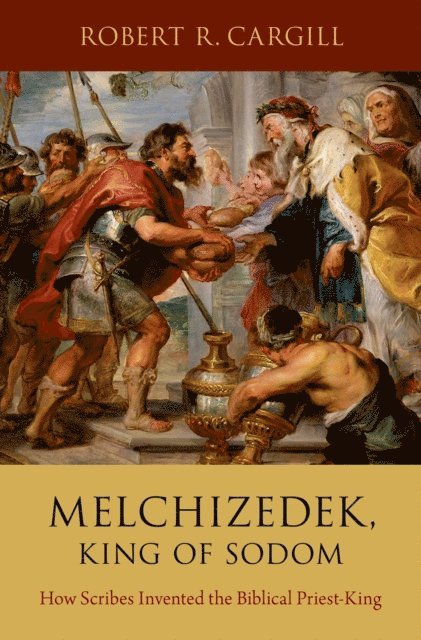
The biblical figure Melchizedek appears just twice in the Hebrew Bible, and once more in the Christian New Testament. Cited as both the king of Shalem-understood by most scholars to be Jerusalem-and as an eternal priest without ancestry, Melchizedek's appearances become textual justification for tithing to the Levitical priests in Jerusalem and for the priesthood of Jesus Christ himself. But what if the text was manipulated? Robert R. Cargill explores the Hebrew and Greek texts concerning Melchizedek's encounter with Abraham in Genesis as a basis to unravel the biblical mystery of this character's origins. The textual evidence that Cargill presents shows that Melchizedek was originally known as the king of Sodom and that the later traditions about Sodom forced biblical scribes to invent a new location, Shalem, for Melchizedek's priesthood and reign. Cargill also identifies minor, strategic changes to the Hebrew Bible and the Samaritan Pentateuch that demonstrate an evolving, polemical, sectarian discourse between Jews and Samaritans competing for the superiority of their respective temples and holy mountains. The resulting literary evidence was used as the ideological motivation for identifying Shalem with Jerusalem in the Second Temple Jewish tradition. A brief study with far-reaching implications, Melchizedek, King of Sodom reopens discussion of not only this unusual character, but also the origins of both the priesthood of Christ and the role of early Israelite priest-kings.
E-bok
PDF, Engelska, 20191 264 kr
Läs direkt efter köp
The biblical figure Melchizedek appears just twice in the Hebrew Bible, and once more in the Christian New Testament. Cited as both the king of Shalem-understood by most scholars to be Jerusalem-and as an eternal priest without ancestry, Melchizedek''s appearances become textual justification for tithing to the Levitical priests in Jerusalem and for the priesthood of Jesus Christ himself. But what if the text was manipulated?Robert R. Cargill explores the Hebrew and Greek texts concerning Melchizedek''s encounter with Abraham in Genesis as a basis to unravel the biblical mystery of this character''s origins. The textual evidence that Cargill presents shows that Melchizedek was originally known as the king of Sodom and that the later traditions about Sodom forced biblical scribes to invent a new location, Shalem, for Melchizedek''s priesthood and reign. Cargill also identifies minor, strategic changes to the Hebrew Bible and the Samaritan Pentateuch that demonstrate an evolving, polemical, sectarian discourse between Jews and Samaritans competing for the superiority of their respective temples and holy mountains. The resulting literary evidence was used as the ideological motivation for identifying Shalem with Jerusalem in the Second Temple Jewish tradition.A brief study with far-reaching implications, Melchizedek, King of Sodom reopens discussion of not only this unusual character, but also the origins of both the priesthood of Christ and the role of early Israelite priest-kings.
E-bok
Engelska, 20191 264 kr
Läs direkt efter köp
The biblical figure Melchizedek appears just twice in the Hebrew Bible, and once more in the Christian New Testament. Cited as both the king of Shalem-understood by most scholars to be Jerusalem-and as an eternal priest without ancestry, Melchizedek''s appearances become textual justification for tithing to the Levitical priests in Jerusalem and for the priesthood of Jesus Christ himself. But what if the text was manipulated?Robert R. Cargill explores the Hebrew and Greek texts concerning Melchizedek''s encounter with Abraham in Genesis as a basis to unravel the biblical mystery of this character''s origins. The textual evidence that Cargill presents shows that Melchizedek was originally known as the king of Sodom and that the later traditions about Sodom forced biblical scribes to invent a new location, Shalem, for Melchizedek''s priesthood and reign. Cargill also identifies minor, strategic changes to the Hebrew Bible and the Samaritan Pentateuch that demonstrate an evolving, polemical, sectarian discourse between Jews and Samaritans competing for the superiority of their respective temples and holy mountains. The resulting literary evidence was used as the ideological motivation for identifying Shalem with Jerusalem in the Second Temple Jewish tradition.A brief study with far-reaching implications, Melchizedek, King of Sodom reopens discussion of not only this unusual character, but also the origins of both the priesthood of Christ and the role of early Israelite priest-kings.
E-bok
PDF, Engelska, 20191 869 kr
Läs direkt efter köp
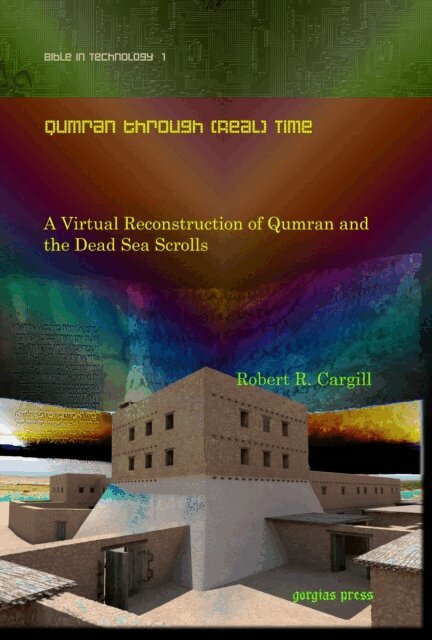
This book proposes a new occupation model for the remains of Khirbet Qumran, the site associated with the discovery of the Dead Sea Scrolls. Using the latest in virtual reality technology, the author reconstructs the site of Qumran and demonstrates that the site was initially built as a Hasmonean fortress, and was later expanded into a residence for a self-sufficient community responsible for the Dead Sea Scrolls.