In a story that spans from the founding of immigrant parishes in the early twentieth century to the rise of the Chicano civil rights movement in the early 1970s, Roberto R. Trevino discusses how an intertwining of ethnic identity and Catholic faith equipped Mexican Americans in Houston to overcome adversity and find a place for themselves in the Bayou City. Houston's native-born and immigrant Mexicans alike found solidarity and sustenance in their Catholicism, a distinctive style that evolved from the blending of the religious sensibilities and practices of Spanish Christians and New World indigenous peoples. Employing church records, newspapers, family letters, mementos, and oral histories, Trevino reconstructs the history of several predominately Mexican American parishes in Houston. He explores Mexican American Catholic life from the most private and mundane, such as home altar worship and everyday speech and behavior, to the most public and dramatic, such as neighborhood processions and civil rights marches. He demonstrates how Mexican Americans' religious faith helped to mold and preserve their identity, structured family and community relationships as well as institutions, provided both spiritual and material sustenance, and girded their long quest for social justice.
In a story that spans from the founding of immigrant parishes in the early twentieth century to the rise of the Chicano civil rights movement in the early 1970s, Roberto R. Trevino discusses how an intertwining of ethnic identity and Catholic faith equipped Mexican Americans in Houston to overcome adversity and find a place for themselves in the Bayou City. Houston''s native-born and immigrant Mexicans alike found solidarity and sustenance in their Catholicism, a distinctive style that evolved from the blending of the religious sensibilities and practices of Spanish Christians and New World indigenous peoples. Employing church records, newspapers, family letters, mementos, and oral histories, Trevino reconstructs the history of several predominately Mexican American parishes in Houston. He explores Mexican American Catholic life from the most private and mundane, such as home altar worship and everyday speech and behavior, to the most public and dramatic, such as neighborhood processions and civil rights marches. He demonstrates how Mexican Americans'' religious faith helped to mold and preserve their identity, structured family and community relationships as well as institutions, provided both spiritual and material sustenance, and girded their long quest for social justice.
Like the rosary itself, the influence of Catholicism on the social and historical development of the American West has been both visible and hidden: visible in the effects of personal conviction on lives and communities; hidden in that the fuller context of this important American religious group has been largely marginalized or undervalued in traditional historiographic treatments of the region. This volume, an outgrowth of the 2004 Walter Prescott Webb Memorial Lectures, seeks to redress this imbalance. Editors Roberto R. Trevino and Richard Francaviglia have assembled here a variety of scholarly voices to present, according to the preface, ""little-known stories about a religion whose traditions and adherents had until recently remained largely at the periphery of U.S. history narratives."" The result is a work that offers at once a fuller portrait of the Catholic experience in and impact on the American West, and also tantalizing glimpses that are highly suggestive of fruitful areas for further study. The contributors to ""Catholicism in the American West"" bring to light the variety, the hardships, and, ultimately, some of the triumphs of Catholicism in the American West. These studies are fine examples of the scholarship currently ""reshaping how historians understand the role of Catholicism both in the development of the West and in the broader history of the nation.
In a story that spans from the founding of immigrant parishes in the early twentieth century to the rise of the Chicano civil rights movement in the early 1970s, Roberto R. Trevino discusses how an intertwining of ethnic identity and Catholic faith equipped Mexican Americans in Houston to overcome adversity and find a place for themselves in the Bayou City. Houston''s native-born and immigrant Mexicans alike found solidarity and sustenance in their Catholicism, a distinctive style that evolved from the blending of the religious sensibilities and practices of Spanish Christians and New World indigenous peoples. Employing church records, newspapers, family letters, mementos, and oral histories, Trevino reconstructs the history of several predominately Mexican American parishes in Houston. He explores Mexican American Catholic life from the most private and mundane, such as home altar worship and everyday speech and behavior, to the most public and dramatic, such as neighborhood processions and civil rights marches. He demonstrates how Mexican Americans'' religious faith helped to mold and preserve their identity, structured family and community relationships as well as institutions, provided both spiritual and material sustenance, and girded their long quest for social justice.
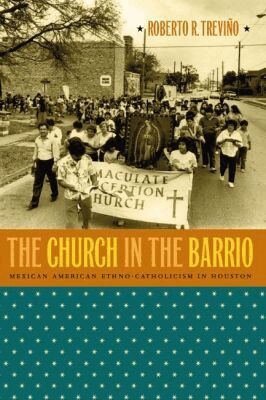
In a story that spans from the founding of immigrant parishes in the early twentieth century to the rise of the Chicano civil rights movement in the early 1970s, Roberto R. Trevino discusses how an intertwining of ethnic identity and Catholic faith equipped Mexican Americans in Houston to overcome adversity and find a place for themselves in the Bayou City. Houston's native-born and immigrant Mexicans alike found solidarity and sustenance in their Catholicism, a distinctive style that evolved from the blending of the religious sensibilities and practices of Spanish Christians and New World indigenous peoples. Employing church records, newspapers, family letters, mementos, and oral histories, Trevino reconstructs the history of several predominately Mexican American parishes in Houston. He explores Mexican American Catholic life from the most private and mundane, such as home altar worship and everyday speech and behavior, to the most public and dramatic, such as neighborhood processions and civil rights marches. He demonstrates how Mexican Americans' religious faith helped to mold and preserve their identity, structured family and community relationships as well as institutions, provided both spiritual and material sustenance, and girded their long quest for social justice.
In a story that spans from the founding of immigrant parishes in the early twentieth century to the rise of the Chicano civil rights movement in the early 1970s, Roberto R. Trevino discusses how an intertwining of ethnic identity and Catholic faith equipped Mexican Americans in Houston to overcome adversity and find a place for themselves in the Bayou City. Houston''s native-born and immigrant Mexicans alike found solidarity and sustenance in their Catholicism, a distinctive style that evolved from the blending of the religious sensibilities and practices of Spanish Christians and New World indigenous peoples. Employing church records, newspapers, family letters, mementos, and oral histories, Trevino reconstructs the history of several predominately Mexican American parishes in Houston. He explores Mexican American Catholic life from the most private and mundane, such as home altar worship and everyday speech and behavior, to the most public and dramatic, such as neighborhood processions and civil rights marches. He demonstrates how Mexican Americans'' religious faith helped to mold and preserve their identity, structured family and community relationships as well as institutions, provided both spiritual and material sustenance, and girded their long quest for social justice.
Like the rosary itself, the influence of Catholicism on the social and historical development of the American West has been both visible and hidden: visible in the effects of personal conviction on lives and communities; hidden in that the fuller context of this important American religious group has been largely marginalized or undervalued in traditional historiographic treatments of the region. This volume, an outgrowth of the 2004 Walter Prescott Webb Memorial Lectures, seeks to redress this imbalance. Editors Roberto R. Trevino and Richard Francaviglia have assembled here a variety of scholarly voices to present, according to the preface, ""little-known stories about a religion whose traditions and adherents had until recently remained largely at the periphery of U.S. history narratives."" The result is a work that offers at once a fuller portrait of the Catholic experience in and impact on the American West, and also tantalizing glimpses that are highly suggestive of fruitful areas for further study. The contributors to ""Catholicism in the American West"" bring to light the variety, the hardships, and, ultimately, some of the triumphs of Catholicism in the American West. These studies are fine examples of the scholarship currently ""reshaping how historians understand the role of Catholicism both in the development of the West and in the broader history of the nation.
In a story that spans from the founding of immigrant parishes in the early twentieth century to the rise of the Chicano civil rights movement in the early 1970s, Roberto R. Trevino discusses how an intertwining of ethnic identity and Catholic faith equipped Mexican Americans in Houston to overcome adversity and find a place for themselves in the Bayou City. Houston''s native-born and immigrant Mexicans alike found solidarity and sustenance in their Catholicism, a distinctive style that evolved from the blending of the religious sensibilities and practices of Spanish Christians and New World indigenous peoples. Employing church records, newspapers, family letters, mementos, and oral histories, Trevino reconstructs the history of several predominately Mexican American parishes in Houston. He explores Mexican American Catholic life from the most private and mundane, such as home altar worship and everyday speech and behavior, to the most public and dramatic, such as neighborhood processions and civil rights marches. He demonstrates how Mexican Americans'' religious faith helped to mold and preserve their identity, structured family and community relationships as well as institutions, provided both spiritual and material sustenance, and girded their long quest for social justice.