Rod Andrew Jr. – författare
Visar alla böcker från författaren Rod Andrew Jr.. Handla med fri frakt och snabb leverans.
16 produkter
Marines' Fight for Survival
War, Politics, and Institutional Crisis, 1945-1952
E-bok, 2025
323 kr
Lägg i varukorg
The compelling history of how the US Marines and their allies fought to preserve the Corps and establish its role in national defense.Only five years after Marines raised the American flag on Iwo Jima, the United States Marine Corps was close to becoming a hollow force. A parsimonious Truman …
Marines' Fight for Survival
War, Politics, and Institutional Crisis, 1945-1952
E-bok, 2025
323 kr
Lägg i varukorg
The compelling history of how the US Marines and their allies fought to preserve the Corps and establish its role in national defense.Only five years after Marines raised the American flag on Iwo Jima, the United States Marine Corps was close to becoming a hollow force. A parsimonious Truman …
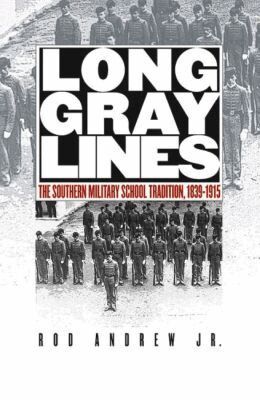
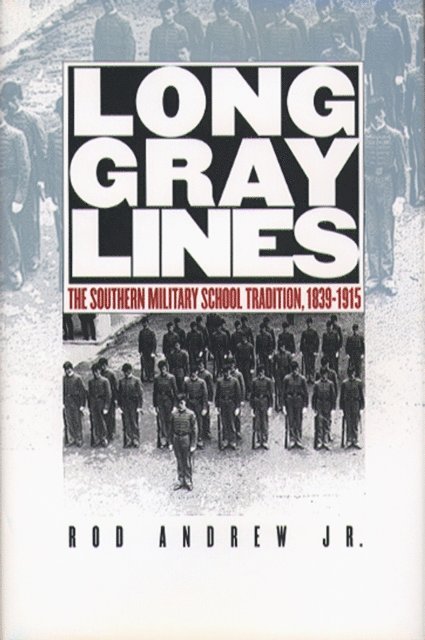
Long Gray Lines
The Southern Military School Tradition, 1839-1915
Häftad, 2004
461 kr
Lägg i varukorg
Challenging assumptions about a distinctive ""southern military tradition,"" Rod Andrew demonstrates that southern military schools were less concerned with preparing young men for actual combat than with instilling in their students broader values of honor, patriotism, civic duty, and virtue. …
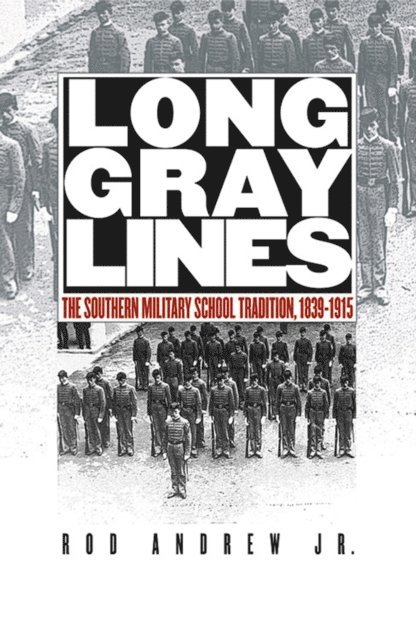
Long Gray Lines
The Southern Military School Tradition, 1839-1915
E-bok, 2003
520 kr
Lägg i varukorg
Military training was a prominent feature of higher education across the nineteenth-century South. Virginia Military Institute and the Citadel, as well as land-grant schools such as Texas A&M, Auburn, and Clemson, organized themselves on a military basis, requiring their male students to wear …
Wade Hampton
Confederate Warrior to Southern Redeemer
E-bok, 2009
276 kr
Lägg i varukorg
One of the South’s most illustrious military leaders, Wade Hampton III was for a time the commander of all Lee’s cavalry and at the end of the war was the highest-ranking Confederate cavalry officer. Yet for all Hampton’s military victories, he also suffered devastating losses in his family and …
Wade Hampton
Confederate Warrior to Southern Redeemer
E-bok, 2013
1241 kr
Lägg i varukorg
One of the South''s most illustrious military leaders, Wade Hampton III was for a time the commander of all Lee''s cavalry and at the end of the war was the highest-ranking Confederate cavalry officer. Yet for all Hampton''s military victories, he also suffered devastating losses in his family and …
Wade Hampton
Confederate Warrior to Southern Redeemer
Häftad, 2013
442 kr
Lägg i varukorg
One of the South's most illustrious military leaders, Wade Hampton III was for a time the commander of all Lee's cavalry and at the end of the war was the highest-ranking Confederate cavalry officer. Yet for all Hampton's military victories, he also suffered devastating losses in his family and …
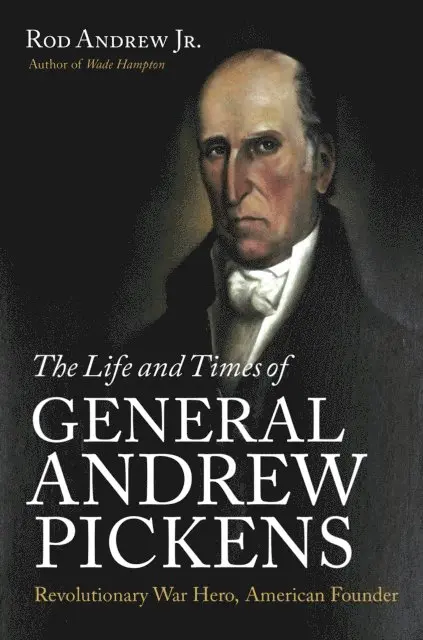
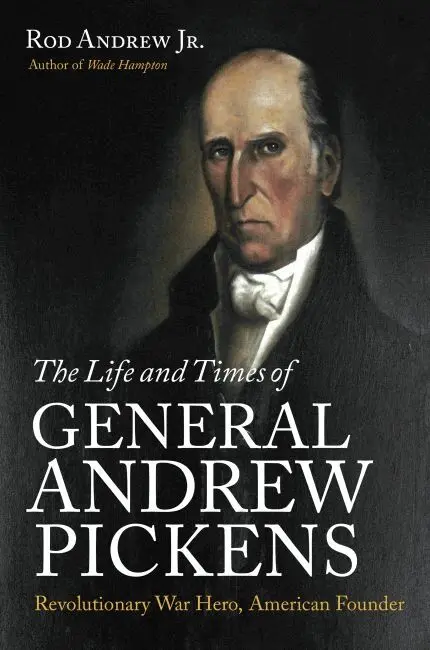
Life and Times of General Andrew Pickens
Revolutionary War Hero, American Founder
E-bok, 2017
599 kr
Lägg i varukorg
Andrew Pickens (1739–1817), the hard-fighting South Carolina militia commander of the American Revolution, was the hero of many victories against British and Loyalist forces. In this book, Rod Andrew Jr. offers an authoritative and comprehensive biography of Pickens the man, the general, the …
Life and Times of General Andrew Pickens
Revolutionary War Hero, American Founder
E-bok, 2017
2482 kr
Lägg i varukorg
Andrew Pickens (1739–1817), the hard-fighting South Carolina militia commander of the American Revolution, was the hero of many victories against British and Loyalist forces. In this book, Rod Andrew Jr. offers an authoritative and comprehensive biography of Pickens the man, the general, the …
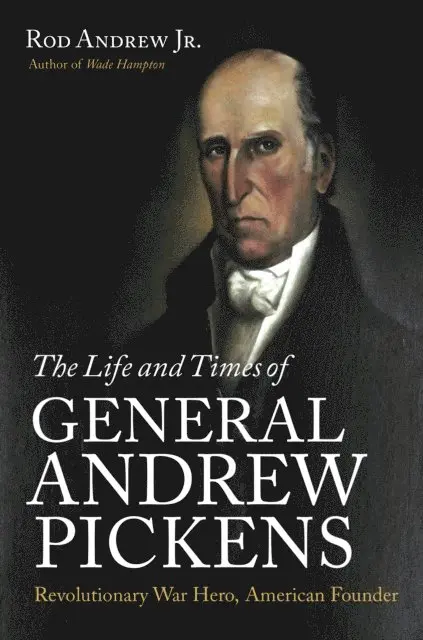
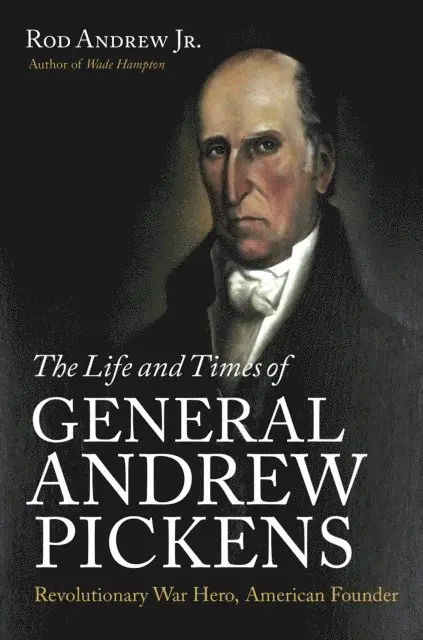
Life and Times of General Andrew Pickens
Revolutionary War Hero, American Founder
Häftad, 2022
458 kr
Lägg i varukorg
Andrew Pickens (1739–1817), the hard-fighting South Carolina militia commander of the American Revolution, was the hero of many victories against British and Loyalist forces. In this book, Rod Andrew Jr. offers an authoritative and comprehensive biography of Pickens the man, the general, the …
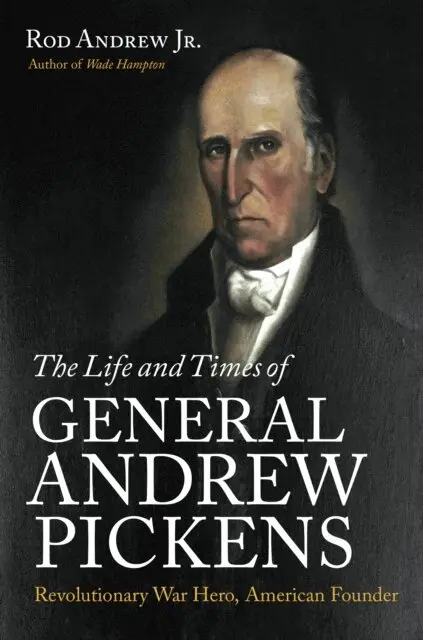
Life and Times of General Andrew Pickens
Revolutionary War Hero, American Founder
E-bok, 2017
515 kr
Lägg i varukorg
Andrew Pickens (1739–1817), the hard-fighting South Carolina militia commander of the American Revolution, was the hero of many victories against British and Loyalist forces. In this book, Rod Andrew Jr. offers an authoritative and comprehensive biography of Pickens the man, the general, the …
Life and Times of General Andrew Pickens
Revolutionary War Hero, American Founder
E-bok, 2017
2482 kr
Lägg i varukorg
Andrew Pickens (1739–1817), the hard-fighting South Carolina militia commander of the American Revolution, was the hero of many victories against British and Loyalist forces. In this book, Rod Andrew Jr. offers an authoritative and comprehensive biography of Pickens the man, the general, the …
Long Gray Lines
The Southern Military School Tradition, 1839-1915
E-bok, 2003
535 kr
Lägg i varukorg
Military training was a prominent feature of higher education across the nineteenth-century South. Virginia Military Institute and the Citadel, as well as land-grant schools such as Texas A&M, Auburn, and Clemson, organized themselves on a military basis, requiring their male students to wear …
Wade Hampton
Confederate Warrior to Southern Redeemer
E-bok, 2009
276 kr
Lägg i varukorg
One of the South’s most illustrious military leaders, Wade Hampton III was for a time the commander of all Lee’s cavalry and at the end of the war was the highest-ranking Confederate cavalry officer. Yet for all Hampton’s military victories, he also suffered devastating losses in his family and …
Wade Hampton
Confederate Warrior to Southern Redeemer
E-bok, 2013
1180 kr
Lägg i varukorg
One of the South’s most illustrious military leaders, Wade Hampton III was for a time the commander of all Lee’s cavalry and at the end of the war was the highest-ranking Confederate cavalry officer. Yet for all Hampton’s military victories, he also suffered devastating losses in his family and …