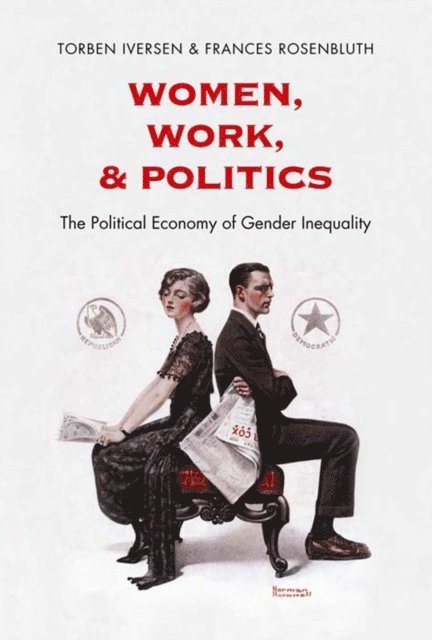
Looking at women's power in the home, in the workplace, and in politics from a political economy perspective, Torben Iversen and Frances Rosenbluth demonstrate that equality is tied to demand for women's labor outside the home, which is a function of structural, political, and institutional conditions. They go on to explain several anomalies of modern gender politics: why women vote differently from men; why women are better represented in the workforce in the United States than in other countries but less well represented in politics; why men share more of the household work in some countries than in others; and why some countries have such low fertility rates. The first book to integrate the micro-level of families with the macro-level of national institutions, Women, Work, and Politics presents an original and groundbreaking approach to gender inequality.
How popular democracy has paradoxically eroded trust in political systems worldwide, and how to restore confidence in democratic politics Democracies across the world are adopting reforms to bring politics closer to the people. Parties have turned to primaries and local caucuses to select candidates. Ballot initiatives and referenda allow citizens to enact laws directly. Many democracies now use proportional representation, encouraging smaller, more specific parties rather than two dominant ones. Yet voters keep getting angrier. There is a steady erosion of trust in politicians, parties, and democratic institutions, culminating most recently in major populist victories in the United States, the United Kingdom, and elsewhere. Frances Rosenbluth and Ian Shapiro argue that devolving power to the grass roots is part of the problem, not the solution. Efforts to decentralize political decision-making make governments and especially political parties less effective and less able to address constituents’ long-term interests. To revive confidence in governance, we must restructure our political systems to restore power to the core institution of representative democracy: the political party.
Looking at women's power in the home, in the workplace, and in politics from a political economy perspective, Torben Iversen and Frances Rosenbluth demonstrate that equality is tied to demand for women's labor outside the home, which is a function of structural, political, and institutional conditions. They go on to explain several anomalies of modern gender politics: why women vote differently from men; why women are better represented in the workforce in the United States than in other countries but less well represented in politics; why men share more of the household work in some countries than in others; and why some countries have such low fertility rates. The first book to integrate the micro-level of families with the macro-level of national institutions, Women, Work, and Politics presents an original and groundbreaking approach to gender inequality.
How popular democracy has paradoxically eroded trust in political systems worldwide, and how to restore confidence in democratic politics Democracies across the world are adopting reforms to bring politics closer to the people. Parties have turned to primaries and local caucuses to select candidates. Ballot initiatives and referenda allow citizens to enact laws directly. Many democracies now use proportional representation, encouraging smaller, more specific parties rather than two dominant ones. Yet voters keep getting angrier. There is a steady erosion of trust in politicians, parties, and democratic institutions, culminating most recently in major populist victories in the United States, the United Kingdom, and elsewhere. Frances Rosenbluth and Ian Shapiro argue that devolving power to the grass roots is part of the problem, not the solution. Efforts to decentralize political decision-making make governments and especially political parties less effective and less able to address constituents’ long-term interests. To revive confidence in governance, we must restructure our political systems to restore power to the core institution of representative democracy: the political party.