Sanna Wolk – författare
656 kr
Skickas
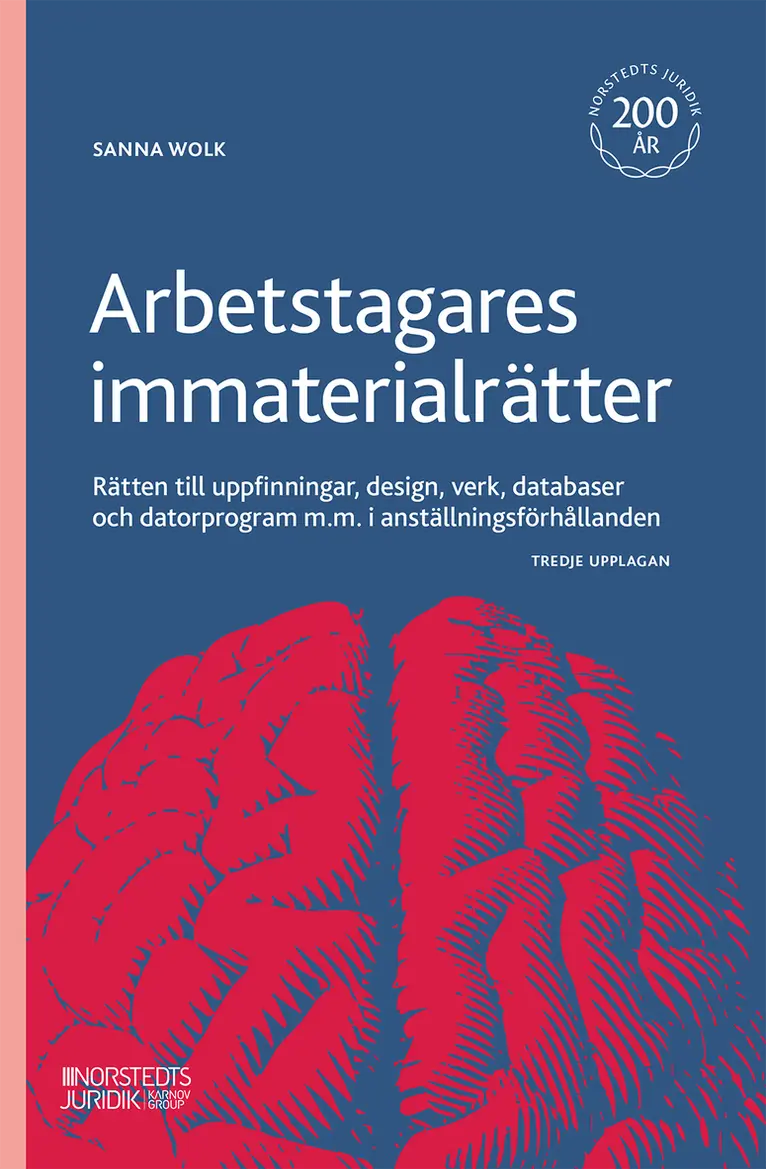
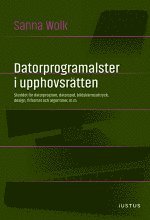
Idag är de immateriella tillgångarna, som uppfinningar, datorprogram, databaser och mycket mer, många gånger de allra viktigaste för företag. Eftersom de flesta immaterialrätter skapas inom ramen för anställningsförhållanden, är det viktigt för företagen att tillgodogöra sig rättigheternas ekonomiska värde. Arbetsgivaren eftersträvar följaktligen normalt att de immaterialrätter och ekonomiska värden som är resultatet av verksamheten tillfaller företaget.
I Arbetstagares immaterialrätter ges en samlad framställning av rättsövergången i anställningsförhållanden och parternas rättigheter och skyldigheter beträffande anställdas immaterialrätter. I boken behandlas arbetsgivarens förvärv av arbetstagares ensamrätter – främst upphovsrätt, design/formgivning och patent – och arbetstagarens lagstiftade, presumerade eller eventuellt förhandlade ekonomiska ersättning för den rätt som arbetsgivaren förvärvar. Det redogörs särskilt för de ersättningsbedömningar som gjorts vid Statens nämnd för arbetstagares uppfinningar (SNAU) och den skiljenämnd som finns på det kollektivavtalsreglerade området. Också de särskilda förhållanden som gäller vid universitet och högskola samt rätten till hyrda arbetstagares immaterialrätter behandlas i boken. Vidare diskuteras vad som gäller vid överlappande immaterialrättsliga skyddsformer, när olika principer för rättigheternas övergång i anställningsförhållanden kan vara tillämpliga samtidigt. Problemen på området beskrivs och analyserar med en praktisk ekonomisk ansats.
1 562 kr
Skickas inom 5-8 vardagar
1 325 kr
Läs direkt efter köp
EU Copyright Law
Subsistence, Exploitation and Protection of Rights
Morten Rosenmeier, Kacper Szkalej and Sanna Wolk
Against a background in which technology continues to change the ways we create, use, distribute and consume cultural content – and where there has been a noticeable increase in the body of case law of Court of Justice of the European Union (CJEU) relating to copyright – copyright protection has become an essential component of the knowledge-based economy and the information society. This book, structured around the various rights and issues rather than the legislative instruments, greatly facilitates an understanding of the complex legal area of European Union (EU) copyright law and provides for a more conscious application of these rules.
Among the issues and topics covered are the following:
the CJEU’s interpretation of EU copyright law and application of fundamental rights; authorship and ownership of copyright; protection of computer programs and databases; scope of exclusive rights, such as communication to the public and distribution, including rental and lending; application of limitations and exceptions; cross-border access to online content services; digital exhaustion of copyright; and enforcement of copyright and cross-border issues;With its practical approach to the substance of the various legal rules and principles both at EU level and in the various EU Member States, the book clearly describes in detail how copyright law functions throughout the EU. Professionals, business entities and academics who must be familiar with this dynamic legal area, especially in the digital environment, will benefit greatly from the book’s clear consideration of legal questions that arise in connection with copyright issues.
1 325 kr
Läs direkt efter köp
EU Copyright Law
Subsistence, Exploitation and Protection of Rights
Morten Rosenmeier, Kacper Szkalej and Sanna Wolk
Against a background in which technology continues to change the ways we create, use, distribute and consume cultural content – and where there has been a noticeable increase in the body of case law of Court of Justice of the European Union (CJEU) relating to copyright – copyright protection has become an essential component of the knowledge-based economy and the information society. This book, structured around the various rights and issues rather than the legislative instruments, greatly facilitates an understanding of the complex legal area of European Union (EU) copyright law and provides for a more conscious application of these rules.
Among the issues and topics covered are the following:
the CJEU’s interpretation of EU copyright law and application of fundamental rights; authorship and ownership of copyright; protection of computer programs and databases; scope of exclusive rights, such as communication to the public and distribution, including rental and lending; application of limitations and exceptions; cross-border access to online content services; digital exhaustion of copyright; and enforcement of copyright and cross-border issues;With its practical approach to the substance of the various legal rules and principles both at EU level and in the various EU Member States, the book clearly describes in detail how copyright law functions throughout the EU. Professionals, business entities and academics who must be familiar with this dynamic legal area, especially in the digital environment, will benefit greatly from the book’s clear consideration of legal questions that arise in connection with copyright issues.
2 598 kr
Skickas inom 3-6 vardagar
2 353 kr
Läs direkt efter köp
In today’s knowledge-based global economy, most inventions are made by employed persons through their employers’ research and development activities. However, methods of establishing rights over an employee’s intellectual property assets are relatively uncertain in the absence of international solutions. Given that increasingly more businesses establish entities in different countries and more employees co-operate across borders, it becomes essential for companies to be able to establish the conditions under which ownership subsists in intellectual property created in employment relationships in various countries.
This comparative law publication describes and analyses employers’ acquisition of employees’ intellectual property rights, first in general and then in depth. This second edition of the book considers thirty-four different jurisdictions worldwide. The book was developed within the framework of the International Association for the Protection of Intellectual Property (AIPPI), a non-affiliated, non-profit organization dedicated to improving and promoting the protection of intellectual property at both national and international levels.
Among the issues and topics covered by the forty-nine distinguished contributors are the following:
• different approaches in different law systems;• choice of law for contracts;• harmonizing international jurisdiction rules;• conditions for recognition and enforcement of foreign judgments;• employees’ rights in copyright, semiconductor chips, inventions, designs, plant varieties and utility models on a country-by-country basis;• employee remuneration right;• parties’ duty to inform; and• instances for disputes.With its wealth of information on an increasingly important subject for practitioners in every jurisdiction, this book is sure to be put to constant use by corporate lawyers and in-house counsel everywhere. It is also exceptionally valuable as a thorough resource for academics and researchers interested in the international harmonization of intellectual property law.
2 353 kr
Läs direkt efter köp
In today’s knowledge-based global economy, most inventions are made by employed persons through their employers’ research and development activities. However, methods of establishing rights over an employee’s intellectual property assets are relatively uncertain in the absence of international solutions. Given that increasingly more businesses establish entities in different countries and more employees co-operate across borders, it becomes essential for companies to be able to establish the conditions under which ownership subsists in intellectual property created in employment relationships in various countries.
This comparative law publication describes and analyses employers’ acquisition of employees’ intellectual property rights, first in general and then in depth. This second edition of the book considers thirty-four different jurisdictions worldwide. The book was developed within the framework of the International Association for the Protection of Intellectual Property (AIPPI), a non-affiliated, non-profit organization dedicated to improving and promoting the protection of intellectual property at both national and international levels.
Among the issues and topics covered by the forty-nine distinguished contributors are the following:
• different approaches in different law systems;• choice of law for contracts;• harmonizing international jurisdiction rules;• conditions for recognition and enforcement of foreign judgments;• employees’ rights in copyright, semiconductor chips, inventions, designs, plant varieties and utility models on a country-by-country basis;• employee remuneration right;• parties’ duty to inform; and• instances for disputes.With its wealth of information on an increasingly important subject for practitioners in every jurisdiction, this book is sure to be put to constant use by corporate lawyers and in-house counsel everywhere. It is also exceptionally valuable as a thorough resource for academics and researchers interested in the international harmonization of intellectual property law.
326 kr
Skickas
1 689 kr
Skickas inom 5-8 vardagar
1 433 kr
Läs direkt efter köp
1 433 kr
Läs direkt efter köp