Sara Migliorini – författare
Visar alla böcker från författaren . Handla med fri frakt och snabb leverans.
4 produkter
4 produkter
Inbunden, Engelska, 2026
2 347 kr
Kommande
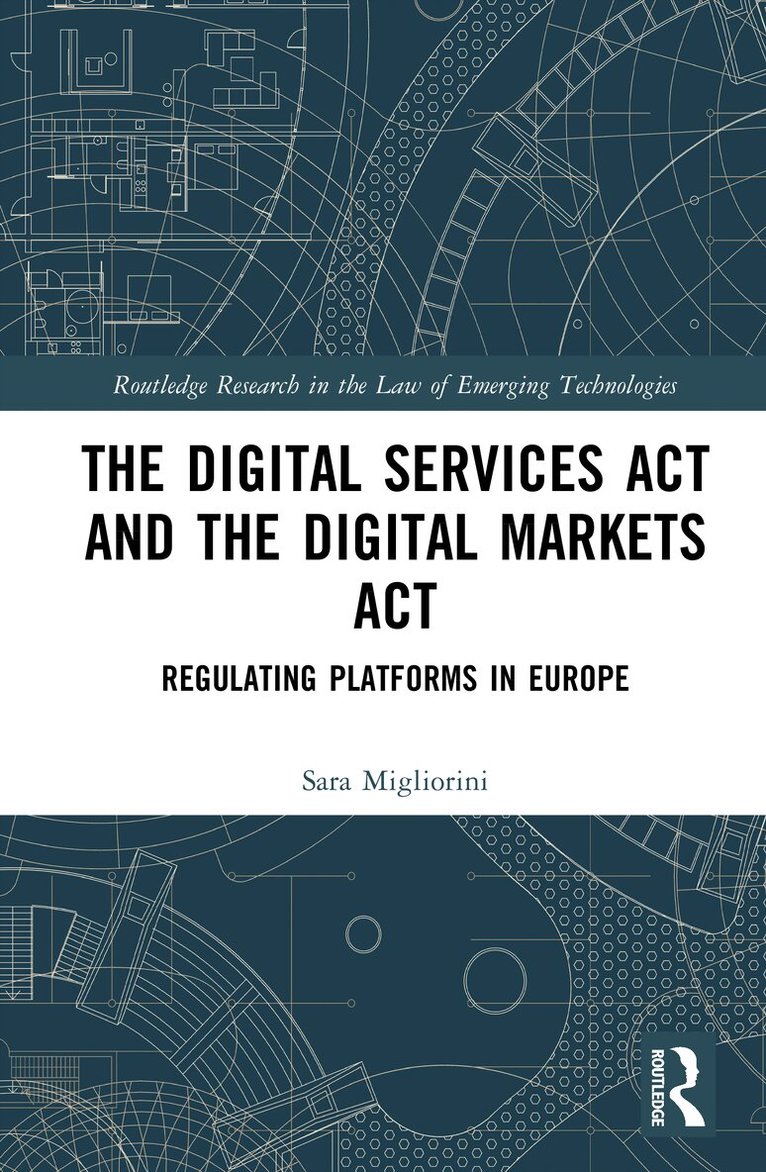
The Digital Services Act (DSA) and the Digital Markets Act (DMA) represent the European Union's most ambitious attempt to recast the rules of the digital economy since the E-Commerce Directive of 2000. These instruments overhaul the duties of online intermediaries and rewrite the rules of competition in digital markets, with far-reaching implications for the relationship between platforms, users, and public authorities across the Union.This book offers a concise and practical user's guide to both regulations, covering the core substantive areas of the DSA and DMA: platform liability, due diligence obligations, content moderation, online advertising, and recommender systems. It also examines the enforcement powers of the European Commission and of national Digital Services Coordinators. The book situates the DSA and DMA within the broader EU legal order, examining their interplay with the GDPR, the AI Act, the EU consumer acquis and other relevant instruments and decisions of the Court of Justice of the EU, offering a useful resource for understanding platform regulation in Europe.The book is aimed at scholars, practitioners and policymakers in digital law, European law and international law.
Inbunden, Engelska, 2018
2 610 kr
Skickas inom 7-10 vardagar
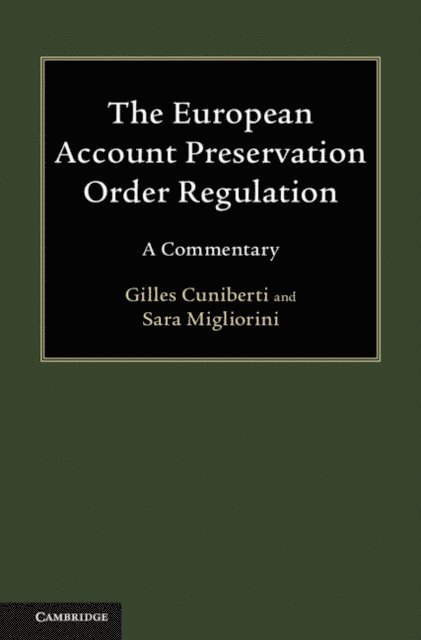
The European Account Preservation Order (EAPO) Regulation provides a protective measure for creditors wishing to freeze the bank account of their debtor, preventing the transferral or withdrawal of funds. Courts can issue freezing measures over bank accounts located in other member states, thereby establishing a new remedy for cross-border debt recovery in Europe. This book provides a detailed article-by-article commentary of the EAPO Regulation. It describes its legislative history and structure and carries out a critical analysis of its provisions and recitals, focusing on the practical implementation of the instrument. The commentary also provides additional focus on the interplay between the EAPO Regulation and the existing EU instruments and framework, and examines specific issues that the implementation of the Regulation might raise in member states. This is an important resource tool for practitioners, legal scholars and students interested in the theoretical and practical implications of the EAPO Regulation.
E-bok
Engelska, 20182 976 kr
Läs direkt efter köp
The European Account Preservation Order (EAPO) Regulation provides a protective measure for creditors wishing to freeze the bank account of their debtor, preventing the transferral or withdrawal of funds. Courts can issue freezing measures over bank accounts located in other member states, thereby establishing a new remedy for cross-border debt recovery in Europe. This book provides a detailed article-by-article commentary of the EAPO Regulation. It describes its legislative history and structure and carries out a critical analysis of its provisions and recitals, focusing on the practical implementation of the instrument. The commentary also provides additional focus on the interplay between the EAPO Regulation and the existing EU instruments and framework, and examines specific issues that the implementation of the Regulation might raise in member states. This is an important resource tool for practitioners, legal scholars and students interested in the theoretical and practical implications of the EAPO Regulation.
E-bok
PDF, Engelska, 20182 984 kr
Läs direkt efter köp
The European Account Preservation Order (EAPO) Regulation provides a protective measure for creditors wishing to freeze the bank account of their debtor, preventing the transferral or withdrawal of funds. Courts can issue freezing measures over bank accounts located in other member states, thereby establishing a new remedy for cross-border debt recovery in Europe. This book provides a detailed article-by-article commentary of the EAPO Regulation. It describes its legislative history and structure and carries out a critical analysis of its provisions and recitals, focusing on the practical implementation of the instrument. The commentary also provides additional focus on the interplay between the EAPO Regulation and the existing EU instruments and framework, and examines specific issues that the implementation of the Regulation might raise in member states. This is an important resource tool for practitioners, legal scholars and students interested in the theoretical and practical implications of the EAPO Regulation.