Scott Saul – författare
Visar alla böcker från författaren Scott Saul. Handla med fri frakt och snabb leverans.
2 produkter
2 produkter
Häftad, Engelska, 2016
172 kr
Skickas
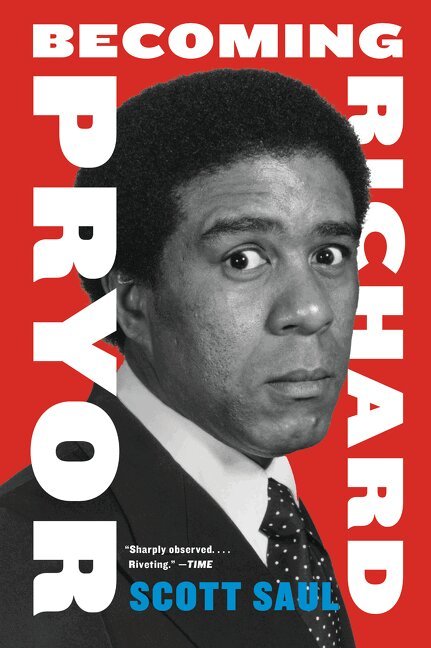
A major biography-intimate, gripping, revelatory-of an artist who revolutionized American comedy. Richard Pryor may have been the most unlikely star in Hollywood history. Raised in his family's brothels, he grew up an outsider to privilege. He took to the stage, originally, to escape the hard-bitten realities of his childhood, but later came to a reverberating discovery: that by plunging into the depths of his experience, he could make stand-up comedy as exhilarating and harrowing as the life he'd known. He brought that trembling vitality to Hollywood, where his movie career-Blazing Saddles, the buddy comedies with Gene Wilder, Blue Collar-flowed directly out of his spirit of creative improvisation. The major studios considered him dangerous. Audiences felt plugged directly into the socket of life. Becoming Richard Pryor brings the man and his comic genius into focus as never before.Drawing upon a mountain of original research-interviews with family and friends, court transcripts, unpublished journals, screenplay drafts-Scott Saul traces Pryor's rough journey to the heights of fame: from his heartbreaking childhood, his trials in the Army, and his apprentice days in Greenwich Village to his soul-searching interlude in Berkeley and his ascent in the "New Hollywood" of the 1970s. Becoming Richard Pryor illuminates an entertainer who, by bringing together the spirits of the black freedom movement and the counterculture, forever altered the DNA of American comedy. It reveals that, while Pryor made himself a legend with his own account of his life onstage, the full truth of that life is more bracing still.
Häftad, Engelska, 2005
330 kr
Skickas inom 10-15 vardagar
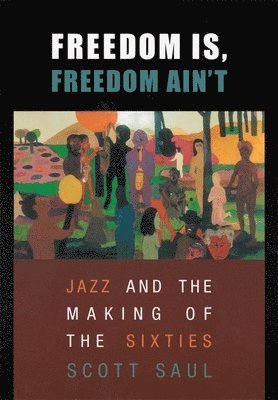
In the long decade between the mid-1950s and the late ’60s, jazz was changing more than its sound. The age of Max Roach’s Freedom Now Suite, John Coltrane’s A Love Supreme, and Charles Mingus’s The Black Saint and the Sinner Lady was a time when jazz became both newly militant and newly seductive, its example powerfully shaping the social dramas of the Civil Rights movement, the Black Power movement, and the counterculture. Freedom Is, Freedom Ain’t is the first book to tell the broader story of this period in jazz—and American—history.The story’s central figures are jazz musicians like Coltrane and Mingus, who rewrote the conventions governing improvisation and composition as they sought to infuse jazz with that gritty exuberance known as “soul.” Scott Saul describes how these and other jazz musicians of the period engaged in a complex cultural balancing act: utopian and skeptical, race-affirming and cosmopolitan, they tried to create an art that would make uplift into something forceful, undeniable in its conviction, and experimental in its search for new possibilities. Freedom Is, Freedom Ain’t considers these musicians and their allies as a cultural front of the Civil Rights movement, a constellation of artists and intellectuals whose ideas of freedom pushed against a Cold War consensus that stressed rational administration and collective security. Capturing the social resonance of the music’s marriage of discipline and play, the book conveys the artistic and historical significance of the jazz culture at the start, and the heart, of the Sixties.