Sea-Jin Chang – författare
Visar alla böcker från författaren Sea-Jin Chang. Handla med fri frakt och snabb leverans.
6 produkter
6 produkter
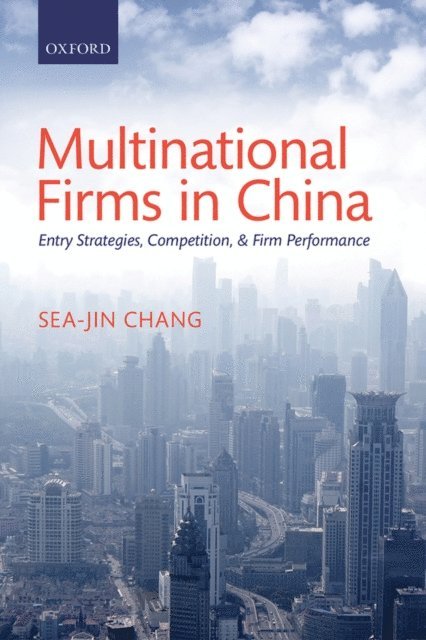
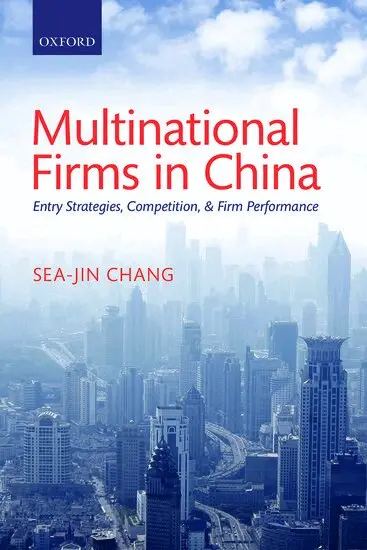
Multinational Firms in China
Entry Strategies, Competition, and Firm Performance
Häftad, Engelska, 2015
769 kr
Skickas inom 5-8 vardagar
As a consequence of aggressive competition, Chinese industries have become increasingly consolidated. While the extent to which emerging local firms can challenge well-established multinational firms varies by industry, there are common characteristics of 'winners' within each firm type. A handful of multinational and local firms emerged victorious by acquiring small, weak, and regional players to become truly national players. During this process, weaker multinational firms were crowded out of the market by stronger multinationals as well as by emerging local powerhouses. The successful local firms that survive competition in China have global ambitions and venture into international markets, challenging foreign multinational firms in the global marketplace. This book examines how multinational firms grew their operations in China and how successful local firms emerged from the restructuring process, as well the competition between them, in the fierce marketplace of China's economic reform. While anecdotal evidence on this topic is widespread, there exists no comprehensive research. This book seeks to address this gap by rooting its discussion in the author's extensive and rigorous statistical analyses and detailed case studies across five industries: consumer products, beer, telecom, automobile, and steel.
2 124 kr
Skickas inom 5-8 vardagar
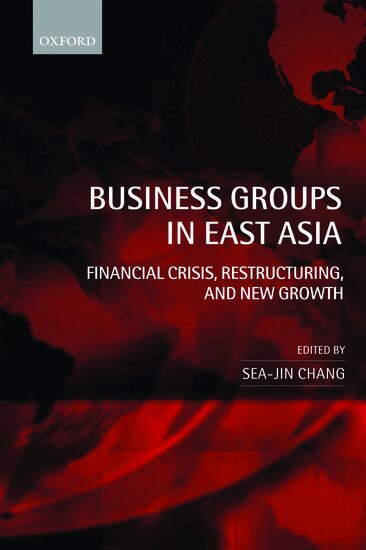
The 1997 Asian Crisis principally affected Thailand, Indonesia, Malaysia, and Korea, as well as other East Asian countries heavily dependent on intra-regional trade. Banks and other financial institutions quickly become insolvent, and heavily indebted industrial firms went bankrupt. Many of these firms were affiliated with the business groups of this region, yet most groups did not immediately collapse, indeed they proved remarkably robust, some surviving and even prospering.This book examines these East Asian business groups and their subsequent restructuring following the Asian Crisis. East Asian nations embarked on very different trajectories to this common external shock. The Asian Crisis affected the inter-relationships among the socio-cultural environment, the state, and the market of each country quite differently and had distinct effects on the operations of these countries' business groups. This slow yet divergent pattern of development provides evidence against theories of rapid global convergence.Yet East Asian business groups face an uncertain future. Foreign investors' influence has increased substantially since the crisis, as East Asian governments had to accommodate their demands to keep attracting foreign capital. Governments supervise banks more closely and have loosened restrictions on mergers and hostile takeovers, further strengthening the discipline of the market. Various entry barriers that had inhibited foreign multinationals from competing in national markets were lifted, exposing business groups to intensified foreign competition. Under these new conditions, business groups in East Asia should reconfigure their business structures and adjust their corporate governance systems to regain momentum for further growth. Business groups will continue to be important vehicles for the sustained future growth of this region, and this book presents a substantial amount of new data on this, which will be of interest to academics, researchers, and advanced students of East Asian business, and business practitioners working within the region.
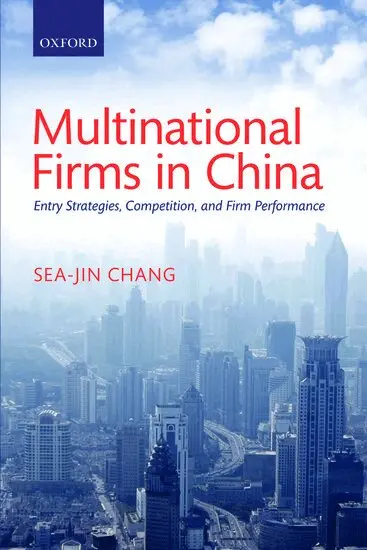
Multinational Firms in China
Entry Strategies, Competition, and Firm Performance
Inbunden, Engelska, 2013
1 379 kr
Skickas inom 5-8 vardagar
As a consequence of aggressive competition, Chinese industries have become increasingly consolidated. While the extent to which emerging local firms can challenge well-established multinational firms varies by industry, there are common characteristics of 'winners' within each firm type. A handful of multinational and local firms emerged victorious by acquiring small, weak, and regional players to become truly national players. During this process, weaker multinational firms were crowded out of the market by stronger multinationals as well as by emerging local powerhouses. The successful local firms that survive competition in China have global ambitions and venture into international markets, challenging foreign multinational firms in the global marketplace. This book examines how multinational firms grew their operations in China and how successful local firms emerged from the restructuring process, as well the competition between them, in the fierce marketplace of China's economic reform. While anecdotal evidence on this topic is widespread, there exists no comprehensive research. This book seeks to address this gap by rooting its discussion in the author's extensive and rigorous statistical analyses and detailed case studies across five industries: consumer products, beer, telecom, automobile, and steel.
Sony vs Samsung
The Inside Story of the Electronics Giants' Battle For Global Supremacy
Häftad, Engelska, 2008
182 kr
Skickas inom 7-10 vardagar
"Sony vs. Samsung is business history at its best! It explores the divergent fortunes of these two electronics giants in the last decade and identifies the true reasons behind Sony's decline and Samsung's rise. Contrary to popular belief, Chang shows that success (or failure) does not simply arise from different strategies. Rather, it emerges from major decisions that are deeply rooted in the companies' organizational processes and their executives' political behavior. This book is a must-read for any senior executive."—Constantinos Markides, Robert P. Bauman Professor of Strategic Leadership and Chairman, Strategy Department, London Business School "Sea-Jin Chang has produced that rarity in a business book--one that is as valuable to practicing managers as it is insightful to academic researchers. In this fascinating comparison of two modern global giants, he applies his high resolution research microscope to their changing fortunes by dissecting their contrasting strategies, and providing interesting insights into their divergent organizational processes and management practices. This is a very valuable contribution to the international business literature. It will end up in as many corporate boardrooms as faculty seminars."—Christopher A. Bartlett, Thomas D. Casserly Professor Emeritus, Harvard Business School "Sea-Jin Chang has written a fascinating comparison of Sony and Samsung that will be valuable to anyone interested in strategy, organizations or international business. The interwoven and very detailed case studies of two very different companies in overlapping industries illuminate problems such as adaptation to technological change (analog to digital), organizational flexibility and globalization. His attempt to analyze both strategic development and implementation is successful and very useful. Both academics and practitioners will learn a lot from this book."—Stephen J. Kobrin, William Wurster Professor of Multinational Management, The Wharton School, University of Pennsylvania "Refreshingly original and entertaining, this book analyzes major strategic decisions of Samsung and Sony and highlights organizational processes and top management leadership that have shaped their performances. This is a must-read for all executives who want to understand the strengths and weaknesses of Asian competitors. It also provides penetrating insights to other Asian companies with global ambitions."—Myoung Woo Lee, President and CEO, iriver
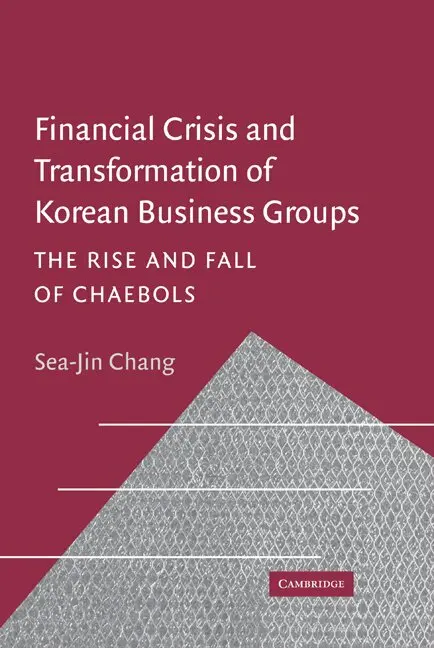
Financial Crisis and Transformation of Korean Business Groups
The Rise and Fall of Chaebols
Häftad, Engelska, 2006
523 kr
Skickas inom 7-10 vardagar
Sea-Jin Chang argues that the Korean financial crisis of 1997 was due to the inertia of both the business groups known as chaebols and the Korean government which prevented adaptation to changing external environments. Once the Korean government stopped central economic planning and pursued economic liberalization in the 1980s, the transition created a void under which neither the government nor markets could monitor chaebols' investment activities. The intricate web of cross-shareholding, debt guarantees, and vertical integration resulted in extensive cross-subsidization and kept chaebols from shedding unprofitable businesses. The government's continued interventions in banks' lending practices created 'moral hazards' for both chaebols and banks. This treatment demonstrates how the structure of chaebols later inhibited other adaptations and for all practical purposes became nearly dysfunctional. The book argues that restructuring of chaebols should focus on improving corporate governance systems. After such restructuring, the author predicts, chaebols will re-emerge as stronger, more focused global players.
Financial Crisis and Transformation of Korean Business Groups
The Rise and Fall of Chaebols
Inbunden, Engelska, 2003
1 038 kr
Skickas inom 7-10 vardagar
Sea-Jin Chang argues that the Korean financial crisis of 1997 was due to the inertia of both the business groups known as chaebols and the Korean government which prevented adaptation to changing external environments. Once the Korean government stopped central economic planning and pursued economic liberalization in the 1980s, the transition created a void under which neither the government nor markets could monitor chaebols' investment activities. The intricate web of cross-shareholding, debt guarantees, and vertical integration resulted in extensive cross-subsidization and kept chaebols from shedding unprofitable businesses. The government's continued interventions in banks' lending practices created 'moral hazards' for both chaebols and banks. This treatment demonstrates how the structure of chaebols later inhibited other adaptations and for all practical purposes became nearly dysfunctional. The book argues that restructuring of chaebols should focus on improving corporate governance systems. After such restructuring, the author predicts, chaebols will re-emerge as stronger, more focused global players.