Sebastiano Brandolini - Böcker
Visar alla böcker från författaren Sebastiano Brandolini. Handla med fri frakt och snabb leverans.
3 produkter
3 produkter
258 kr
Skickas
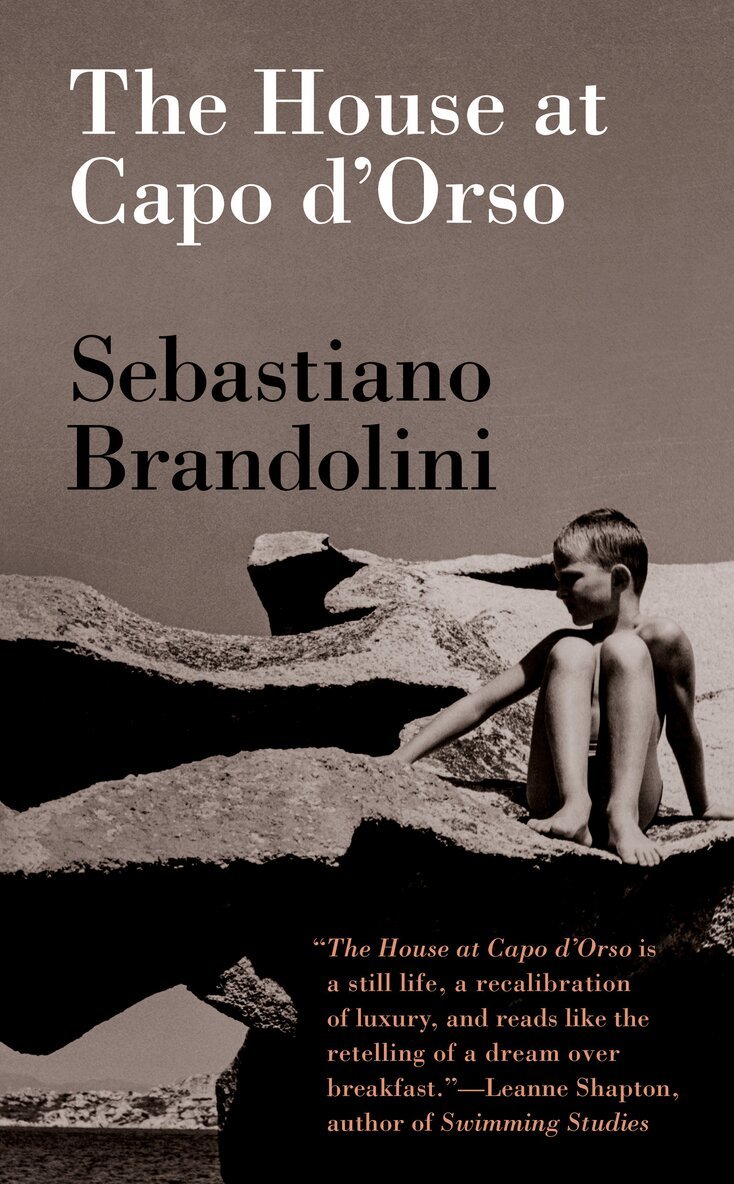
Rocks, wind, sea, and sky frame a house on the Sardinian coast, and the house frames a family’s life and art, suspended in memory.How does a house shape experience? How does architecture establish a practice of living? Architect Sebastiano Brandolini invites readers on a meditative tour of his family’s house on the Sardinian coast, describing everything from the geology of the rocks beneath, to the history of the surrounding villages, to the way the shifting light measures the day. More than the story of a single summer home written by an accomplished architect, this is a study of how place, the built environment, and daily practice make up our lives, at the most minute level of detail. Recalling the essays of Walter Benjamin, Bill Bryson, Rebecca Solnit, and Lawrence Weschler, Brandolini’s writing weaves literature, art history, and the transformation of Sardinia since the 1960s into a single fabric.The House at Capo d’Orso is not only a study of architecture and life in the built environment, but of family life, and the way the Brandolini family adapted themselves to the house they built. For Sebastiano Brandolini’s parents, this meant letting their house influence their work in poetry and visual art, and this book attends carefully to the way houses can guide the creative process. The wind and water of Sardinia change more than the rocks and trees; they invite the imagination itself to form new shapes.“Certain places—or perhaps objects—in the interior of Sardinia have left such a deep impression on my mind that I cannot rid myself them, becoming obsessions that give me pleasure and prompt reflections. For us obligatory positivists of the twenty-first century, there is something enigmatic and incomprehensible about these objects. They oscillate between architecture, archeology, geology, and landscape, but do not belong to any of these categories; as soon as we think we’ve found a plausible classification, we are assailed by doubts and qualifications.”—from The House at Capo d’Orso
486 kr
Tillfälligt slut
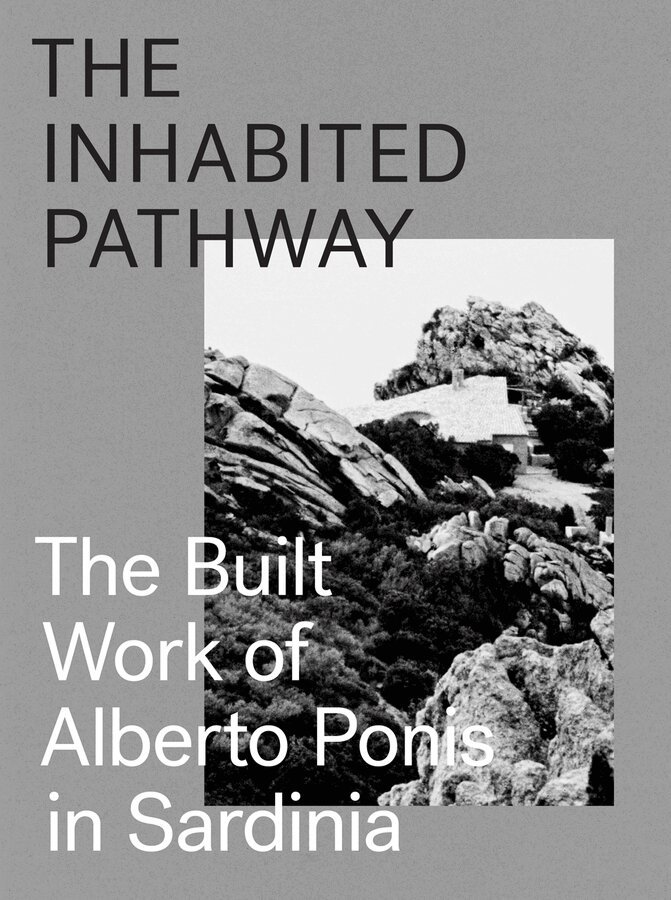
Alberto Ponis, born 1933 in Genoa, was educated at Florence University, where he qualified as an architect in 1960. He worked in London with Erno Goldfinger and Denys Lasdun in 1960-64, under the strong - and lasting - influence of the movements of modernism and new brutalism then dominant in British architecture. He established his studio in 1964 in Palau on the island of Sardinia. Ponis has studied the natural conditions and social history of Sardinia and has also done extensive research on the "stazzo", Sardinia's typical rural building type. On this thorough knowledge of conditions, traditions and requirements, an oeuvre of more than 300 residential buildings is founded. Each house is deeply rooted in its environment and connected with the land and other dwellings by the "sentiero", the path leading to and from it. They show a natural modesty and simplicity and express the architect's great formal skills and sensitivity. Alberto Ponis - Sardinia is the first comprehensive monograph on this highly interesting and original architect.Lavishly illustrated, it documents his life and work and presents in detail eight selected buildings between 1965-98 that make traceable the evolution of Ponis's work and philosophy.
165 kr
Skickas inom 7-10 vardagar
5+1 (Paola Arboco, Pierluigi Feltri, Alfonso Femia, Gianluca Peluffo, Maurizio Vallino) is one of Italy's hottest young architectural studios. The 5+1 studio of associated architects was established in Genoa in 1995 by five graduates of the Faculty of Architecture at Genoa University where they worked on architectural design courses with Enrico D. Bona. After winning the first prize in a national competition regarding the signalling system at Campi industrial park in Genoa in 1996, since 1997 they have been part of the IFYA (International Forum of Young Architects), and in the same year they were commissioned by Spes spa to convert the former Bligny Barracks in Savona into a new university campus. In 1998 they were invited by the Italian Institute for Culture in Paris to expound on the creative process in an exhibition entitled 5+1 associati: progetti in gruppo. Fin qui tutto bene with a catalogue jointly published with Joshua. In 1999 they won a bid to design the new archaeological centre in Aquileia, which with the university campus in Savona is an important example of project based on existing sites.In the same year they took part in the Biennale dei Giovani Artisti dell'Europa e del Mediterraneo held in Rome (May-June) where they displayed their work in the exhibition Gerico and a portrait of the studio in 'grande et@gere'. They were invited to take part in the second phase of the international design competition for the expansion of the Palace of Justice (Law Courts) in Siena. In 2000 they were invited by INARCH to display their work at the Italian Institute of Culture in Prague and at the Venice Biennale, both of which were dedicated to young Italian architects. They won the competition to construct an office building at Vado Ligure and were invited to take part in the second phase of the international design competition for the new Congress Bridge in Rome.