Shamik Chowdhury – författare
1 991 kr
Skickas inom 10-15 vardagar
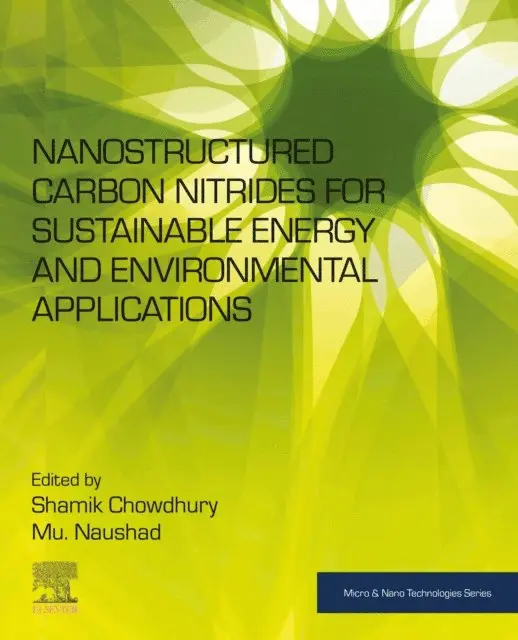
In recent years, carbon nitride, a new type of two-dimensional (2D) material, has attracted great interest, in terms of fundamental scientific investigation and potential practical applications, for a range of energy and environmental technologies. This can be largely attributed to its optoelectronic and physicochemical properties, including moderate band gap, adjustable energy band configuration, tailor-made surface functionalities, low cost, metal-free nature, remarkable thermochemical stability, and environmentally benign manufacturing protocol.
Nanostructured Carbon Nitrides for Sustainable Energy and Environmental Applications offers a comprehensive, authoritative, and critical account of the recent progress in the development and application of multifunctional carbon nitride materials and their hybrid heterostructures. There are two major objectives of this book: first, to provide a systematic overview of the key design principles toward the fabrication of high-performance carbon nitride-based nanostructures; and second, to provide insights into a range of clean energy technologies and environmental remediation methods that build on these nanoengineered carbon nitrides.
This book serves as an important reference source for materials scientists and engineers who are interested in developing their understanding of how carbon-based nanomaterials are being used for sustainable energy and environmental applications.
Helps users gain deeper insights into various aspects of carbon nitride materials from multidisciplinary perspectives Covers how to apply nanostructured carbon nitrides to tackle global energy and environmental challenges in a sustainable manner Explains the design and fabrication of carbon nitride-based materials with optimized structures, controlled morphologies, and tailored properties for practical implementation2 834 kr
Läs direkt efter köp
3 055 kr
Skickas inom 5-8 vardagar
2 733 kr
Läs direkt efter köp
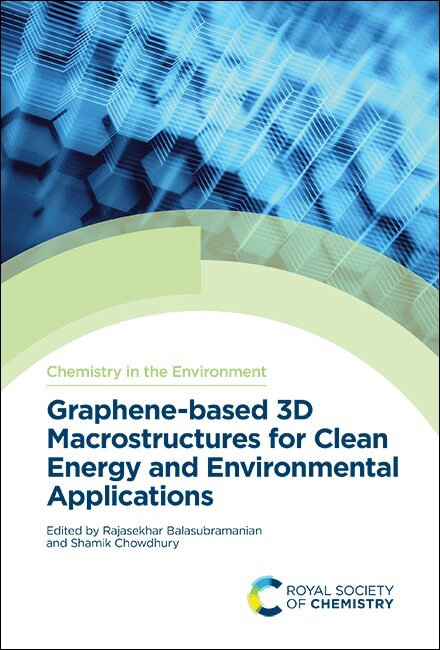
With escalating global population, increased consumption of fossil fuels, spiralling energy demand, rapid environmental degradation and global climate change, energy and environmental issues are receiving considerable attention worldwide from the purview of sustainable development. In order to address these complex and interlinked challenges, the development of new materials for affordable green energy technologies (batteries, supercapacitors, fuel cells and solar cells) and environmental remediation methods (adsorption, photocatalysis, separation, and sensing) is essential. Three-dimensional graphene-based macrostructures (3D GBMs) are of great interest in these applications given their large surface area and adaptable surface chemistry.
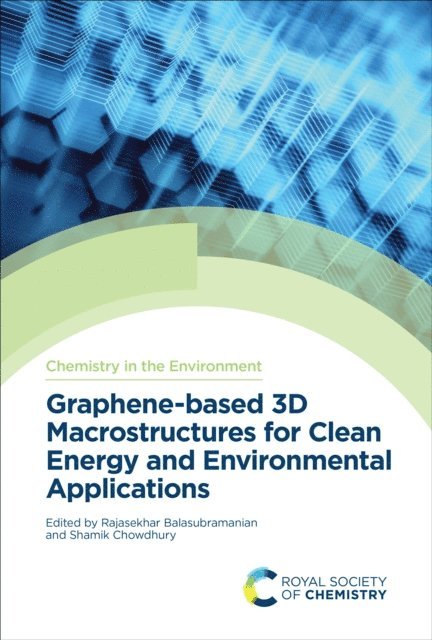
Graphene-based 3D Macrostructures for Clean Energy and Environmental Applications provides a critical and comprehensive account of the recent advances in the development and potential applications of high performance 3D GBMs for tackling global energy and environmental issues in a sustainable manner. Particular attention is paid to the fabrication schemes, modulation of physiochemical properties, and their integration into practical devices, and the roles of surface chemistry and pore morphology, as well as their interplay, on the overall performance of 3D GBMs are examined.
With contributions from authors around the world this book is a useful resource for both environmental scientists interested in sustainable energy and remediation solutions and materials scientists interested in applications for 3D GMBs.
2 733 kr
Läs direkt efter köp
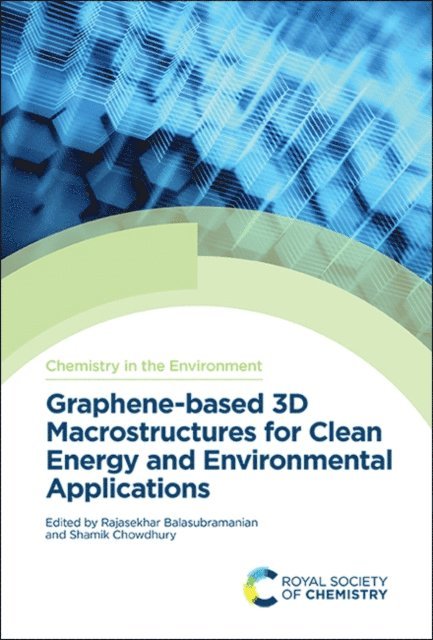
With escalating global population, increased consumption of fossil fuels, spiralling energy demand, rapid environmental degradation and global climate change, energy and environmental issues are receiving considerable attention worldwide from the purview of sustainable development. In order to address these complex and interlinked challenges, the development of new materials for affordable green energy technologies (batteries, supercapacitors, fuel cells and solar cells) and environmental remediation methods (adsorption, photocatalysis, separation, and sensing) is essential. Three-dimensional graphene-based macrostructures (3D GBMs) are of great interest in these applications given their large surface area and adaptable surface chemistry.
Graphene-based 3D Macrostructures for Clean Energy and Environmental Applications provides a critical and comprehensive account of the recent advances in the development and potential applications of high performance 3D GBMs for tackling global energy and environmental issues in a sustainable manner. Particular attention is paid to the fabrication schemes, modulation of physiochemical properties, and their integration into practical devices, and the roles of surface chemistry and pore morphology, as well as their interplay, on the overall performance of 3D GBMs are examined.
With contributions from authors around the world this book is a useful resource for both environmental scientists interested in sustainable energy and remediation solutions and materials scientists interested in applications for 3D GMBs.