Susumu Mori – författare
Visar alla böcker från författaren Susumu Mori. Handla med fri frakt och snabb leverans.
7 produkter
MRI Atlas of Human White Matter
Av L.M. Nagae-Poetscher, Peter C M van Zijl m. fl.
E-bok, 2005
3120 kr
Lägg i varukorg
Recent advances in modern imaging techniques that can be used non-invasively for the visualization of the human brain have greatly enhanced the knowledge of brain anatomy and the understanding of its relationship to brain function. A unique new MRI modality, called diffusion tensor imaging (DTI) …
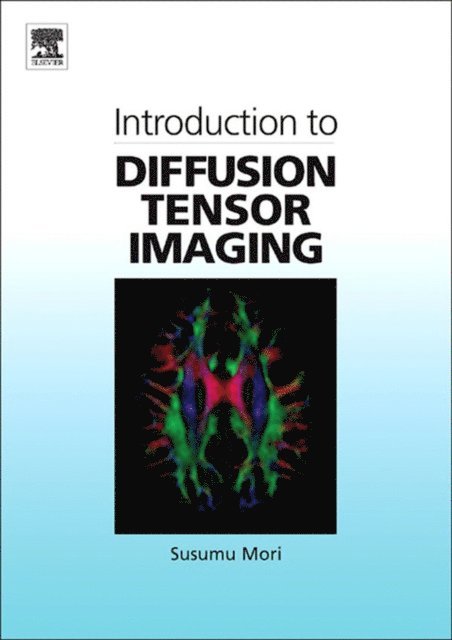
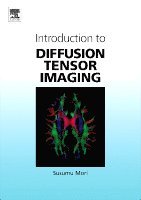
Introduction to Diffusion Tensor Imaging
Av Susumu Mori
E-bok, 2007
1175 kr
Lägg i varukorg
The concept of Diffusion Tensor Imaging (DTI) is often difficult to grasp, even for Magnetic Resonance physicists. Introduction to Diffusion Tensor Imaging uses extensive illustrations (not equations) to help readers to understand how DTI works. Emphasis is placed on the interpretation of DTI …
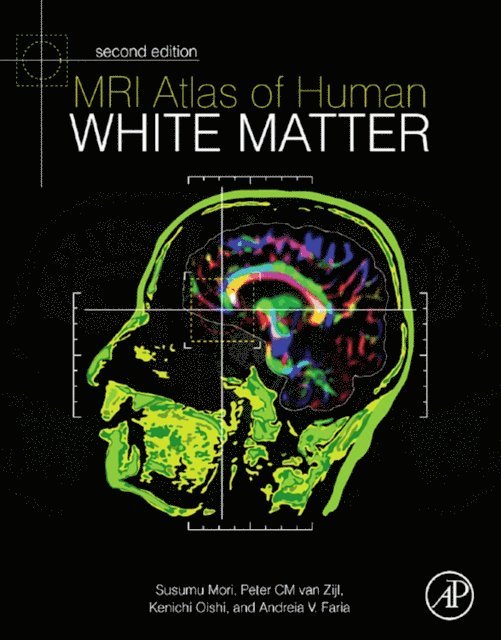
MRI Atlas of Human White Matter
Av Kenichi Oishi, Andreia V. Faria m. fl.
Inbunden, 2010
2109 kr
Lägg i varukorg
MRI Atlas of Human White Matter presents an atlas to the human brain on the basis of T 1-weighted imaging and diffusion tensor imaging. A general background on magnetic resonance imaging is provided, as well as the basics of diffusion tensor imaging. An overview of the principles and limitations in …
MRI Atlas of Human White Matter
Av Susumu Mori, Peter C M van Zijl m. fl.
E-bok, 2010
2182 kr
Lägg i varukorg
MRI Atlas of Human White Matter presents an atlas to the human brain on the basis of T 1-weighted imaging and diffusion tensor imaging. A general background on magnetic resonance imaging is provided, as well as the basics of diffusion tensor imaging. An overview of the principles and limitations in …
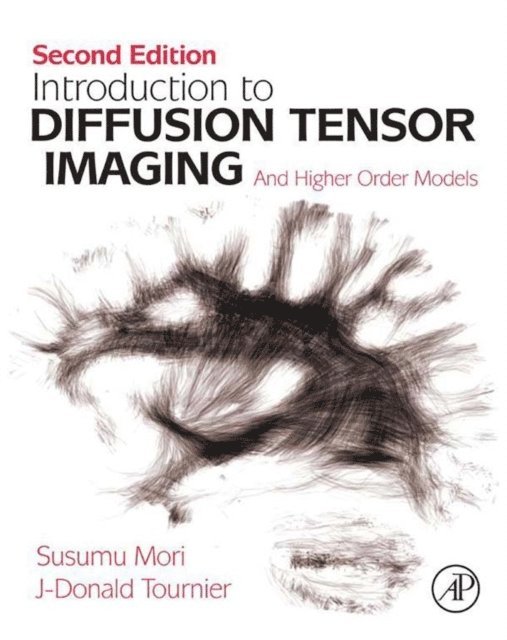
Introduction to Diffusion Tensor Imaging
And Higher Order Models
Av Susumu Mori, J-Donald Tournier
Inbunden, 2013
1157 kr
Lägg i varukorg
The concepts behind diffusion tensor imaging (DTI) are commonly difficult to grasp, even for magnetic resonance physicists. To make matters worse, a many more complex higher-order methods have been proposed over the last few years to overcome the now well-known deficiencies of DTI. In Introduction …
Introduction to Diffusion Tensor Imaging
And Higher Order Models
Av J-Donald Tournier, Susumu Mori
E-bok, 2013
1248 kr
Lägg i varukorg
The concepts behind diffusion tensor imaging (DTI) are commonly difficult to grasp, even for magnetic resonance physicists. To make matters worse, a many more complex higher-order methods have been proposed over the last few years to overcome the now well-known deficiencies of DTI. In Introduction …
Introduction to Diffusion Tensor Imaging
Av Susumu Mori
Inbunden, 2007
1117 kr
Lägg i varukorg
The concept of Diffusion Tensor Imaging (DTI) is often difficult to grasp, even for Magnetic Resonance physicists. Introduction to Diffusion Tensor Imaging uses extensive illustrations (not equations) to help readers to understand how DTI works. Emphasis is placed on the interpretation of DTI …