T. S. Kemp – författare
Visar alla böcker från författaren T. S. Kemp. Handla med fri frakt och snabb leverans.
12 produkter
Mammals
A Very Short Introduction
Av T. S. Kemp
E-bok, 2017
92 kr
Lägg i varukorg
From a modest beginning in the form of a little shrew-like, nocturnal, insect eating ancestor that lived 200 million years ago, mammals evolved into the huge variety of different kinds of animals we see today. Many species are still small, and follow the lifestyle of the ancestor, but others have …
Mammals
A Very Short Introduction
Av T. S. Kemp
E-bok, 2017
92 kr
Lägg i varukorg
From a modest beginning in the form of a little shrew-like, nocturnal, insect eating ancestor that lived 200 million years ago, mammals evolved into the huge variety of different kinds of animals we see today. Many species are still small, and follow the lifestyle of the ancestor, but others have …
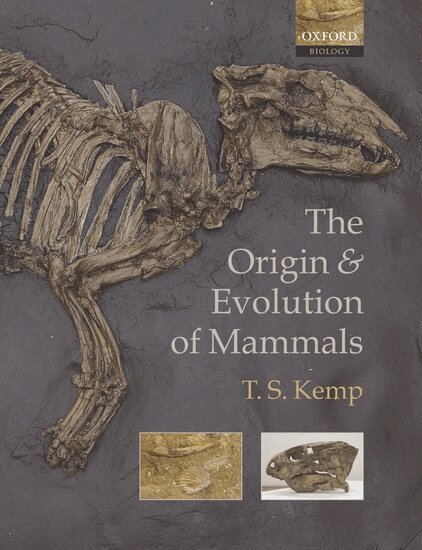
Origin and Evolution of Mammals
Av T. S. Kemp
E-bok, 2004
1064 kr
Lägg i varukorg
Mammals are the dominant large animals of today, occurring in virtually every environment. This book is an account of the remarkable 320 million year long fossil record that documents their origin, their long spell as no more than small, nocturnal creatures, and their explosive radiation since the …
Reptiles
A Very Short Introduction
Av T. S. Kemp
E-bok, 2019
92 kr
Lägg i varukorg
For millions of years reptiles have walked, crawled, and slithered over the face of our Earth. From the mighty dinosaurs who dominated the land, the pterosaurs who took to the air, and the marine adapted ichthyosaurs, to the living reptiles today such as the lizards, snakes, crocodiles, and …
Reptiles
A Very Short Introduction
Av T. S. Kemp
E-bok, 2019
92 kr
Lägg i varukorg
For millions of years reptiles have walked, crawled, and slithered over the face of our Earth. From the mighty dinosaurs who dominated the land, the pterosaurs who took to the air, and the marine adapted ichthyosaurs, to the living reptiles today such as the lizards, snakes, crocodiles, and …
Amphibians
A Very Short Introduction
Av T. S. Kemp
E-bok, 2021
92 kr
Lägg i varukorg
Very Short Introductions : Brilliant, Sharp, Inspiring From frogs, toads, newts, and salamanders, to the lesser-known caecilians, there are over 8,000 species of amphibians alive today. Characterised by their moist, naked skin and the tadpole phase of their lives, they are uniquely adapted to …
Amphibians
A Very Short Introduction
Av T. S. Kemp
E-bok, 2021
92 kr
Lägg i varukorg
Very Short Introductions : Brilliant, Sharp, Inspiring From frogs, toads, newts, and salamanders, to the lesser-known caecilians, there are over 8,000 species of amphibians alive today. Characterised by their moist, naked skin and the tadpole phase of their lives, they are uniquely adapted to …
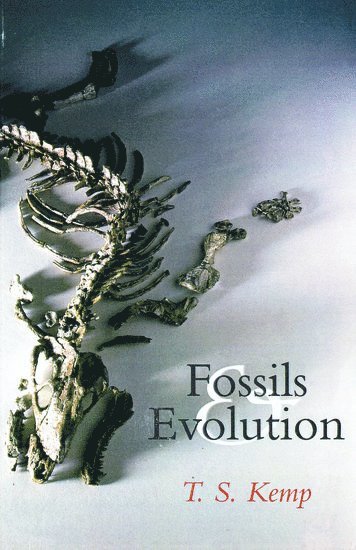
Fossils and Evolution
Av T. S. Kemp
Häftad, 1999
1052 kr
Lägg i varukorg
The book is about the ideas, methodology and scope of contemporary palaeobiology, rather than a comprehensive, detailed survey of the factual basis of the subject. It addresses the issue of how on the one hand evolutionary theory is necessary for interpretation of the fossil record, and yet on the …
The Origin and Evolution of Mammals
Av T. S. Kemp
Häftad, 2004
1536 kr
Lägg i varukorg
Mammals are the dominant large animals of today, occurring in virtually every environment. This book is an account of the remarkable 320 million year long fossil record that documents their origin, their long spell as no more than small, nocturnal creatures, and their explosive radiation since the …
Mammals
A Very Short Introduction
Av T. S. Kemp
Häftad, 2017
113 kr
Lägg i varukorg
From a modest beginning in the form of a little shrew-like, nocturnal, insect eating ancestor that lived 200 million years ago, mammals evolved into the huge variety of different kinds of animals we see today. Many species are still small, and follow the lifestyle of the ancestor, but others have …
Reptiles
A Very Short Introduction
Av T. S. Kemp
Häftad, 2019
113 kr
Lägg i varukorg
For millions of years reptiles have walked, crawled, and slithered over the face of our Earth. From the mighty dinosaurs who dominated the land, the pterosaurs who took to the air, and the marine adapted ichthyosaurs, to the living reptiles today such as the lizards, snakes, crocodiles, and …
Amphibians
A Very Short Introduction
Av T. S. Kemp
Häftad, 2021
113 kr
Lägg i varukorg
Very Short Introductions: Brilliant, Sharp, Inspiring From frogs, toads, newts, and salamanders, to the lesser-known caecilians, there are over 8,000 species of amphibians alive today. Characterised by their moist, naked skin and the tadpole phase of their lives, they are uniquely adapted to occupy …