Tamara Levitz – författare
Visar alla böcker från författaren Tamara Levitz. Handla med fri frakt och snabb leverans.
2 produkter
2 produkter
1 284 kr
Skickas inom 7-10 vardagar
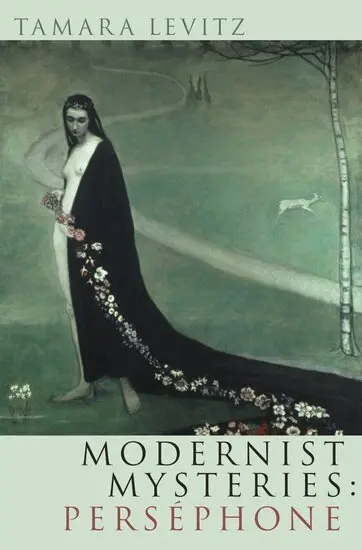
Modernist Mysteries: Persephone is a landmark study that will move the field of musicology in important new directions. The book presents a microhistorical analysis of the premiere of the melodrama Persephone at the Paris Opera on April 30th, 1934, engaging with the collaborative, transnational nature of the production. Author Tamara Levitz demonstrates how these collaborators used the myth of Persephone to perform and articulate their most deeply held beliefs about four topics significant to modernism: religion, sexuality, death, and historical memory in art. In investigating the aesthetic and political consequences of the artists' diverging perspectives, and the fall-out of their titanic clash on the theater stage, Levitz dismantles myths about neoclassicism as a musical style. The result is a revisionary account of modernism in music in the 1930s. As a result of its focus on the collaborative performance, this book differs from traditional accounts of musical modernism and neoclassicism in several ways. First and foremost, it centers on the performance of modernism, highlighting the theatrical, performative, and sensual. Levitz places Christianity in the center of the discussion, and questions the national distinctions common in modernist research by involving a transnational team of collaborators. She further breaks new ground in shifting the focus from "history" to "memory" by emphasizing the commemorative nature of neoclassic listening rituals over the historicist stylization of its scores, and contends that modernists captured on stage and in philosophical argument their simultaneous need and inability to mourn the past. The book as a whole counters the common criticism that neoclassicism was a "reactionary" musical style by suggesting a more pluralistic, ambivalent, and sometimes even progressive politics, and reconnects musical neoclassicism with a queer classicist tradition extending from Winckelmann through Walter Pater to Gide. Modernist Mysteries concludes that 1930s modernists understood neoclassicism not as formalist compositional approaches but rather as a vitalist art haunted by ghosts of the past and promissory visions of the future.
396 kr
Skickas inom 5-8 vardagar
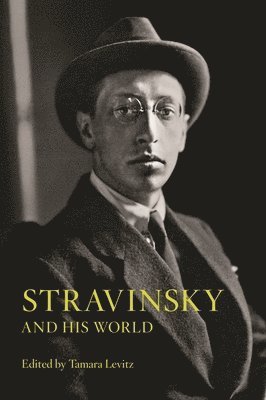
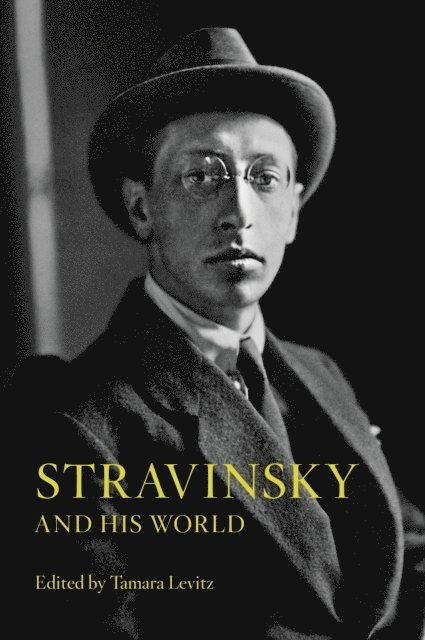
Stravinsky and His World brings together an international roster of scholars to explore fresh perspectives on the life and music of Igor Stravinsky. Situating Stravinsky in new intellectual and musical contexts, the essays in this volume shed valuable light on one of the most important composers of the twentieth century. Contributors examine Stravinsky's interaction with Spanish and Latin American modernism, rethink the stylistic label "neoclassicism" with a section on the ideological conflict over his lesser-known opera buffa Mavra, and reassess his connections to his homeland, paying special attention to Stravinsky's visit to the Soviet Union in 1962. The essays also explore Stravinsky's musical and religious differences with Arthur Lourie, delve into Stravinsky's collaboration with Pyotr Suvchinsky and Roland-Manuel in the genesis of his groundbreaking Poetics of Music, and look at how the movement within stasis evident in the scores of Stravinsky's Orpheus and Oedipus Rex reflected the composer's fierce belief in fate.Rare documents--including Spanish and Mexican interviews, Russian letters, articles by Arthur Lourie, and rarely seen French and Russian texts--supplement the volume, bringing to life Stravinsky's rich intellectual milieu and intense personal relationships. The contributors are Tatiana Baranova, Leon Botstein, Jonathan Cross, Valerie Dufour, Gretchen Horlacher, Tamara Levitz, Klara Moricz, Leonora Saavedra, and Svetlana Savenko.