Tan Tai Yong – författare
Visar alla böcker från författaren Tan Tai Yong. Handla med fri frakt och snabb leverans.
21 produkter
Aftermath of Partition in South Asia
Av Gyanesh Kudaisya, Tan Tai Yong
Inbunden, 2000
1569 kr
Lägg i varukorg
This book draws upon new theoretical insights and fresh bodies of data to historically reappraise partition in the light of its long aftermath. It uses a comparative approach by viewing South Asia in its totality, rather than looking at it in narrow 'national' terms. As the first book to focus on …
Aftermath of Partition in South Asia
Av Gyanesh Kudaisya, Tan Tai Yong
Häftad, 2002
563 kr
Lägg i varukorg
This book draws upon new theoretical insights and fresh bodies of data to historically reappraise partition in the light of its long aftermath. It uses a comparative approach by viewing South Asia in its totality, rather than looking at it in narrow 'national' terms. As the first book to focus on …
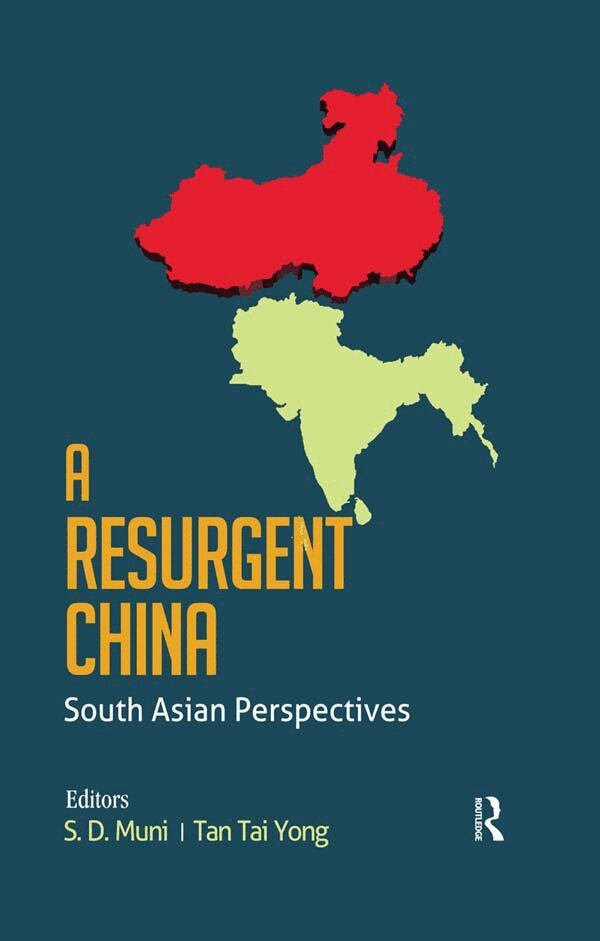
Resurgent China
South Asian Perspectives
Inbunden, 2012
1524 kr
Lägg i varukorg
Bringing together a range of South Asian perspectives on rising China in a comparative framework, an attempt has been made, for the first time, to identify and examine the political, economic and socio-cultural stakeholders and constituencies that influence the respective policy of individual South …
International Migration and Development in South Asia
Inbunden, 2015
2515 kr
Lägg i varukorg
In migration studies, the nexus between migration and development in the global South has been meticulously debated. However, a unanimous resolution to this debate has not been found, due to the ever-changing nature of international migration. This book advances knowledge on the global debate on …
Transformation of Southeast Asia
Av Marc Frey, Ronald W. Pruessen m. fl.
Inbunden, 2003
1569 kr
Lägg i varukorg
This book provides the basis for a reconceptualization of key features in Southeast Asia's history. Scholars from Europe, America, and Asia examine evolutionary patterns of Europe's and Japan's Southeast Asian empires from the late nineteenth century through World War II, and offer important …
Transformation of Southeast Asia
International Perspectives on Decolonization
Av Marc Frey, Ronald W. Pruessen m. fl.
Häftad, 2003
773 kr
Lägg i varukorg
Providing the basis for a reconceptualization of key features in Southeast Asia's history, this book examines evolutionary patterns of Europe's and Japan's Southeast Asian empires from the late 19th century through to the 1960s.
International Migration and Development in South Asia
Häftad, 2017
773 kr
Lägg i varukorg
In migration studies, the nexus between migration and development in the global South has been meticulously debated. However, a unanimous resolution to this debate has not been found, due to the ever-changing nature of international migration. This book advances knowledge on the global debate on …
Aftermath of Partition in South Asia
Av Gyanesh Kudaisya, Tan Tai Yong
E-bok, 2004
646 kr
Lägg i varukorg
This book draws upon new theoretical insights and fresh bodies of data to historically reappraise partition in the light of its long aftermath. It uses a comparative approach by viewing South Asia in its totality, rather than looking at it in narrow 'national' terms. As the first book to focus on …
Aftermath of Partition in South Asia
Av Gyanesh Kudaisya, Tan Tai Yong
E-bok, 2004
660 kr
Lägg i varukorg
This book draws upon new theoretical insights and fresh bodies of data to historically reappraise partition in the light of its long aftermath. It uses a comparative approach by viewing South Asia in its totality, rather than looking at it in narrow 'national' terms. As the first book to focus on …
Resurgent China
South Asian Perspectives
Häftad, 2016
561 kr
Lägg i varukorg
Bringing together a range of South Asian perspectives on rising China in a comparative framework, an attempt has been made, for the first time, to identify and examine the political, economic and socio-cultural stakeholders and constituencies that influence the respective policy of individual South …
Transformation of Southeast Asia
International Perspectives on Decolonization
Av Tan-Tai Yong, Marc Frey m. fl.
E-bok, 2015
890 kr
Lägg i varukorg
Providing the basis for a reconceptualization of key features in Southeast Asia''s history, this book examines evolutionary patterns of Europe''s and Japan''s Southeast Asian empires from the late 19th century through to the 1960s.
Transformation of Southeast Asia
International Perspectives on Decolonization
Av Tan-Tai Yong, Marc Frey m. fl.
E-bok, 2015
910 kr
Lägg i varukorg
Providing the basis for a reconceptualization of key features in Southeast Asia''s history, this book examines evolutionary patterns of Europe''s and Japan''s Southeast Asian empires from the late 19th century through to the 1960s.
Transformation of Southeast Asia
Av Tan Tai Yong, Tai Yong Tan m. fl.
E-bok, 2015
1052 kr
Lägg i varukorg
This book provides the basis for a reconceptualization of key features in Southeast Asia''s history. Scholars from Europe, America, and Asia examine evolutionary patterns of Europe''s and Japan''s Southeast Asian empires from the late nineteenth century through World War II, and offer important …
Transformation of Southeast Asia
Av Tan Tai Yong, Tai Yong Tan m. fl.
E-bok, 2015
1052 kr
Lägg i varukorg
This book provides the basis for a reconceptualization of key features in Southeast Asia''s history. Scholars from Europe, America, and Asia examine evolutionary patterns of Europe''s and Japan''s Southeast Asian empires from the late nineteenth century through World War II, and offer important …
International Migration and Development in South Asia
E-bok, 2015
883 kr
Lägg i varukorg
In migration studies, the nexus between migration and development in the global South has been meticulously debated. However, a unanimous resolution to this debate has not been found, due to the ever-changing nature of international migration. This book advances knowledge on the global debate on …
International Migration and Development in South Asia
E-bok, 2015
883 kr
Lägg i varukorg
In migration studies, the nexus between migration and development in the global South has been meticulously debated. However, a unanimous resolution to this debate has not been found, due to the ever-changing nature of international migration. This book advances knowledge on the global debate on …
Resurgent China
South Asian Perspectives
E-bok, 2013
658 kr
Lägg i varukorg
Bringing together a range of South Asian perspectives on rising China in a comparative framework, an attempt has been made, for the first time, to identify and examine the political, economic and socio-cultural stakeholders and constituencies that influence the respective policy of individual South …
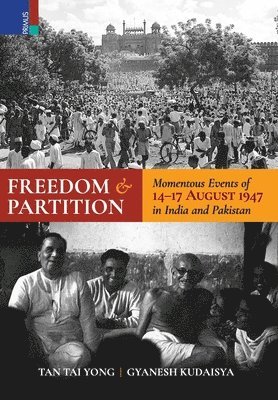
Freedom and Partition
Momentous Events of 14-17 August in India and Pakistan
Av Tan Tai Yong, Gyanesh Kudaisya
Inbunden, 2023
529 kr
Lägg i varukorg
Freedom and Partition: Momentous Events of 14-17 August in India and Pakistan
Av Tan Tai Yong, Gyanesh Kudaisya
Häftad, 2023
235 kr
Lägg i varukorg
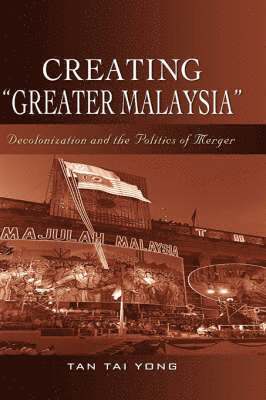
Creating ""Greater Malaysia
Decolonization and the Politics of Merger
Av Tan Tai Yong
Inbunden, 2008
573 kr
Lägg i varukorg
This book offers an in-depth and detailed analysis of the political processes that led to formation of the Federation of Malaysia in 1963. It argues that the Malaysia that came into being following the amalgamation of Malaya, Singapore, Sarawak and North Borneo was a political creation whose only …
Partition and Post-Colonial South Asia
A Reader
Av Gyanesh Kudaisya, Tan Tai Yong
2007
11882 kr
Tillfälligt slut
The partition of the Indian subcontinent in 1947 was a turning point for the area, irrevocably altering the fortunes of the people of South Asia. This new three-volume reader brings together an array of materials drawing upon new theoretical insights and fresh bodies of data which critically …