Terence Zuber – författare
Visar alla böcker från författaren . Handla med fri frakt och snabb leverans.
9 produkter
9 produkter
E-bok
PDF, Engelska, 2002622 kr
Läs direkt efter köp
The existence of the Schlieffen plan has been one of the basic assumptions of twentieth-century military history. It was the perfect example of the evils of German militarism: aggressive, mechanical, disdainful of politics and of public morality. The Great War began in August 1914 allegedly because the Schlieffen plan forced the German government to transform a Balkan quarrel into a World War by attacking France. And, in the end, the Schlieffen plan failed at thebattle of the Marne.Yet it has always been recognized that the Schlieffen plan included inconsistencies which have never been satisfactorily explained. On the basis of newly discovered documents from German archives, Terence Zuber presents a radically different picture of German war planning between 1871 and 1914, and concludes that, in fact, there never really was a `Schlieffen plan''.
E-bok
Engelska, 2002624 kr
Läs direkt efter köp
The existence of the Schlieffen plan has been one of the basic assumptions of twentieth-century military history. It was the perfect example of the evils of German militarism: aggressive, mechanical, disdainful of politics and of public morality. The Great War began in August 1914 allegedly because the Schlieffen plan forced the German government to transform a Balkan quarrel into a World War by attacking France. And, in the end, the Schlieffen plan failed at thebattle of the Marne.Yet it has always been recognized that the Schlieffen plan included inconsistencies which have never been satisfactorily explained. On the basis of newly discovered documents from German archives, Terence Zuber presents a radically different picture of German war planning between 1871 and 1914, and concludes that, in fact, there never really was a `Schlieffen plan''.
Häftad, Engelska, 2014
987 kr
Skickas inom 5-8 vardagar
The existence of the Schlieffen plan has been one of the basic assumptions of twentieth-century military history. It was the perfect example of the evils of German militarism: aggressive, mechanical, disdainful of politics and of public morality. The Great War began in August 1914 allegedly because the Schlieffen plan forced the German government to transform a Balkan quarrel into a World War by attacking France. And, in the end, the Schlieffen plan failed at the battle of the Marne.Yet it has always been recognized that the Schlieffen plan included inconsistencies which have never been satisfactorily explained. On the basis of newly discovered documents from German archives, Terence Zuber presents a radically different picture of German war planning between 1871 and 1914, and concludes that, in fact, there never really was a 'Schlieffen plan'.
Inbunden, Engelska, 2002
4 094 kr
Skickas inom 5-8 vardagar
The existence of the Schlieffen plan has been one of the basic assumptions of twentieth-century military history. It was the perfect example of the evils of German militarism: aggressive, mechanical, disdainful of politics and of public morality. The Great War began in August 1914 allegedly because the Schlieffen plan forced the German government to transform a Balkan quarrel into a World War by attacking France. And, in the end, the Schlieffen plan failed at the battle of the Marne.Yet it has always been recognized that the Schlieffen plan included inconsistencies which have never been satisfactorily explained. On the basis of newly discovered documents from German archives, Terence Zuber presents a radically different picture of German war planning between 1871 and 1914, and concludes that, in fact, there never really was a `Schlieffen plan'.
Häftad, Engelska, 2008
924 kr
Skickas inom 10-15 vardagar
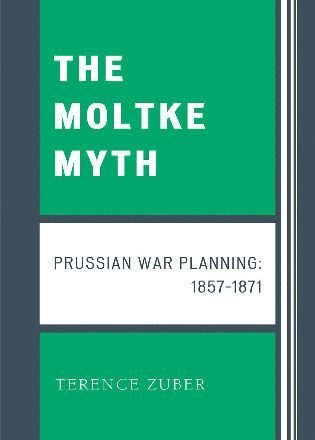
The Moltke Myth is author Terence Zuber's groundbreaking book on Helmuth Karl Bernhard Graf von Moltke, the chief of staff of the Prussian Army for thirty years. Often referred to as Moltke the Elder, he is portrayed today as the nearly-infallible victor of the Prussian wars in 1864 against Denmark, in 1866 against Austria, and in 1871 against France. Moltke the Elder is known as a brilliant, innovative planner and master of the battlefield. The Moltke Myth shows that this "common knowledge" is based solely on hero-worship and simplistic generalizations.Zuber, a career infantry officer, subjects Moltke's plans and orders to a militarily professional analysis. He asserts a new premise that Moltke was a normal human being who made grave errors like systematically failing to use cavalry reconnaissance and never knowing the location of his enemy. Zuber presents the true story about how realistic peacetime training and tactical excellence in combat helped the Prussian army win battles. The Moltke Myth offers stimulating new perspectives on tactics and strategy in the Wars of German Unification
Del 21 - Warfare in History
German War Planning, 1891-1914: Sources and Interpretations
Inbunden, Engelska, 2004
1 192 kr
Skickas inom 5-8 vardagar
Germany's Schlieffen Plan of the First World War is much talked of but little understood. Translations of primary sources recently available clarify the issues involved.The great deficiency in the discussion of German war planning prior to the Great War has been the dearth of reliable primary sources. Practically nothing was made public before the German Reichsarchiv was destroyed in April 1945,and this problem is compounded for Anglophone historians by the fact that the most interesting secondary literature was printed in German periodicals in the early 1920s. This book makes available in English translationmany of the documents concerning German war planning before 1914 that survived the war, but were kept closely guarded by the East German army archives, and only became available with the fall of the wall. Included are the only archival history of German war planning, Wilhelm Dieckmann's Der Schlieffenplan, Hellmuth Greiner's secret history of the German west front intelligence estimate from 1885 to 1914, and two of the younger Moltke's General Staff exercises. The book also presents other little-known documents found in other German archives as well as the most important parts of the 1920s literature concerning the debate on the German war plan. The picture ofGerman war planning which now emerges is both more complex and more credible than the previous single-minded emphasis on the 'Schlieffenplan'.TERENCE ZUBER has also written Inventing the Schlieffen Plan and The Moltke Myth; born in Cleveland, Ohio, he is currently living in Wurzburg, Germany.
Inbunden, Engelska, 2008
271 kr
Tillfälligt slut
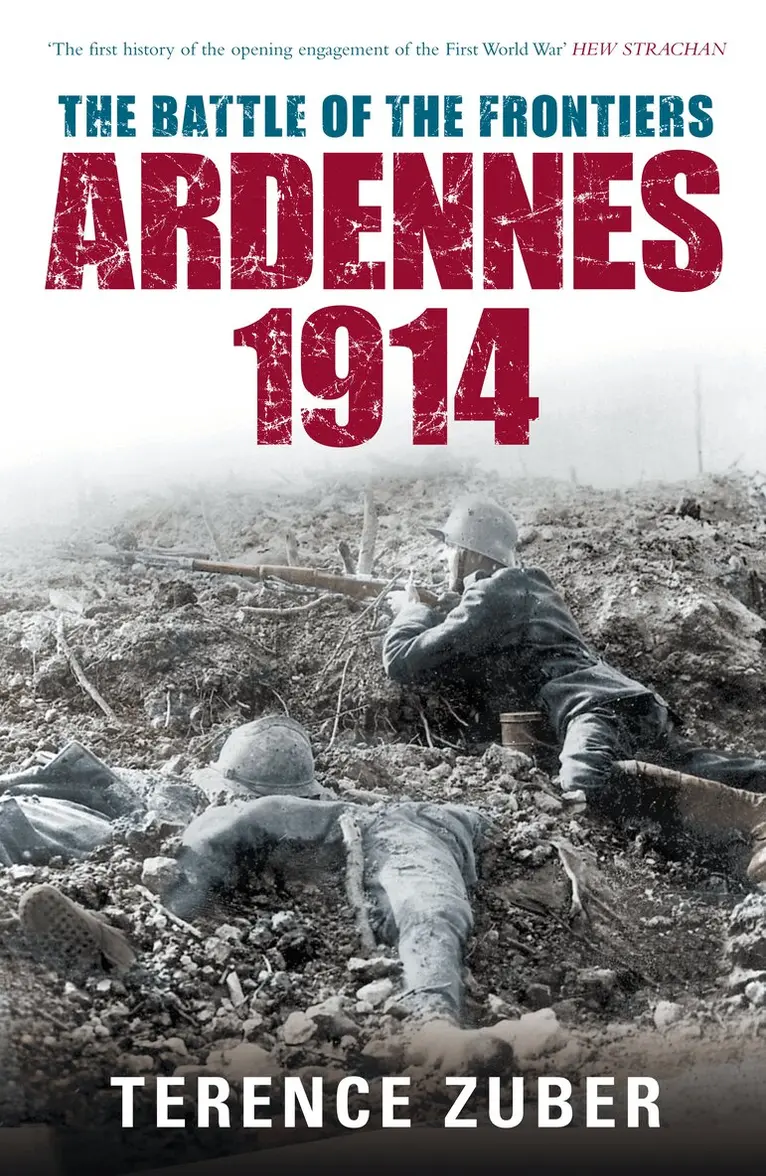
Like the Battle of Verdun, the Battle of the Frontiers has often been ignored by military historians, who assumed that the French lost the first battles of the World War I because they launched suicidal bayonet charges against German machine guns. Therefore, for nearly a century, these battles have been considered uninteresting. In reality, these were some of the most important, hard-fought and instructive battles of the First World War.The Battle of the Frontiers is the first history of this battle in English and is based on ground-breaking research conducted in French and German army archives. It also makes use of neglected French and German books and articles, as well as German regimental histories, and includes personal accounts by participants such as Manfred von Richthofen (when he was still a cavalry lieutenant) and the young Erwin Rommel. Terence Zuber here presents a dramatic new perspective on combat in 1914.
Häftad, Engelska, 2009
336 kr
Tillfälligt slut
Like the Battle of Verdun, the Battle of the Frontiers has often been ignored by military historians, who assumed that the French lost the first battles of the World War I because they launched suicidal bayonet charges against German machine guns. Therefore, for nearly a century, these battles have been considered uninteresting. In reality, these were some of the most important, hard-fought and instructive battles of the First World War.The Battle of the Frontiers is the first history of this battle in English and is based on ground-breaking research conducted in French and German army archives. It also makes use of neglected French and German books and articles, as well as German regimental histories, and includes personal accounts by participants such as Manfred von Richthofen (when he was still a cavalry lieutenant) and the young Erwin Rommel. Terence Zuber here presents a dramatic new perspective on combat in 1914.
Inbunden, Engelska, 2014
289 kr
Tillfälligt slut
On 7 August 1914 a French corps attacked towards Mulhouse in Alsace and was immediately thrown back by the Germans. On 14 August, two weeks before Tannenberg and three weeks before the Battle of the Marne, the French 1st and 2nd Armies attacked into Lorraine, and on 20 August the German 6th and 7th Armies counterattacked. After forty-three years of peace, this was the first test of strength between France and Germany. In 1929, Karl Deuringer wrote the official history of the battle for the Bavarian Army, an immensely detailed work of 890 pages, chronicling the battle to 15 September. Here, First World War expert and former army officer Terence Zuber has translated and edited this study to a more accessible length, while retaining over thirty highly detailed maps, to bring us the first account in English of the first major battle of the Great War.