Teresa H. Meng – författare
Visar alla böcker från författaren Teresa H. Meng. Handla med fri frakt och snabb leverans.
6 produkter
6 produkter
Del 123 - Springer International Series in Engineering and Computer Science
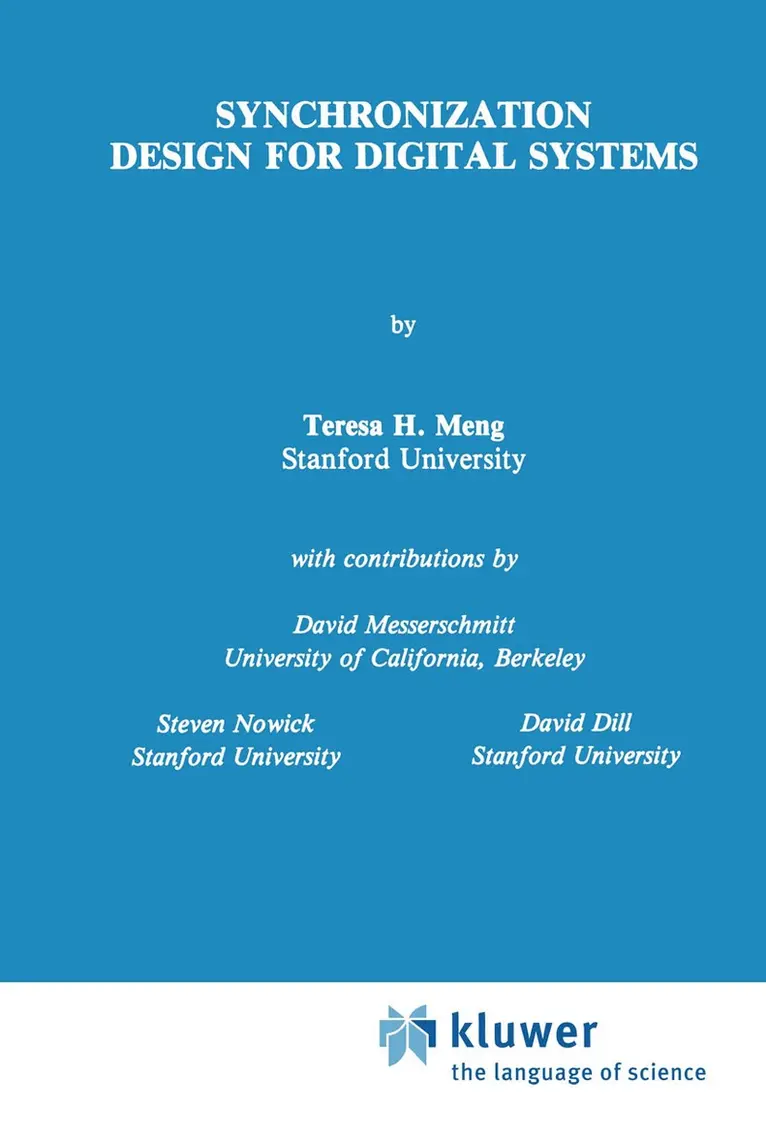
Synchronization Design for Digital Systems
Inbunden, Engelska, 1990
1 091 kr
Skickas inom 10-15 vardagar
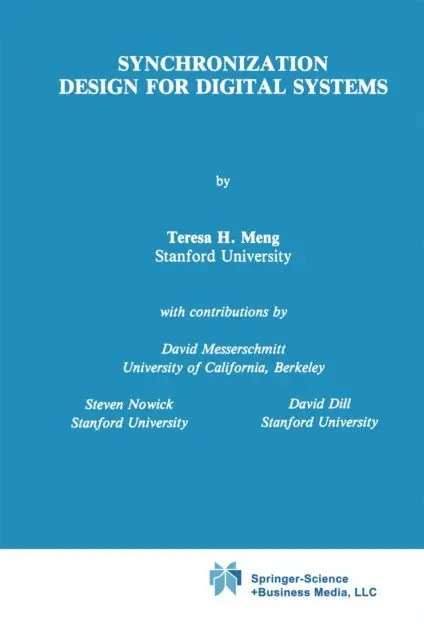
Synchronization is one of the important issues in digital system design. While other approaches have always been intriguing, up until now synchro nous operation using a common clock has been the dominant design philo sophy. However, we have reached the point, with advances in technology, where other options should be given serious consideration. This is because the clock periods are getting much smaller in relation to the interconnect propagation delays, even within a single chip and certainly at the board and backplane level. To a large extent, this problem can be overcome with care ful clock distribution in synchronous design, and tools for computer-aided design of clock distribution. However, this places global constraints on the design, making it necessary, for example, to redesign the clock distribution each time any part of the system is changed. In this book, some alternative approaches to synchronization in digital sys tem design are described and developed. We owe these techniques to a long history of effort in both digital system design and in digital communica tions, the latter field being relevant because large propagation delays have always been a dominant consideration in design. While synchronous design is discussed and contrasted to the other techniques in Chapter 6, the dom inant theme of this book is alternative approaches.
Inbunden, Engelska, 1994
1 633 kr
Skickas inom 10-15 vardagar
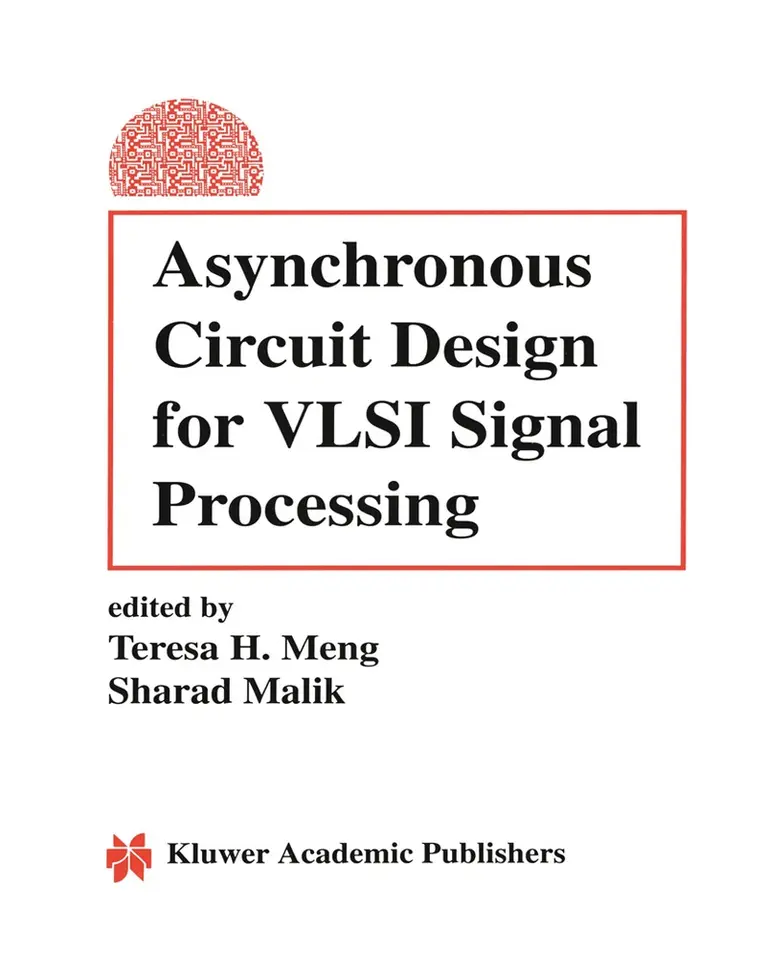
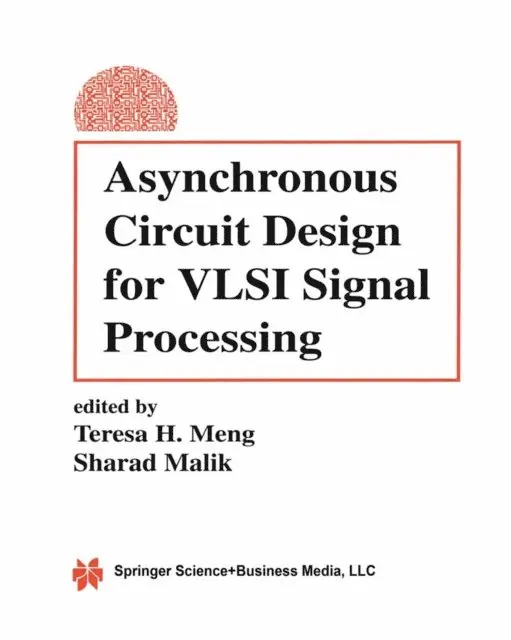
Asynchronous Circuit Design for VLSI Signal Processing is a collection of research papers on recent advances in the area of specification, design and analysis of asynchronous circuits and systems. This interest in designing digital computing systems without a global clock is prompted by the ever growing difficulty in adopting global synchronization as the only efficient means to system timing. Asynchronous circuits and systems have long held interest for circuit designers and researchers alike because of the inherent challenge involved in designing these circuits, as well as developing design techniques for them. The frontier research in this area can be traced back to Huffman's publications `The Synthesis of Sequential Switching Circuits' in 1954 followed by Unger's book, `Asynchronous Sequential Switching Circuits' in 1969 where a theoretical foundation for handling logic hazards was established. In the last few years a growing number of researchers have joined force in unveiling the mystery of designing correct asynchronous circuits, and better yet, have produced several alternatives in automatic synthesis and verification of such circuits. This collection of research papers represents a balanced view of current research efforts in the design, synthesis and verification of asynchronous systems.
Häftad, Engelska, 2012
1 633 kr
Skickas inom 10-15 vardagar
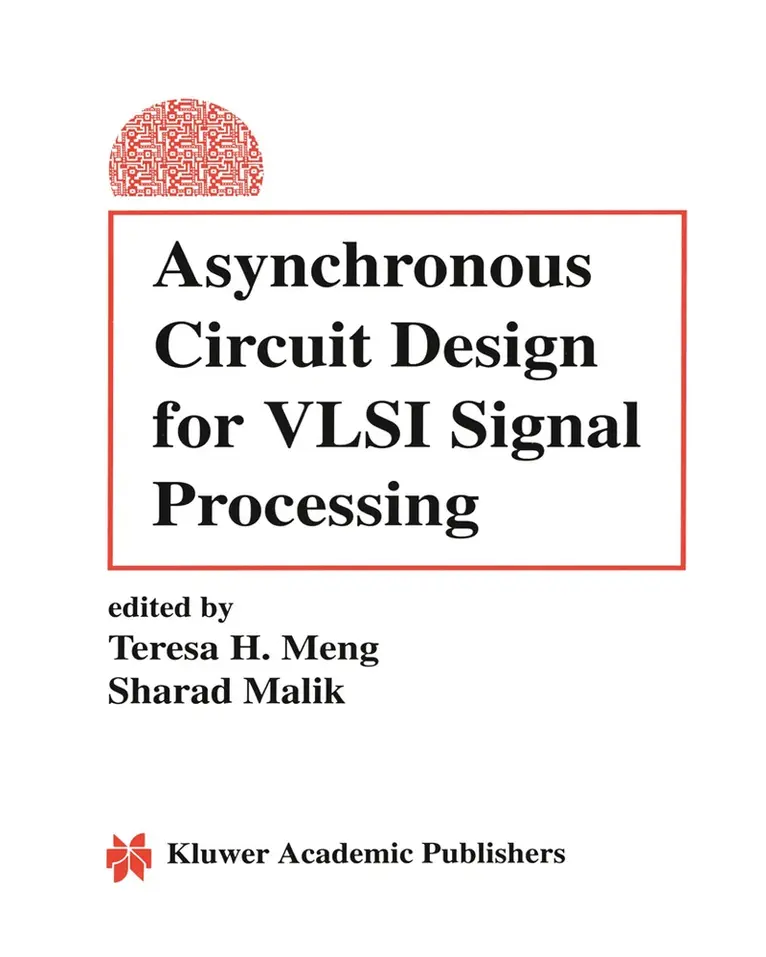
Asynchronous Circuit Design for VLSI Signal Processing is a collection of research papers on recent advances in the area of specification, design and analysis of asynchronous circuits and systems. This interest in designing digital computing systems without a global clock is prompted by the ever growing difficulty in adopting global synchronization as the only efficient means to system timing. Asynchronous circuits and systems have long held interest for circuit designers and researchers alike because of the inherent challenge involved in designing these circuits, as well as developing design techniques for them. The frontier research in this area can be traced back to Huffman's publications `The Synthesis of Sequential Switching Circuits' in 1954 followed by Unger's book, `Asynchronous Sequential Switching Circuits' in 1969 where a theoretical foundation for handling logic hazards was established. In the last few years a growing number of researchers have joined force in unveiling the mystery of designing correct asynchronous circuits, and better yet, have produced several alternatives in automatic synthesis and verification of such circuits. This collection of research papers represents a balanced view of current research efforts in the design, synthesis and verification of asynchronous systems.
Del 123 - Springer International Series in Engineering and Computer Science
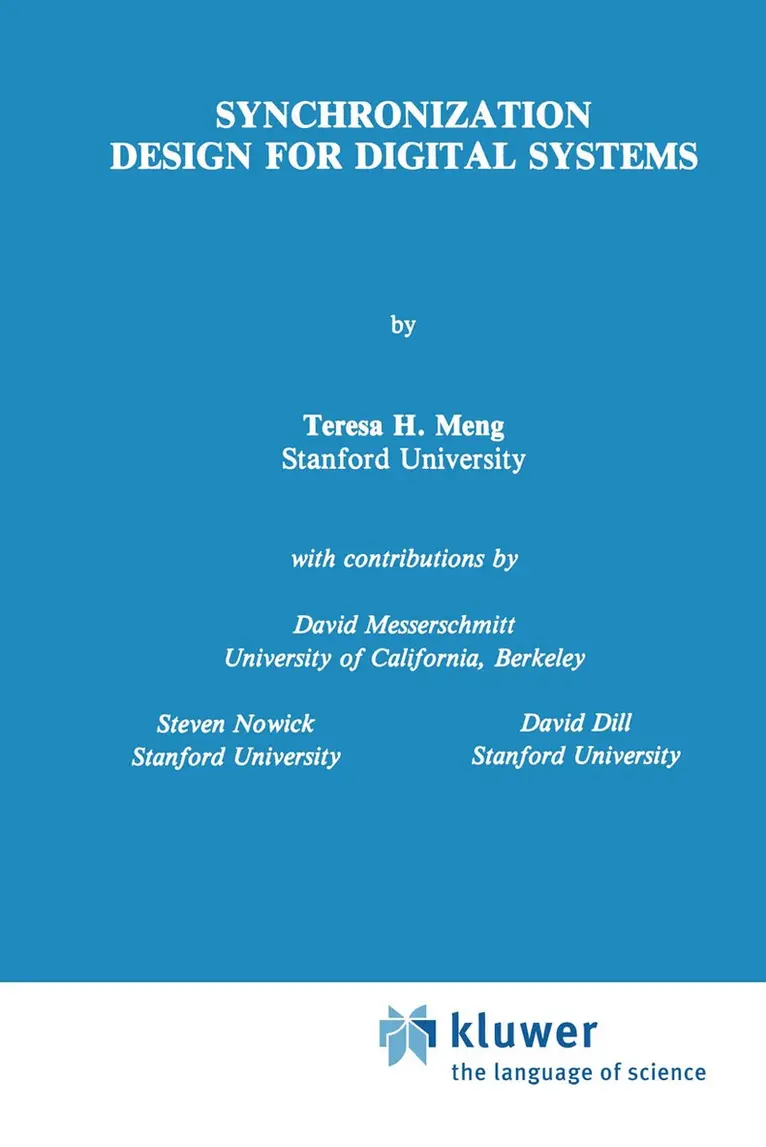
Synchronization Design for Digital Systems
Häftad, Engelska, 2012
1 091 kr
Skickas inom 10-15 vardagar
Synchronization is one of the important issues in digital system design. While other approaches have always been intriguing, up until now synchro nous operation using a common clock has been the dominant design philo sophy. However, we have reached the point, with advances in technology, where other options should be given serious consideration. This is because the clock periods are getting much smaller in relation to the interconnect propagation delays, even within a single chip and certainly at the board and backplane level. To a large extent, this problem can be overcome with care ful clock distribution in synchronous design, and tools for computer-aided design of clock distribution. However, this places global constraints on the design, making it necessary, for example, to redesign the clock distribution each time any part of the system is changed. In this book, some alternative approaches to synchronization in digital sys tem design are described and developed. We owe these techniques to a long history of effort in both digital system design and in digital communica tions, the latter field being relevant because large propagation delays have always been a dominant consideration in design. While synchronous design is discussed and contrasted to the other techniques in Chapter 6, the dom inant theme of this book is alternative approaches.
E-bok
PDF, Engelska, 20112 049 kr
Läs direkt efter köp
Asynchronous Circuit Design for VLSI Signal Processing is a collection of research papers on recent advances in the area of specification, design and analysis of asynchronous circuits and systems. This interest in designing digital computing systems without a global clock is prompted by the ever growing difficulty in adopting global synchronization as the only efficient means to system timing. Asynchronous circuits and systems have long held interest for circuit designers and researchers alike because of the inherent challenge involved in designing these circuits, as well as developing design techniques for them. The frontier research in this area can be traced back to Huffman''s publications `The Synthesis of Sequential Switching Circuits'' in 1954 followed by Unger''s book, `Asynchronous Sequential Switching Circuits'' in 1969 where a theoretical foundation for handling logic hazards was established. In the last few years a growing number of researchers have joined force in unveiling the mystery of designing correct asynchronous circuits, and better yet, have produced several alternatives in automatic synthesis and verification of such circuits. This collection of research papers represents a balanced view of current research efforts in the design, synthesis and verification of asynchronous systems.
E-bok
PDF, Engelska, 20121 367 kr
Läs direkt efter köp
Synchronization is one of the important issues in digital system design. While other approaches have always been intriguing, up until now synchro nous operation using a common clock has been the dominant design philo sophy. However, we have reached the point, with advances in technology, where other options should be given serious consideration. This is because the clock periods are getting much smaller in relation to the interconnect propagation delays, even within a single chip and certainly at the board and backplane level. To a large extent, this problem can be overcome with care ful clock distribution in synchronous design, and tools for computer-aided design of clock distribution. However, this places global constraints on the design, making it necessary, for example, to redesign the clock distribution each time any part of the system is changed. In this book, some alternative approaches to synchronization in digital sys tem design are described and developed. We owe these techniques to a long history of effort in both digital system design and in digital communica tions, the latter field being relevant because large propagation delays have always been a dominant consideration in design. While synchronous design is discussed and contrasted to the other techniques in Chapter 6, the dom inant theme of this book is alternative approaches.