Thomas Bollinghaus – författare
Visar alla böcker från författaren Thomas Bollinghaus. Handla med fri frakt och snabb leverans.
7 produkter
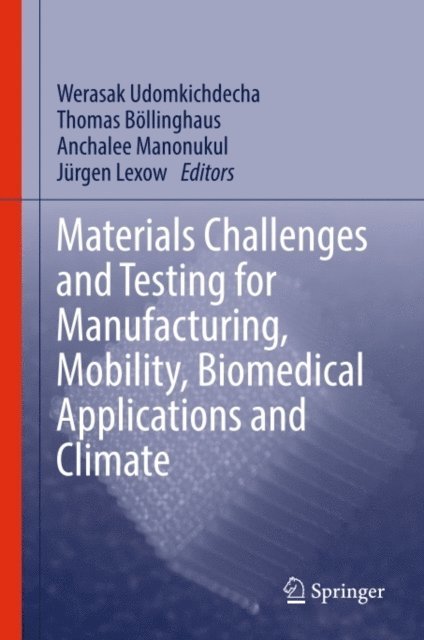
Materials Challenges and Testing for Manufacturing, Mobility, Biomedical Applications and Climate
Av Jurgen Lexow, Anchalee Manonukul m. fl.
E-bok, 2014
1459 kr
Lägg i varukorg
In two parts, the book focusses on materials science developments in the area of 1) Materials Data and Informatics: - Materials data quality and infrastructure - Materials databases - Materials data mining, image analysis, data driven materials discovery, data visualization. 2) Materials for …
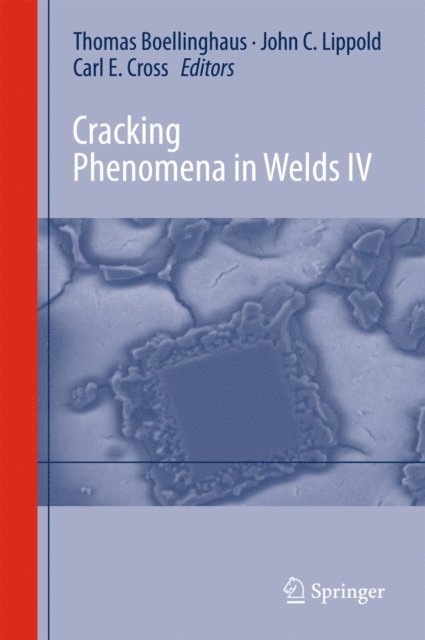
Cracking Phenomena in Welds IV
Av Carl Edward Cross, John Lippold m. fl.
E-bok, 2016
2543 kr
Lägg i varukorg
This is the fourth volume inthe well-established series of compendiums devoted to the subject of weld hotcracking. It contains the papers presented at the 4th InternationalCracking Workshop held in Berlin in April 2014. In the context of thisworkshop, the term “cracking” refers to hot cracking in …
Hot Cracking Phenomena in Welds
Av Horst Herold, Thomas Bollinghaus
E-bok, 2005
2111 kr
Lägg i varukorg
Although the avoidance of hot cracking still represents a major topic in modern fabrication welding components, the phenomena have not yet been fully understood. Through the 20 individual contributions from experts all over the world the present state of knowledge about hot cracking during welding …
Hot Cracking Phenomena in Welds II
Av J C Lippold, Carl E. Cross m. fl.
E-bok, 2008
2111 kr
Lägg i varukorg
Failure of welded components can occur during service as well as during fabrication. Most common, analyses of the resistance of welded components against failure are targeted at crack avoidance. Such evaluations are increasingly carried out by modern weldability studies, i. e. considering …
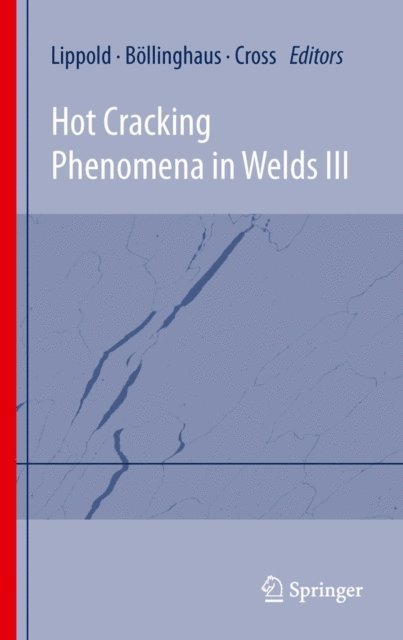
Hot Cracking Phenomena in Welds III
Av Carl E. Cross, Thomas Bollinghaus m. fl.
E-bok, 2011
2065 kr
Lägg i varukorg
This is the third in a series of compendiums devoted to the subject of weld hot cracking. It contains 22 papers presented at the 3 rd International Hot Cracking Workshop in Columbus, Ohio USA in March 2010. In the context of this workshop, the term “hot cracking” refers to elevated temperature …
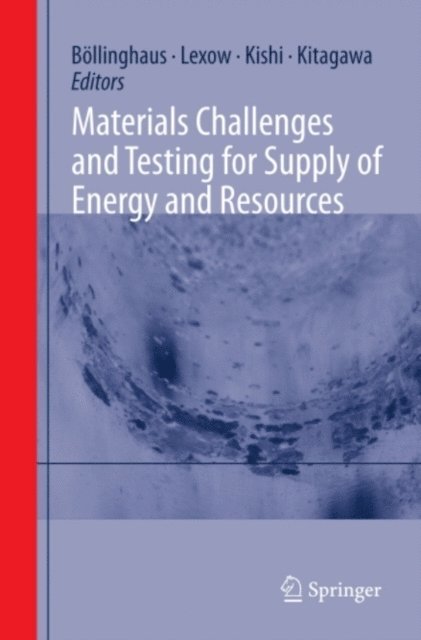
Materials Challenges and Testing for Supply of Energy and Resources
Av Masaki Kitagawa, Teruo Kishi m. fl.
E-bok, 2012
1427 kr
Lägg i varukorg
One major goal of the World Materials Research Institute Forum - WMRIF is to promote young scientists in the field of materials science and engineering. To enhance the international knowledge exchange between young postdoctoral scientists all over the world, WMRIF meanwhile regularly organizes …
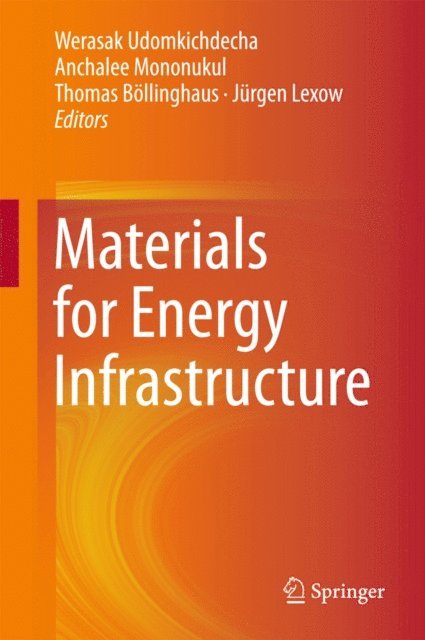
Materials for Energy Infrastructure
Av Jurgen Lexow, Thomas Bollinghaus m. fl.
E-bok, 2015
1459 kr
Lägg i varukorg
This book presents contributions to the topics of materials for energy infrastructure with a focus on data and informatics for materials. This spectrum of topics has been chosen because challenges in terms of materials are identified to lie in transport and storage of energy, adequate supply of …