Tin Seng Lim - Böcker
Visar alla böcker från författaren Tin Seng Lim. Handla med fri frakt och snabb leverans.
2 produkter
2 produkter
1 107 kr
Tillfälligt slut
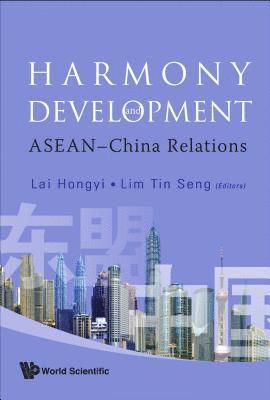
This book celebrates the 15th anniversary of China-ASEAN dialogue, which has captured the limelight as a key development in international relations in the Asia-Pacific. The contributions discuss a wide range of complex and challenging issues concerning ASEAN-China relations in a readable, informative, concise and comprehensive way.In three parts, the volume begins with an introduction and three speeches. The second and third parts discuss the political, security and economic aspects of ASEAN-China relations. Some of the specific issues covered in the book include China's rise and its implication on ASEAN, China's political and economic relations with ASEAN, and China's relations with Singapore, Malaysia, Indonesia, Vietnam, Myanmar and the Philippines.Contributors include leading scholars and analysts from these countries.
Del 20 - Series on Contemporary China
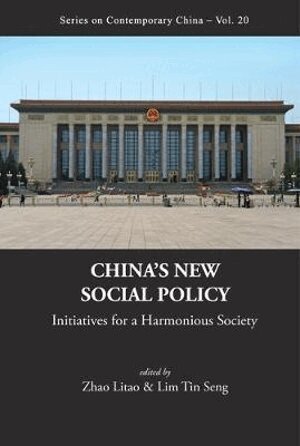
China's New Social Policy: Initiatives For A Harmonious Society
Inbunden, Engelska, 2009
1 594 kr
Skickas inom 5-8 vardagar
After more than 30 years of rapid development, China has established herself as an important engine of growth for the world economy. This achievement, however, came with a heavy price, in the form of serious pollution in its developed regions and social problems in areas such as healthcare and housing. This publication studies some of such problems and provides an updated account on a wide range of new social policy initiatives in China.China's New Social Policy distinguishes itself from other literature in this field. It undertakes a general methodology that assesses the social impact brought about by the market-oriented changes in China's social policies, and contests the idea whether market-oriented development can result in a more sustainable society. All chapters in the book are crafted by prominent scholars, which include Professor Zheng Yongnian, Director of the East Asian Institute, and Professor Gu Xin, School of Government, Peking University.