Tomas Tomascik – författare
Visar alla böcker från författaren . Handla med fri frakt och snabb leverans.
4 produkter
4 produkter
Inbunden, Engelska, 1997
956 kr
Skickas inom 7-10 vardagar
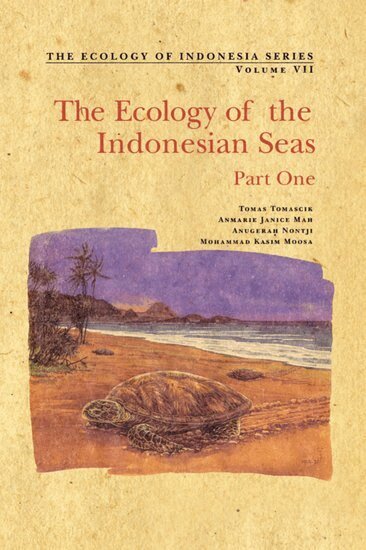
Located between the Pacific and Indian Oceans, and between the Asian and Australian continents, the seas of the Indonesian Archipelago have a significant role in global weather patterns and oceanic circulation. The dynamic interplay between geological, physical, chemical, and biological processes, past and present, has given rise to one of the most diverse marine regions on the planet. The exceptional marine and coastal ecosystem diversity of the Indonesian archipelago provides hundreds of habitats that support thousands of species. This treasure trove of marine biodiversity has sustained the people of the archipelago for thousands of years. Population growth and socio-economic development place many of these resources at increasing risk of overexploitation. Using maps and numerous illustrations, The Ecology of the Indonesian Seas describes the complex and ecologically vulnerable coastal and marine ecosystems of the region in rich detail. Discussion of development, resource use and ecologically sustainable management plans is also incorporated. The first step towards sustainable use of marine and coastal resources, this book will be a valuable tool for ecologists, marine biologists, resource managers, government planners, and all those with an interest in the ecology of the region. Bound in two parts, of which this is the first, this book is part of The Ecology of Indonesia series.
Inbunden, Engelska, 1997
956 kr
Skickas inom 7-10 vardagar
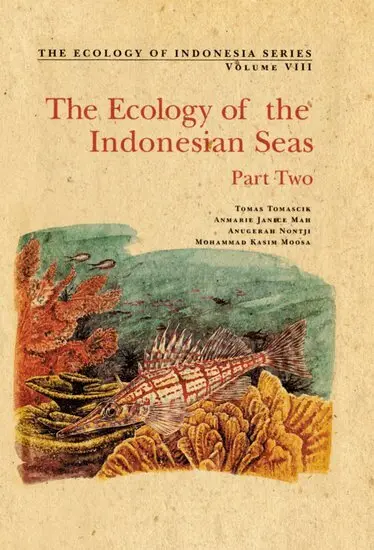
Located between the Pacific and Indian Oceans, and between the Asian and Australian continents, the seas of the Indonesian Archipelago have a significant role in global weather patterns and oceanic circulation. The dynamic interplay between geological, physical, chemical, and biological processes, past and present, has given rise to one of the most diverse marine regions on the planet. The exceptional marine and coastal ecosystem diversity of the Indonesian archipelago provides hundreds of habitats that support thousands of species. This treasure-trove of marine biodiversity has sustained the people of the archipelago for thousands of years. Population growth and socio-economic development place many of these resources at increasing risk of overexploitation. Using maps and numerous illustrations, The Ecology of the Indonesian Seas describes the complex and ecologically vulnerable coastal and marine ecosystems of the region in rich detail. Discussion of development, resource use and ecologically sustainable management plans is also incorporated. The first step towards sustainable use of marine and coastal resources, this book will be a valuable tool for ecologists, marine biologists, resource managers, government planners, and all those with an interest in the ecology of the region. Bound in two parts, of which this is the second, The Ecology of the Indonesian Seas is part of The Ecology of Indonesia Series.
E-bok
Engelska, 2013273 kr
Läs direkt efter köp
The Ecology of the Indonesian Seas distills for the first time the information found in thousands of scholarly works relevant to an understanding of the sustainable use of marine and coastal resources in these islands—many of them available up to now only in Dutch, German or Indonesian. It is an invaluable tool for government planners, resource managers, ecologists, university students, scuba divers, and all those with an interest in the sea. The first volume provides a review of the geology, physical oceanography and meteorology of the archipelago. Coral reefs, one of the most important, yet least known ecosystems in Indonesia, are introduced in this volume through discussions of the geologic history of reefs, followed by a review of the major theories of coral reef formation, development and their world distribution. Corals and other reef-associated organisms are then examined. The chapter on foraminifera, major producers of the present and past carbonate deposits, presents some little-known Indonesian assemblages. Next, the authors look at the natural environmental factors that affect coral reef development and survival. A chapter on coral reef growth and development concludes the first volume.
E-bok
Engelska, 2013257 kr
Läs direkt efter köp
The Ecology of the Indonesian Seas distills for the first time the information found in thousands of scholarly works relevant to an understanding of the sustainable use of marine and coastal resources in these islands&8212;many of them available up to now only in Dutch, German or Indonesian. It is an invaluable tool for government planners, resource managers, ecologists, university students, scuba divers, and all those with an interest in the sea.The second volume discusses the origins, formation and distribution of various reef types in the Indonesian Archipelago, and provides new estimates on their extent. The second volume also provides a review of the ecology of Indonesian seagrass, mangrove and open-ocean ecosystems. The chapter on marine biodiversity focuses on a number of marine and coastal habitats and threatened marine organisms. The final two chapters discuss what recent effects the human race has had on marine resources, and what we can do to protect and preserve our marine and coastal zones for generations to come.