Tony Berber Sardinha - Böcker
Visar alla böcker från författaren Tony Berber Sardinha. Handla med fri frakt och snabb leverans.
6 produkter
6 produkter
241 kr
Skickas inom 7-10 vardagar
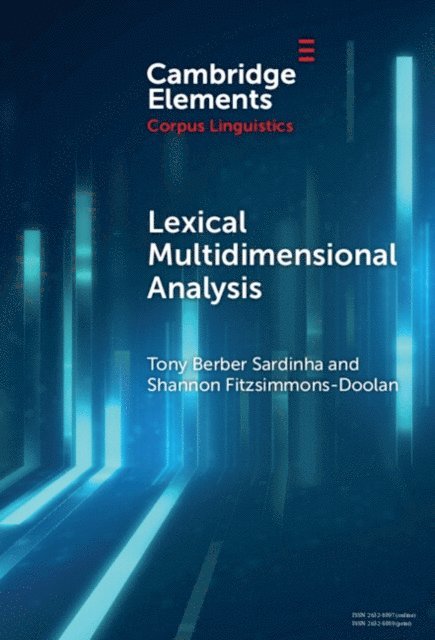
Lexical Multidimensional Analysis (LMDA), an extension of Biber's (1988) Multidimensional Analysis, seeks to identify dimensions (correlated lexical features across texts in a corpus) unveiling underlying patterns of lexical co-occurrence and variation within texts that are operationalized as a variety of latent, macro-level discursive constructs. Initially developed in the 2010s, LMDA has been applied to diverse domains, including education policy, national representations, applied linguistics, music, the infodemic, religion, sustainability, and literary style. This Element introduces LMDA for the identification and analysis of discourses and ideologies, offering insights into how lexis marks discourse formations and ideological alignments. Two case studies demonstrate the application of LMDA: uncovering discourses on climate change within conservative social media and analyzing ideological discourses in migrant education.
775 kr
Skickas inom 7-10 vardagar
Lexical Multidimensional Analysis (LMDA), an extension of Biber's (1988) Multidimensional Analysis, seeks to identify dimensions (correlated lexical features across texts in a corpus) unveiling underlying patterns of lexical co-occurrence and variation within texts that are operationalized as a variety of latent, macro-level discursive constructs. Initially developed in the 2010s, LMDA has been applied to diverse domains, including education policy, national representations, applied linguistics, music, the infodemic, religion, sustainability, and literary style. This Element introduces LMDA for the identification and analysis of discourses and ideologies, offering insights into how lexis marks discourse formations and ideological alignments. Two case studies demonstrate the application of LMDA: uncovering discourses on climate change within conservative social media and analyzing ideological discourses in migrant education.
1 888 kr
Skickas inom 10-15 vardagar
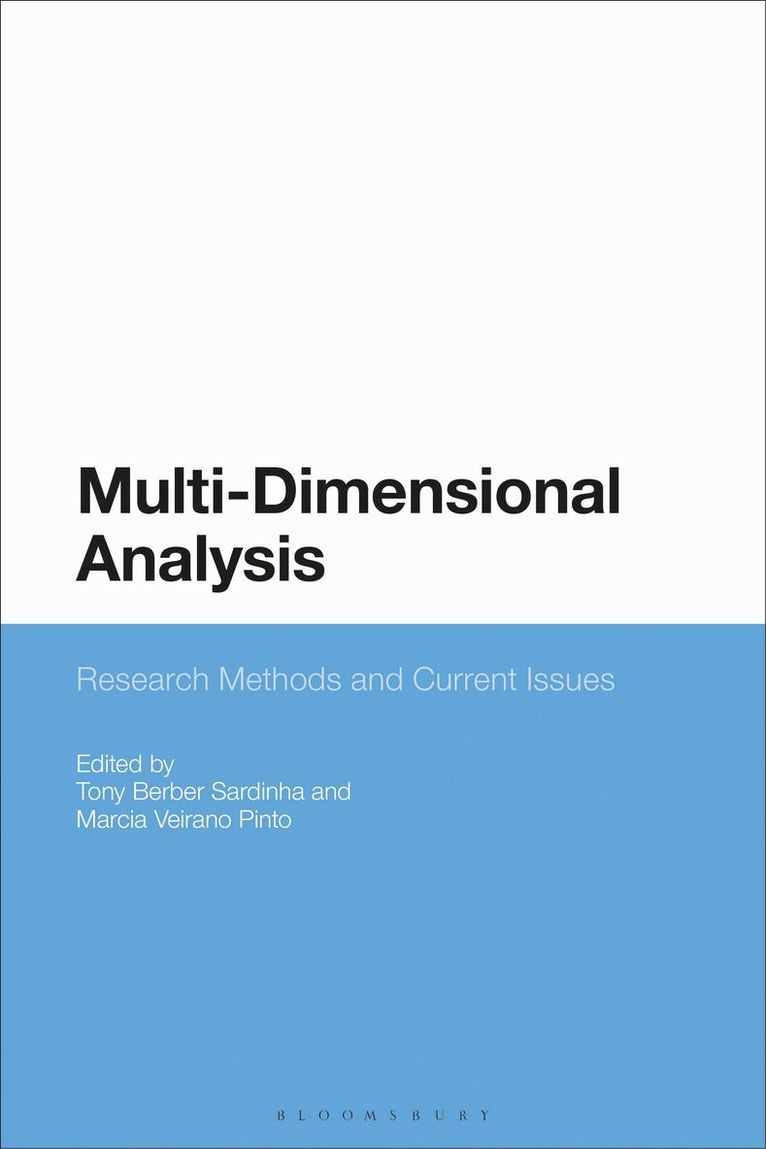
Multi-Dimensional Analysis: Research Methods and Current Issues provides a comprehensive guide both to the statistical methods in Multi-Dimensional Analysis (MDA) and its key elements, such as corpus building, tagging, and tools. The major goal is to explain the steps involved in the method so that readers may better understand this complex research framework and conduct MD research on their own.Multi-Dimensional Analysis is a method that allows the researcher to describe different registers (textual varieties defined by their social use) such as academic settings, regional discourse, social media, movies, and pop songs. Through multivariate statistical techniques, MDA identifies complementary correlation groupings of dozens of variables, including variables which belong both to the grammatical and semantic domains. Such groupings are then associated with situational variables of texts like information density, orality, and narrativity to determine linguistic constructs known as dimensions of variation, which provide a scale for the comparison of a large number of texts and registers.This book is a comprehensive research guide to MDA.
475 kr
Skickas inom 10-15 vardagar
Multi-Dimensional Analysis: Research Methods and Current Issues provides a comprehensive guide both to the statistical methods in Multi-Dimensional Analysis (MDA) and its key elements, such as corpus building, tagging, and tools. The major goal is to explain the steps involved in the method so that readers may better understand this complex research framework and conduct MD research on their own.Multi-Dimensional Analysis is a method that allows the researcher to describe different registers (textual varieties defined by their social use) such as academic settings, regional discourse, social media, movies, and pop songs. Through multivariate statistical techniques, MDA identifies complementary correlation groupings of dozens of variables, including variables which belong both to the grammatical and semantic domains. Such groupings are then associated with situational variables of texts like information density, orality, and narrativity to determine linguistic constructs known as dimensions of variation, which provide a scale for the comparison of a large number of texts and registers.This book is a comprehensive research guide to MDA.
2 157 kr
Skickas inom 10-15 vardagar
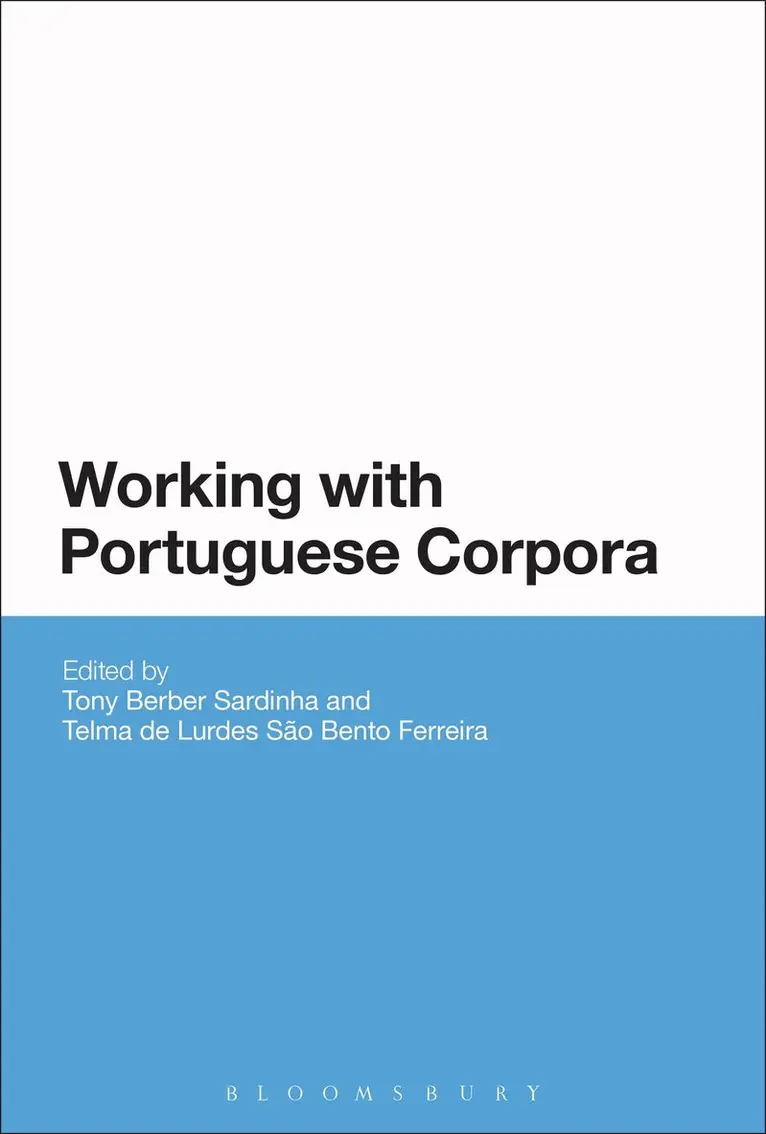
Although Portuguese is one of the main world languages and researchers have been working on Portuguese electronic text collections for decades (e.g. Kelly, 1970; Biderman, 1978; Bacelar do Nascimento et al., 1984; see Berber Sardinha, 2005), this is the first volume in English that encapsulates the exciting and cutting-edge corpus linguistic work being done with Portuguese language corpora on different continents. The book includes chapters by leading corpus linguists dealing with Portuguese corpora across the world, and their contributions explore various methods and how they are applicable to a wide range of language issues. The book is divided into six sections, each covering a key issue in Corpus Linguistics: lexis and grammar, lexicography, language teaching and terminology, translation, corpus building and sharing, and parsing and annotation. Together these sections present the reader with a broad picture of the field.
544 kr
Skickas inom 10-15 vardagar
Although Portuguese is one of the main world languages and researchers have been working on Portuguese electronic text collections for decades (e.g. Kelly, 1970; Biderman, 1978; Bacelar do Nascimento et al., 1984; see Berber Sardinha, 2005), this is the first volume in English that encapsulates the exciting and cutting-edge corpus linguistic work being done with Portuguese language corpora on different continents. The book includes chapters by leading corpus linguists dealing with Portuguese corpora across the world, and their contributions explore various methods and how they are applicable to a wide range of language issues. The book is divided into six sections, each covering a key issue in Corpus Linguistics: lexis and grammar, lexicography, language teaching and terminology, translation, corpus building and sharing, and parsing and annotation. Together these sections present the reader with a broad picture of the field.