Un-Habitat – författare
835 kr
Skickas inom 10-15 vardagar
594 kr
Skickas inom 5-8 vardagar
655 kr
Skickas inom 5-8 vardagar
1 009 kr
Läs direkt efter köp
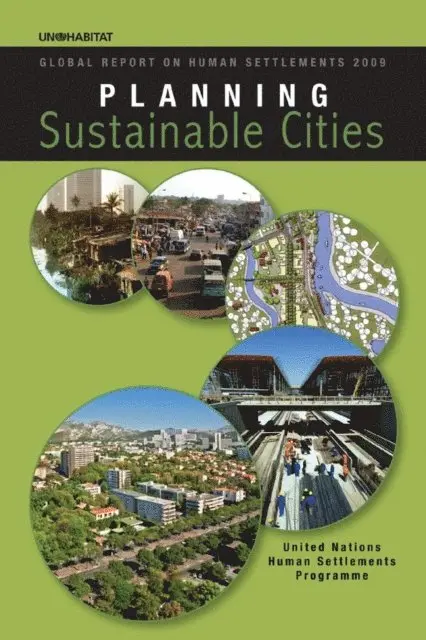
Current urban planning systems are not equipped to deal with the major urban challenges of the twenty-first century, including effects of climate change, resource depletion and economic instability, plus continued rapid urbanization with its negative consequences such as poverty, slums and urban informality. These planning systems have also, to a large extent, failed to meaningfully involve and accommodate the ways of life of communities and other stakeholders in the planning of urban areas, thus contributing to the problems of spatial marginalization and exclusion. It is clear that urban planning needs to be reconsidered and revitalized for a sustainable urban future.
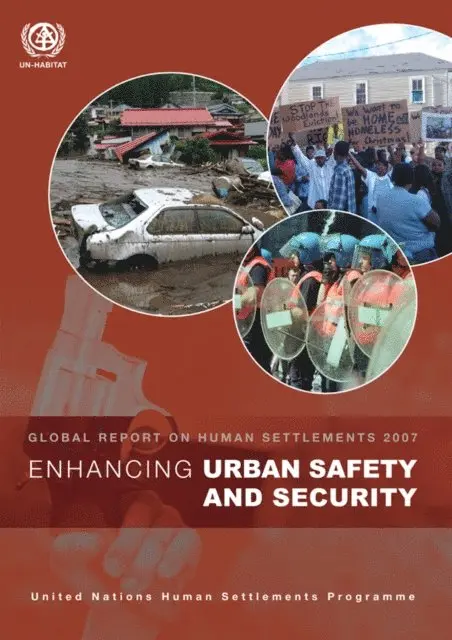
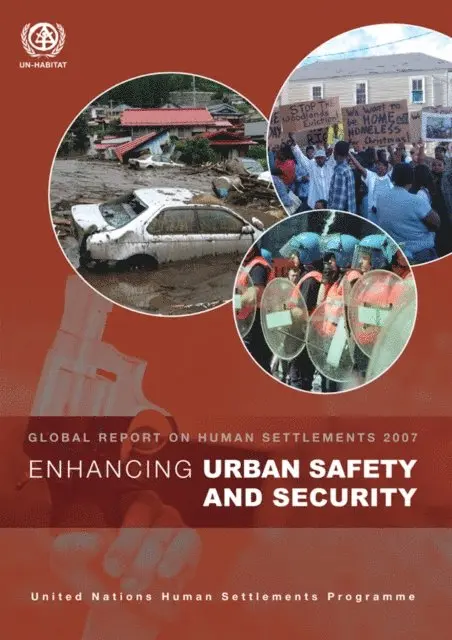
Planning Sustainable Cities reviews the major challenges currently facing cities and towns all over the world, the emergence and spread of modern urban planning and the effectiveness of current approaches. More importantly, it identifies innovative urban planning approaches and practices that are more responsive to current and future challenges of urbanization. The Global Report on Human Settlements is the most authoritative and up-to-date global assessment of human settlements conditions and trends. It is an essential reference for researchers, academics, public authorities and civil society organizations all over the world. Preceding issues of the report have addressed such topics as Cities in a Globalizing World, The Challenge of Slums, Financing Urban Shelter and Enhancing Urban Safety and Security.
1 009 kr
Läs direkt efter köp
Current urban planning systems are not equipped to deal with the major urban challenges of the twenty-first century, including effects of climate change, resource depletion and economic instability, plus continued rapid urbanization with its negative consequences such as poverty, slums and urban informality. These planning systems have also, to a large extent, failed to meaningfully involve and accommodate the ways of life of communities and other stakeholders in the planning of urban areas, thus contributing to the problems of spatial marginalization and exclusion. It is clear that urban planning needs to be reconsidered and revitalized for a sustainable urban future.
Planning Sustainable Cities reviews the major challenges currently facing cities and towns all over the world, the emergence and spread of modern urban planning and the effectiveness of current approaches. More importantly, it identifies innovative urban planning approaches and practices that are more responsive to current and future challenges of urbanization. The Global Report on Human Settlements is the most authoritative and up-to-date global assessment of human settlements conditions and trends. It is an essential reference for researchers, academics, public authorities and civil society organizations all over the world. Preceding issues of the report have addressed such topics as Cities in a Globalizing World, The Challenge of Slums, Financing Urban Shelter and Enhancing Urban Safety and Security.
706 kr
Läs direkt efter köp
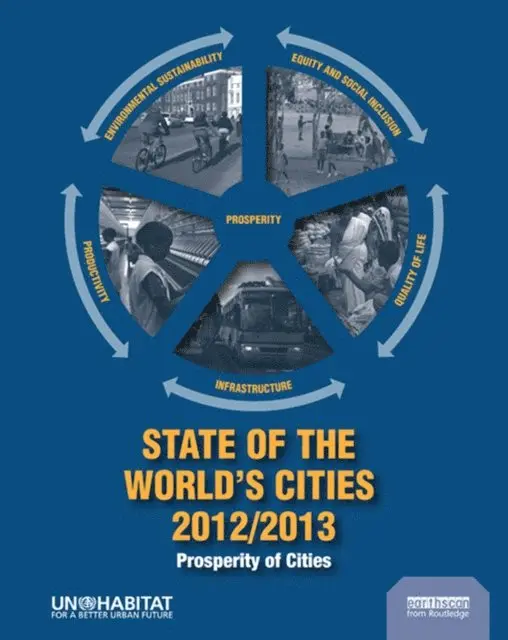
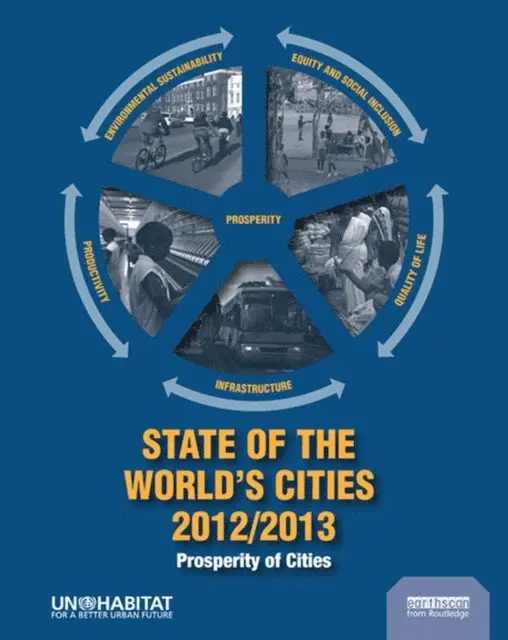
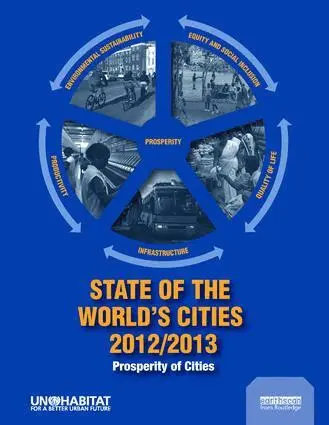
The city is the home of prosperity. It is the place where human beings find satisfaction of basic needs and access to essential public goods. The city is also where ambitions, aspirations and other material and immaterial aspects of life are realized, providing contentment and happiness. It is a locus at which the prospects of prosperity and individual and collective well-being can be increased. However, when prosperity is restricted to some groups, when it is used to pursue specific interests, or when it is a justification for financial gains for the few to the detriment of the majority, the city becomes the arena where the right to shared prosperity is claimed and fought for. As people in the latter part of 2011 gathered in Cairo’s Tahrir Square, in Madrid’s Puerta del Sol, in front of London’s St Paul’s cathedral, or in New York’s Zuccotti Park, they were not only demanding more equality and inclusion; they were also expressing the need for prosperity to be shared across all segments of society.
What this new edition of State of the World’s Cities shows is that prosperity for all has been compromised by a narrow focus on economic growth. UN-Habitat suggests a fresh approach to prosperity beyond the solely economic emphasis, including other vital dimensions such as quality of life, adequate infrastructures, equity and environmental sustainability. The Report proposes a new tool – the City Prosperity Index – together with a conceptual matrix, the Wheel of Prosperity, both of which are meant to assist decision makers to design clear policy interventions. The Report advocates for the need of cities to enhance the public realm, expand public goods and consolidate rights to the ''commons'' for all as a way to expand prosperity. This comes in response to the observed trend of enclosing or restricting these goods and commons in enclaves of prosperity, or depleting them through unsustainable use. The Report maps out major policy steps to promote a new type of city – the city of the twenty-first century – that is a ''good'', people-centred city. One that is capable of integrating the tangible and more intangible aspects of prosperity, and in the process shedding off the inefficient, unsustainable forms and functionalities of the city of the previous century. By doing this, UN-Habitat plays a pivotal role in ensuring that urban planning, legal, regulatory and institutional frameworks become instruments of prosperity and well-being.
706 kr
Läs direkt efter köp
The city is the home of prosperity. It is the place where human beings find satisfaction of basic needs and access to essential public goods. The city is also where ambitions, aspirations and other material and immaterial aspects of life are realized, providing contentment and happiness. It is a locus at which the prospects of prosperity and individual and collective well-being can be increased. However, when prosperity is restricted to some groups, when it is used to pursue specific interests, or when it is a justification for financial gains for the few to the detriment of the majority, the city becomes the arena where the right to shared prosperity is claimed and fought for. As people in the latter part of 2011 gathered in Cairo’s Tahrir Square, in Madrid’s Puerta del Sol, in front of London’s St Paul’s cathedral, or in New York’s Zuccotti Park, they were not only demanding more equality and inclusion; they were also expressing the need for prosperity to be shared across all segments of society.
What this new edition of State of the World’s Cities shows is that prosperity for all has been compromised by a narrow focus on economic growth. UN-Habitat suggests a fresh approach to prosperity beyond the solely economic emphasis, including other vital dimensions such as quality of life, adequate infrastructures, equity and environmental sustainability. The Report proposes a new tool – the City Prosperity Index – together with a conceptual matrix, the Wheel of Prosperity, both of which are meant to assist decision makers to design clear policy interventions. The Report advocates for the need of cities to enhance the public realm, expand public goods and consolidate rights to the ''commons'' for all as a way to expand prosperity. This comes in response to the observed trend of enclosing or restricting these goods and commons in enclaves of prosperity, or depleting them through unsustainable use. The Report maps out major policy steps to promote a new type of city – the city of the twenty-first century – that is a ''good'', people-centred city. One that is capable of integrating the tangible and more intangible aspects of prosperity, and in the process shedding off the inefficient, unsustainable forms and functionalities of the city of the previous century. By doing this, UN-Habitat plays a pivotal role in ensuring that urban planning, legal, regulatory and institutional frameworks become instruments of prosperity and well-being.
891 kr
Läs direkt efter köp
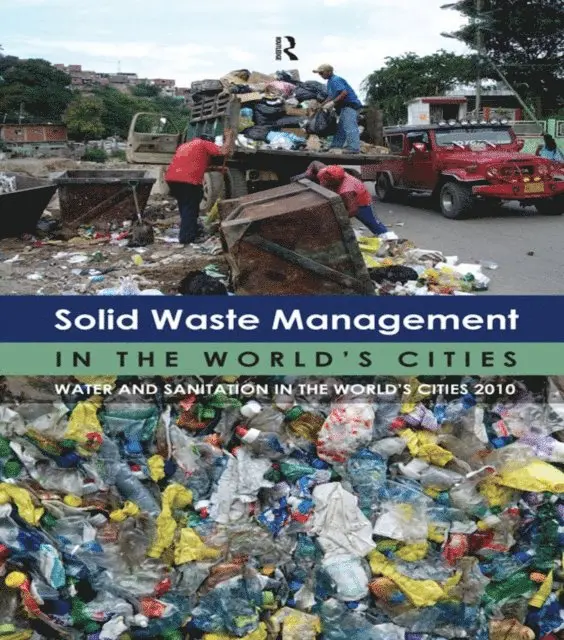
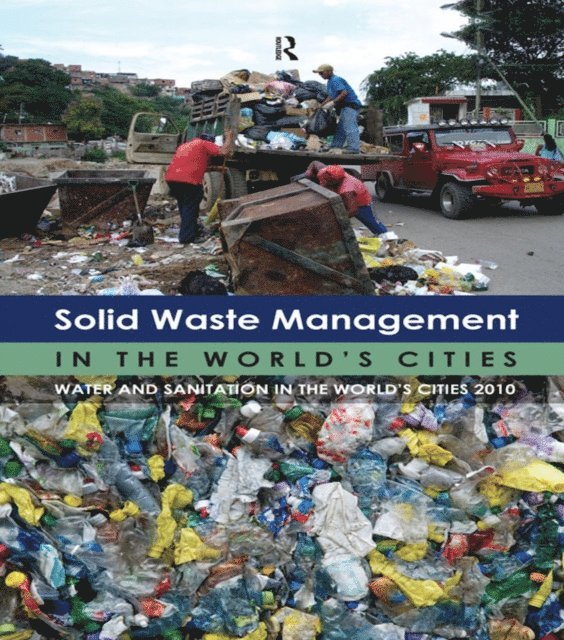
In our rapidly urbanizing global society, solid waste management will be a key challenge facing all the world''s cities. Solid Waste Management in the World''s Cities provides a fresh perspective and new data on one of the biggest issues in urban development.
Using the framework of Integrated Sustainable Waste Management (ISWM), the report brings together unprecedented research from 22 cities across six continents. It uncovers the rich diversity of waste management systems that are in place throughout the world, and draws out the practical lessons for policymakers. The volume will be essential reading for all professionals and policymakers in the field, as well as a valuable resource for researchers and students in all aspects of urban development.
Winner of the International Solid Waste Association Publication Award 2010
Published with UN-Habitat.
891 kr
Läs direkt efter köp
In our rapidly urbanizing global society, solid waste management will be a key challenge facing all the world''s cities. Solid Waste Management in the World''s Cities provides a fresh perspective and new data on one of the biggest issues in urban development.
Using the framework of Integrated Sustainable Waste Management (ISWM), the report brings together unprecedented research from 22 cities across six continents. It uncovers the rich diversity of waste management systems that are in place throughout the world, and draws out the practical lessons for policymakers. The volume will be essential reading for all professionals and policymakers in the field, as well as a valuable resource for researchers and students in all aspects of urban development.
Winner of the International Solid Waste Association Publication Award 2010
Published with UN-Habitat.
824 kr
Läs direkt efter köp
The world''s urban population now exceeds the world''s rural population. What does this mean for the state of our cities, given the strain this global demographic shift is placing upon current urban infrastructures?
Following on from previous State of the World''s Cities reports, this edition uses the framework of ''The Urban Divide'' to analyse the complex social, political, economic and cultural dynamics of urban environments. In particular, the book focuses on the concept of the ''right to the city'' and ways in which many urban dwellers are excluded from the advantages of city life, using the framework to explore links among poverty, inequality, slum formation and economic growth. The volume will be essential reading for all professionals and policymakers in the field, as well as a valuable resource for researchers and students in all aspects of urban development.
Published with UN-Habitat.
824 kr
Läs direkt efter köp
The world''s urban population now exceeds the world''s rural population. What does this mean for the state of our cities, given the strain this global demographic shift is placing upon current urban infrastructures?
Following on from previous State of the World''s Cities reports, this edition uses the framework of ''The Urban Divide'' to analyse the complex social, political, economic and cultural dynamics of urban environments. In particular, the book focuses on the concept of the ''right to the city'' and ways in which many urban dwellers are excluded from the advantages of city life, using the framework to explore links among poverty, inequality, slum formation and economic growth. The volume will be essential reading for all professionals and policymakers in the field, as well as a valuable resource for researchers and students in all aspects of urban development.
Published with UN-Habitat.
757 kr
Läs direkt efter köp
''This is surely the most impressive and important publication to come out of the UN system for many years.'' Peter Adamson, founder, New Internationalist, and author and researcher of UNICEF''s The State of the World''s Children from 1980 to 1995
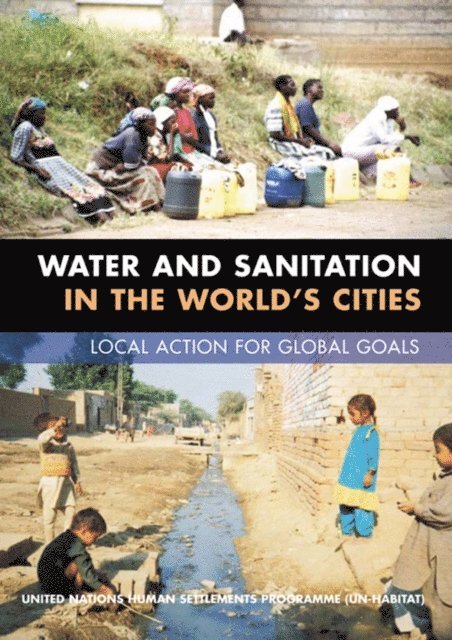
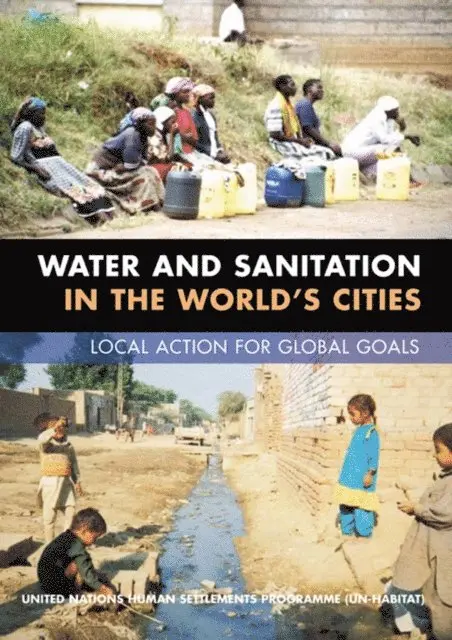
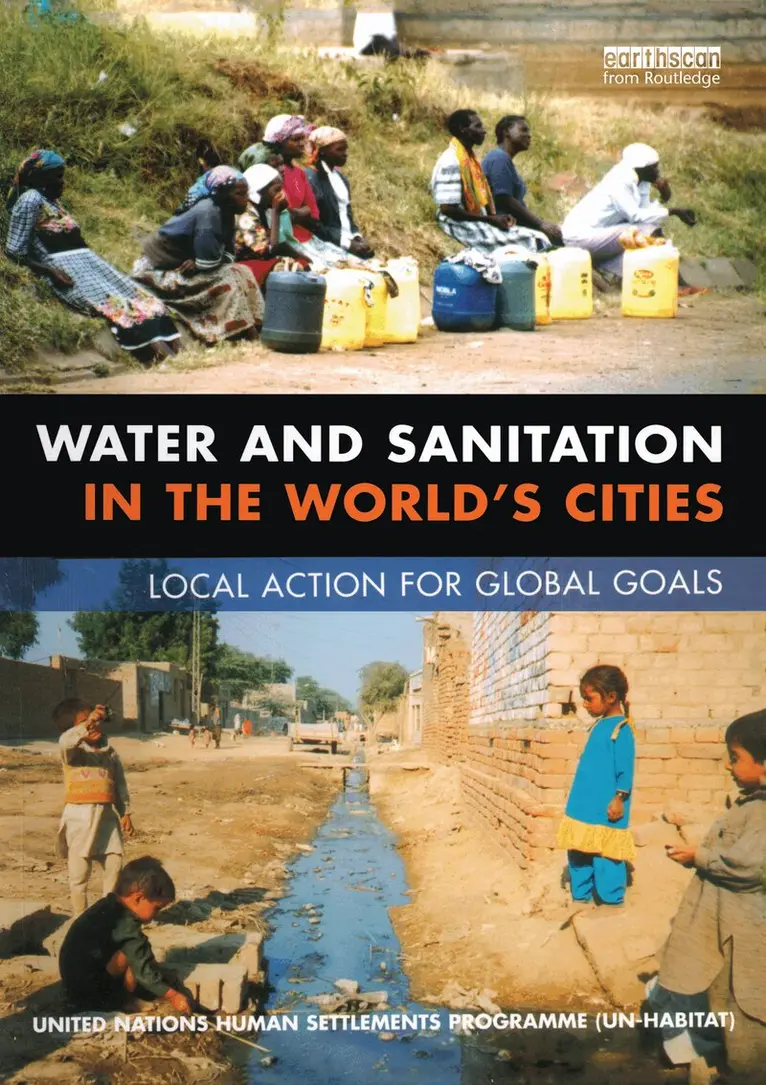
The world''s governments agreed at the Millennium Summit to halve, by 2015, the number of people who lack access to safe water. With rapidly growing urban populations the challenge is immense.
Water and Sanitation in the World''s Cities is a comprehensive and authoritative assessment of the problems and how they can be addressed. This influential publication by the United Nations Human Settlements Programme (UN-HABITAT) sets out in detail the scale of inadequate provision of water and sanitation. It describes the impacts on health and economic performance, showing the potential gains of remedial action; it analyses the proximate and underlying causes of poor provision and identifies information gaps affecting resource allocation; it outlines the consequences of further deterioration; and it explains how resources and institutional capacities - public, private and community - can be used to deliver proper services through integrated water resource management.
757 kr
Läs direkt efter köp
''This is surely the most impressive and important publication to come out of the UN system for many years.'' Peter Adamson, founder, New Internationalist, and author and researcher of UNICEF''s The State of the World''s Children from 1980 to 1995
The world''s governments agreed at the Millennium Summit to halve, by 2015, the number of people who lack access to safe water. With rapidly growing urban populations the challenge is immense.
Water and Sanitation in the World''s Cities is a comprehensive and authoritative assessment of the problems and how they can be addressed. This influential publication by the United Nations Human Settlements Programme (UN-HABITAT) sets out in detail the scale of inadequate provision of water and sanitation. It describes the impacts on health and economic performance, showing the potential gains of remedial action; it analyses the proximate and underlying causes of poor provision and identifies information gaps affecting resource allocation; it outlines the consequences of further deterioration; and it explains how resources and institutional capacities - public, private and community - can be used to deliver proper services through integrated water resource management.
757 kr
Läs direkt efter köp
Cities are perhaps one of humanity''s most complex creations, never finished, never definitive. They are like a journey that never ends. Their evolution is determined by their ascent into greatness or their descent into decline. They are the past, the present and the future. Cities contain both order and chaos. In them reside beauty and ugliness, virtue and vice. They can bring out the best or the worst in humankind. They are the physical manifestation of history and culture and incubators of innovation, industry, technology, entrepreneurship and creativity. Cities are the materialization of humanity''s noblest ideas, ambitions and aspirations but when not planned or governed properly, can be the repository of society''s ills. Cities drive national economies by creating wealth, enhancing social development and providing employment but they can also be the breeding grounds for poverty, exclusion and environmental degradation.
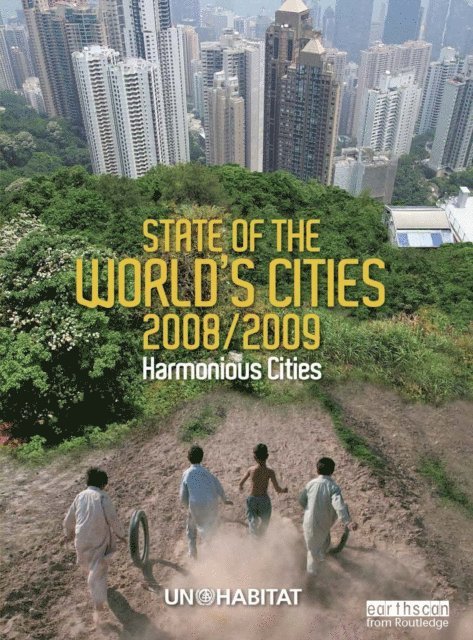
The 21st Century is the Century of the City. Half of humanity now lives in cities, and within the next two decades, 60 per cent of the world''s people will reside in urban areas. How can city planners and policymakers harmonize the various interests, diversity and inherent contradictions within cities? What ingredients are needed to create harmony between the physical, social, environmental and cultural aspects of a city and the human beings that inhabit it? This report adopts the concept of Harmonious Cities as a theoretical framework in order to understand today''s urban world, and also as an operational tool to confront the most important challenges facing urban areas and their development processes. It recognizes that tolerance, diversity, social justice and good governance, all of which are inter-related, are as important to sustainable urban development as physical planning. It addresses national concerns by searching for solutions at the city level. For that purpose, it focuses on three key areas: spatial or regional harmony, which examines the main drivers of urban growth in the developing world and explores the spatial nuances of economic and social policies; social harmony, which presents and analyzes new data on urban inequalities worldwide and describes the types of shelter deprivations experienced by slum dwellers in developing world regions; and environmental harmony, which examines the role of cities in the climate change debate, and the impact of global warming on the most vulnerable cities. The report also assesses the various intangible assets within cities that contribute to harmony, such as cultural heritage, sense of place and memory and the complex set of social and symbolic relationships that give cities meaning. It argues that these intangible assets represent the soul of the city and are as important for harmonious urban development as tangible assets. Harmony within cities, argues the report, is both a journey and a destination.
Published with UN-HABITAT
730 kr
Läs direkt efter köp
Cities are perhaps one of humanity''s most complex creations, never finished, never definitive. They are like a journey that never ends. Their evolution is determined by their ascent into greatness or their descent into decline. They are the past, the present and the future. Cities contain both order and chaos. In them reside beauty and ugliness, virtue and vice. They can bring out the best or the worst in humankind. They are the physical manifestation of history and culture and incubators of innovation, industry, technology, entrepreneurship and creativity. Cities are the materialization of humanity''s noblest ideas, ambitions and aspirations but when not planned or governed properly, can be the repository of society''s ills. Cities drive national economies by creating wealth, enhancing social development and providing employment but they can also be the breeding grounds for poverty, exclusion and environmental degradation.
The 21st Century is the Century of the City. Half of humanity now lives in cities, and within the next two decades, 60 per cent of the world''s people will reside in urban areas. How can city planners and policymakers harmonize the various interests, diversity and inherent contradictions within cities? What ingredients are needed to create harmony between the physical, social, environmental and cultural aspects of a city and the human beings that inhabit it? This report adopts the concept of Harmonious Cities as a theoretical framework in order to understand today''s urban world, and also as an operational tool to confront the most important challenges facing urban areas and their development processes. It recognizes that tolerance, diversity, social justice and good governance, all of which are inter-related, are as important to sustainable urban development as physical planning. It addresses national concerns by searching for solutions at the city level. For that purpose, it focuses on three key areas: spatial or regional harmony, which examines the main drivers of urban growth in the developing world and explores the spatial nuances of economic and social policies; social harmony, which presents and analyzes new data on urban inequalities worldwide and describes the types of shelter deprivations experienced by slum dwellers in developing world regions; and environmental harmony, which examines the role of cities in the climate change debate, and the impact of global warming on the most vulnerable cities. The report also assesses the various intangible assets within cities that contribute to harmony, such as cultural heritage, sense of place and memory and the complex set of social and symbolic relationships that give cities meaning. It argues that these intangible assets represent the soul of the city and are as important for harmonious urban development as tangible assets. Harmony within cities, argues the report, is both a journey and a destination.
Published with UN-HABITAT
1 103 kr
Läs direkt efter köp
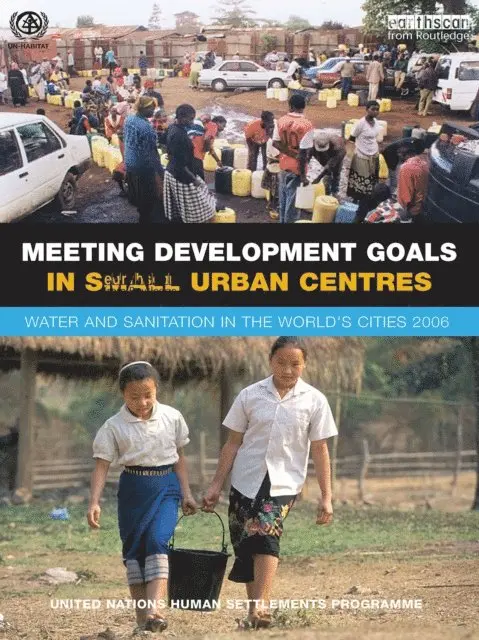
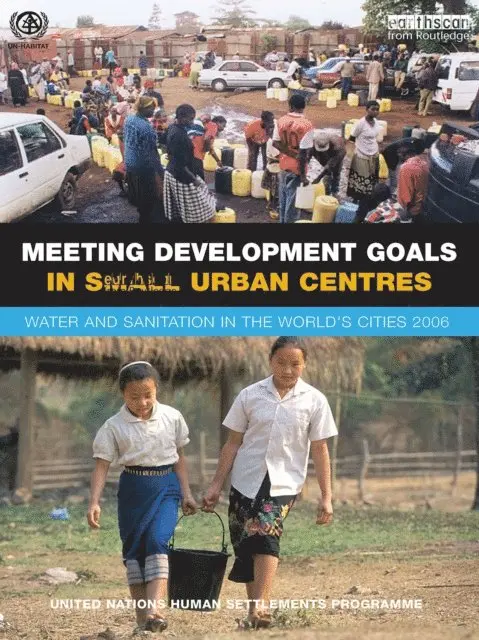
Half of the world''s people live in urban areas, and roughly a third of these live in desperate poverty without access to basic amenities. Taking on the themes of UN-HABITAT''s Water and Sanitation in the World''s Cities (2003), this new volume focuses on the deficiencies in the provision of water and sanitation where most of the populations of the developing world live: in towns and small cities.
Drawing on extensive unpublished research and 15 commissioned papers from experts involved in designing and implementing innovative projects around the world, this is the first major study of the problems facing the smaller urban centres that are recognized to be of enormous importance by governments, international agencies, NGOs and service providers. Tackling these problems is a crucial part of development and of good governance, and critical to meeting the Millennium Development Goals. The volume will be essential reading for all professionals and researchers in the relevant fields and a valuable resource for teachers and students of urban development.
1 143 kr
Läs direkt efter köp
Half of the world''s people live in urban areas, and roughly a third of these live in desperate poverty without access to basic amenities. Taking on the themes of UN-HABITAT''s Water and Sanitation in the World''s Cities (2003), this new volume focuses on the deficiencies in the provision of water and sanitation where most of the populations of the developing world live: in towns and small cities.
Drawing on extensive unpublished research and 15 commissioned papers from experts involved in designing and implementing innovative projects around the world, this is the first major study of the problems facing the smaller urban centres that are recognized to be of enormous importance by governments, international agencies, NGOs and service providers. Tackling these problems is a crucial part of development and of good governance, and critical to meeting the Millennium Development Goals. The volume will be essential reading for all professionals and researchers in the relevant fields and a valuable resource for teachers and students of urban development.
1 110 kr
Läs direkt efter köp
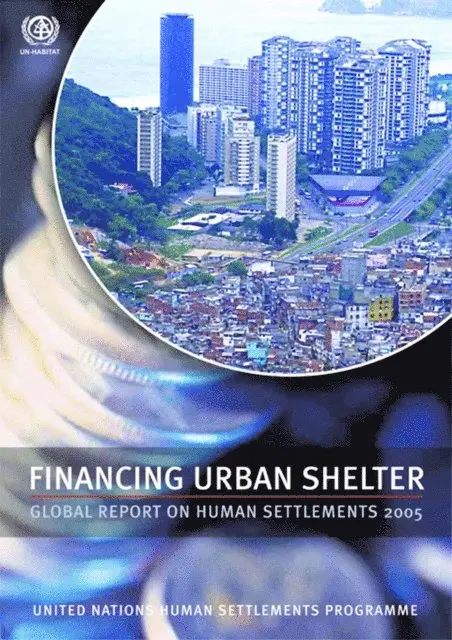
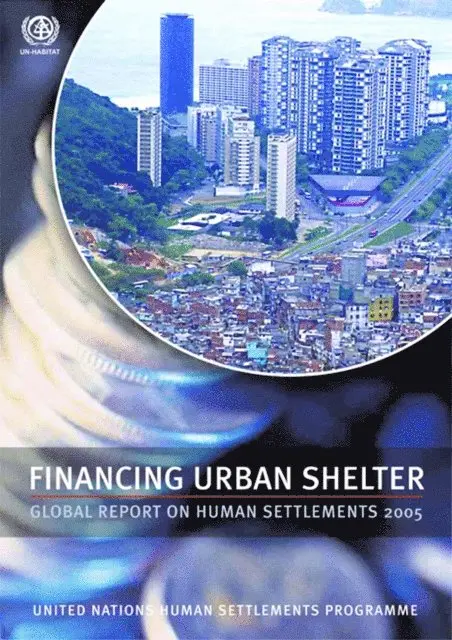
''Achieving the goals set by world leaders in the United Nations Millennium Declaration will be difficult without a significant improvement in the lives of slum dwellers, and the lives of slum dwellers cannot be improved without the sound and sustainable economic development that is conducive to the establishment of a strong shelter sector. As Financing Urban Shelter: Global Report on Human Settlements 2005 emphasizes, one of the key challenges in meeting the Millennium Declaration Goal on slums is mobilization of the financial resources necessary for both slum upgrading and slum prevention by supplying new housing affordable to lower income groups on a large scale. . . . It is my hope that, by highlighting the impacts of current shelter financing systems on low-income households and by identifying the types of financing mechanisms that appear to have worked for them, this report will contribute to the efforts of the wide range of actors involved in improving the lives of slum dwellers, including governments at the central and local levels, as well as non-governmental and international organizations.'' From the Foreword by KOFI ANNAN, Secretary-General, United Nations
Financing Urban Shelter presents the first global assessment of housing finance systems, placing shelter and urban development challenges within the overall context of macroeconomic policies. The report describes and analyses housing finance conditions and trends in all regions of the world, including formal housing finance mechanisms, microfinance and community funding, highlighting their relevance to the upgrading of slums. Recent shelter finance policy development is discussed at the international and national levels, and the directions that could be taken to strengthen shelter finance systems are examined.
The Global Report on Human Settlements is the most authoritative and up-to-date assessment of conditions and trends in the world''s cities. It is an essential tool and reference for researchers, academics, public authorities and civil society organizations around the world. The preceding issues of the Global Report on Human Settlements have addressed such topics as An Urbanizing World, Cities in a Globalizing World and The Challenge of Slums.
Published with UN-HABITAT
1 110 kr
Läs direkt efter köp
''Achieving the goals set by world leaders in the United Nations Millennium Declaration will be difficult without a significant improvement in the lives of slum dwellers, and the lives of slum dwellers cannot be improved without the sound and sustainable economic development that is conducive to the establishment of a strong shelter sector. As Financing Urban Shelter: Global Report on Human Settlements 2005 emphasizes, one of the key challenges in meeting the Millennium Declaration Goal on slums is mobilization of the financial resources necessary for both slum upgrading and slum prevention by supplying new housing affordable to lower income groups on a large scale. . . . It is my hope that, by highlighting the impacts of current shelter financing systems on low-income households and by identifying the types of financing mechanisms that appear to have worked for them, this report will contribute to the efforts of the wide range of actors involved in improving the lives of slum dwellers, including governments at the central and local levels, as well as non-governmental and international organizations.'' From the Foreword by KOFI ANNAN, Secretary-General, United Nations
Financing Urban Shelter presents the first global assessment of housing finance systems, placing shelter and urban development challenges within the overall context of macroeconomic policies. The report describes and analyses housing finance conditions and trends in all regions of the world, including formal housing finance mechanisms, microfinance and community funding, highlighting their relevance to the upgrading of slums. Recent shelter finance policy development is discussed at the international and national levels, and the directions that could be taken to strengthen shelter finance systems are examined.
The Global Report on Human Settlements is the most authoritative and up-to-date assessment of conditions and trends in the world''s cities. It is an essential tool and reference for researchers, academics, public authorities and civil society organizations around the world. The preceding issues of the Global Report on Human Settlements have addressed such topics as An Urbanizing World, Cities in a Globalizing World and The Challenge of Slums.
Published with UN-HABITAT
1 110 kr
Läs direkt efter köp
1 110 kr
Läs direkt efter köp
1 043 kr
Läs direkt efter köp
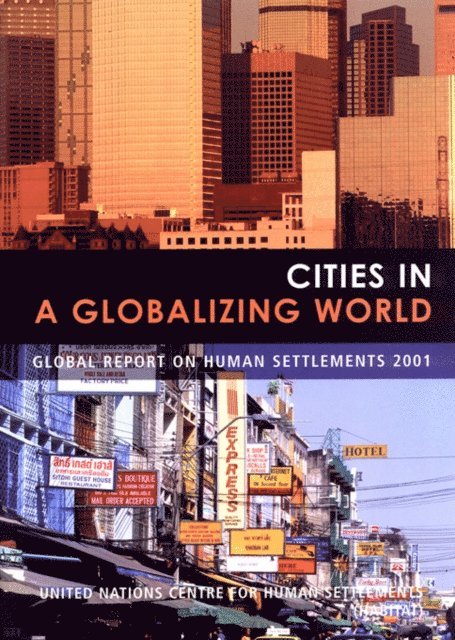
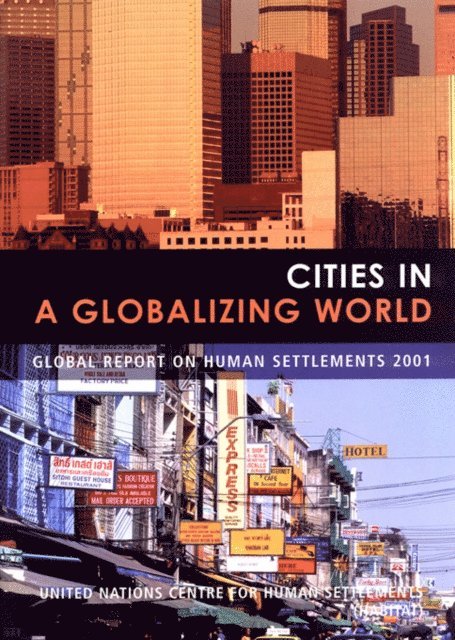
''The world has entered the urban millennium. Nearly half the world''s people are now city dwellers, and the rapid increase in urban population is expected to continue, mainly in developing countries. This historic transition is being further propelled by the powerful forces of globalization. The central challenge for the international community is clear: to make both urbanization and globalization work for all people, instead of leaving billions behind or on the margins. Cities in a Globalizing World: Global Report on Human Settlements is a comprehensive review of conditions in the world''s cities and the prospects for making them better, safer places to live in an age of globalization. I hope that it will provide all stakeholders - foremost among them the urban poor themselves - with reliable and timely information with which to set our policies right and get the machinery of urban life moving in a constructive direction.'' From the Foreword by Kofi Annan, Secretary-General, United Nations.
Cities in a Globalizing World presents a comprehensive review of the world''s cities and analyses the positive and negative impacts on human settlements of the global trends towards social and economic integration and the rapid changes in information and communication technologies. In this Global Report, the United Nations Centre for Human Settlements (Habitat) draws on specially commissioned and contributed background papers from more than 80 leading international specialists. The report focuses on recent trends in human settlements and their implications for poverty, inequity and social polarization. It develops advance knowledge for urban planning and management policies in support and promotion of inclusive cities and good urban governance. This major and influential report is the most authoritative and up-to-date assessment of human settlements conditions and trends. Written in clear, non-technical language and supported by informative graphics, case studies and extensive statistical data, it should be an essential tool and reference for academics, researchers, planners, public authorities and civil society organizations around the world.
1 043 kr
Läs direkt efter köp
''The world has entered the urban millennium. Nearly half the world''s people are now city dwellers, and the rapid increase in urban population is expected to continue, mainly in developing countries. This historic transition is being further propelled by the powerful forces of globalization. The central challenge for the international community is clear: to make both urbanization and globalization work for all people, instead of leaving billions behind or on the margins. Cities in a Globalizing World: Global Report on Human Settlements is a comprehensive review of conditions in the world''s cities and the prospects for making them better, safer places to live in an age of globalization. I hope that it will provide all stakeholders - foremost among them the urban poor themselves - with reliable and timely information with which to set our policies right and get the machinery of urban life moving in a constructive direction.'' From the Foreword by Kofi Annan, Secretary-General, United Nations.
Cities in a Globalizing World presents a comprehensive review of the world''s cities and analyses the positive and negative impacts on human settlements of the global trends towards social and economic integration and the rapid changes in information and communication technologies. In this Global Report, the United Nations Centre for Human Settlements (Habitat) draws on specially commissioned and contributed background papers from more than 80 leading international specialists. The report focuses on recent trends in human settlements and their implications for poverty, inequity and social polarization. It develops advance knowledge for urban planning and management policies in support and promotion of inclusive cities and good urban governance. This major and influential report is the most authoritative and up-to-date assessment of human settlements conditions and trends. Written in clear, non-technical language and supported by informative graphics, case studies and extensive statistical data, it should be an essential tool and reference for academics, researchers, planners, public authorities and civil society organizations around the world.
821 kr
Skickas inom 10-15 vardagar
2 815 kr
Skickas inom 10-15 vardagar
957 kr
Läs direkt efter köp
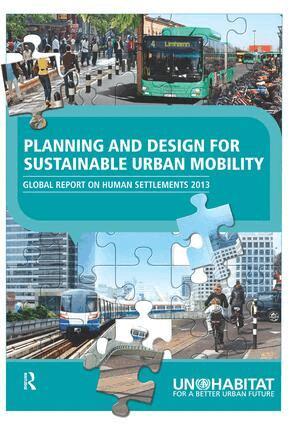
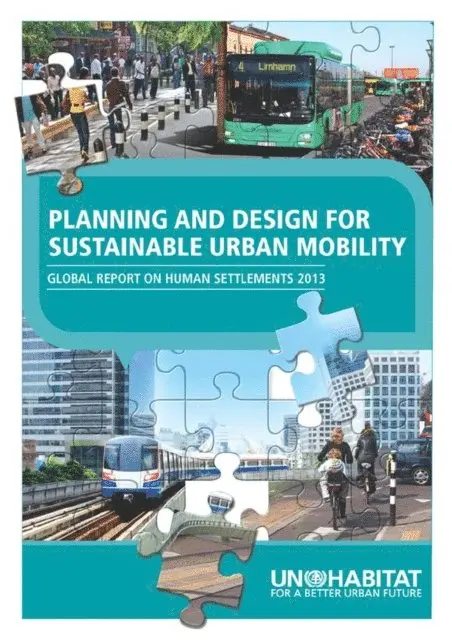
Urban transport systems worldwide are faced by a multitude of challenges. Among the most visible of these are the traffic gridlocks experienced on city roads and highways all over the world. The prescribed solution to transport problems in most cities has thus been to build more infrastructures for cars, with a limited number of cities improving public transport systems in a sustainable manner. However, a number of challenges faced by urban transport systems – such as greenhouse gas emissions, noise and air pollution and road traffic accidents – do not necessarily get solved by the construction of new infrastructure.
Planning and Design for Sustainable Urban Mobility argues that the development of sustainable urban transport systems requires a conceptual leap. The purpose of ‘transportation’ and ‘mobility’ is to gain access to destinations, activities, services and goods. Thus, access is the ultimate objective of transportation. As a result, urban planning and design should focus on how to bring people and places together, by creating cities that focus on accessibility, rather than simply increasing the length of urban transport infrastructure or increasing the movement of people or goods. Urban form and the functionality of the city are therefore a major focus of this report, which highlights the importance of integrated land-use and transport planning.
This new report of the United Nations Human Settlements Programme (UN-Habitat), the world’s leading authority on urban issues, provides some thought-provoking insights and policy recommendations on how to plan and design sustainable urban mobility systems. The Global Report on Human Settlements is the most authoritative and up-to-date global assessment of human settlements conditions and trends. Preceding issues of the report have addressed such topics as Cities in a Globalizing World, The Challenge of Slums, Financing Urban Shelter, Enhancing Urban Safety and Security, Planning Sustainable Cities and Cities and Climate Change.
992 kr
Läs direkt efter köp
Urban transport systems worldwide are faced by a multitude of challenges. Among the most visible of these are the traffic gridlocks experienced on city roads and highways all over the world. The prescribed solution to transport problems in most cities has thus been to build more infrastructures for cars, with a limited number of cities improving public transport systems in a sustainable manner. However, a number of challenges faced by urban transport systems – such as greenhouse gas emissions, noise and air pollution and road traffic accidents – do not necessarily get solved by the construction of new infrastructure.
Planning and Design for Sustainable Urban Mobility argues that the development of sustainable urban transport systems requires a conceptual leap. The purpose of ‘transportation’ and ‘mobility’ is to gain access to destinations, activities, services and goods. Thus, access is the ultimate objective of transportation. As a result, urban planning and design should focus on how to bring people and places together, by creating cities that focus on accessibility, rather than simply increasing the length of urban transport infrastructure or increasing the movement of people or goods. Urban form and the functionality of the city are therefore a major focus of this report, which highlights the importance of integrated land-use and transport planning.
This new report of the United Nations Human Settlements Programme (UN-Habitat), the world’s leading authority on urban issues, provides some thought-provoking insights and policy recommendations on how to plan and design sustainable urban mobility systems. The Global Report on Human Settlements is the most authoritative and up-to-date global assessment of human settlements conditions and trends. Preceding issues of the report have addressed such topics as Cities in a Globalizing World, The Challenge of Slums, Financing Urban Shelter, Enhancing Urban Safety and Security, Planning Sustainable Cities and Cities and Climate Change.
672 kr
Läs direkt efter köp
The future is urban. Indeed, the battle for sustainable development will be won or lost in cities. Not a moment too soon, then, that urbanization is suddenly at the centre of global policy making. In 2015 the governments of the UN adopted the 2030 Agenda for Sustainable Development and in 2016 they adopted the New Urban Agenda. However, the question of how these Agendas will be pursued concretely remains. Unfortunately, the prevailing model is rigidly technocratic Charter of Athens from 1933—the strict functionalist separation of activities that it prescribes still dominates planning practices worldwide.
The purpose of The Quito Papers and the New Urban Agenda is to start a discussion that both challenges this status quo and opens up new lines of enquiry. It intentionally does not propose a manifesto made up of simplistic slogans and recommendations as cities in the 21st century are more fragile and complex. Its content, therefore, is intentionally broad, ranging from architecture, planning and urban design, to land ownership and regulation, water management and environmental philosophy. This multifaceted assembly of perspectives critiques the tenets of the Charter of Athens, identify new trends and propose new insights on contemporary urbanization.
Part One outlines the overall challenges facing cities in the 21st century and Part Two offers a number of conceptual frameworks and approaches for dealing with those challenges. Each Part is also composed of a body of illustrated arguments, synthesized from selectively-abridged background papers from over 15 commissioned authors, interspersed with in-depth papers.
757 kr
Läs direkt efter köp
The future is urban. Indeed, the battle for sustainable development will be won or lost in cities. Not a moment too soon, then, that urbanization is suddenly at the centre of global policy making. In 2015 the governments of the UN adopted the 2030 Agenda for Sustainable Development and in 2016 they adopted the New Urban Agenda. However, the question of how these Agendas will be pursued concretely remains. Unfortunately, the prevailing model is rigidly technocratic Charter of Athens from 1933—the strict functionalist separation of activities that it prescribes still dominates planning practices worldwide.
The purpose of The Quito Papers and the New Urban Agenda is to start a discussion that both challenges this status quo and opens up new lines of enquiry. It intentionally does not propose a manifesto made up of simplistic slogans and recommendations as cities in the 21st century are more fragile and complex. Its content, therefore, is intentionally broad, ranging from architecture, planning and urban design, to land ownership and regulation, water management and environmental philosophy. This multifaceted assembly of perspectives critiques the tenets of the Charter of Athens, identify new trends and propose new insights on contemporary urbanization.
Part One outlines the overall challenges facing cities in the 21st century and Part Two offers a number of conceptual frameworks and approaches for dealing with those challenges. Each Part is also composed of a body of illustrated arguments, synthesized from selectively-abridged background papers from over 15 commissioned authors, interspersed with in-depth papers.
642 kr
Skickas inom 10-15 vardagar