V. F. Reyna – författare
Visar alla böcker från författaren V. F. Reyna. Handla med fri frakt och snabb leverans.
3 produkter
3 produkter
E-bok
Engelska, 20051 026 kr
Läs direkt efter köp
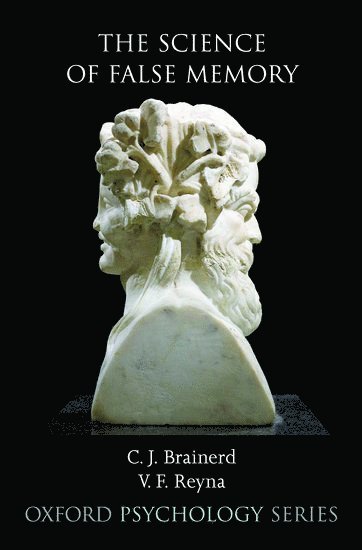
Findings from research on false memory have major implications for a number of fields central to human welfare, such as medicine and law. Although many important conclusions have been reached after a decade or so of intensive research, the majority of them are not well known outside the immediate field. To make this research accessible to a much wider audience, The Science of False Memory has been written to require little or no background knowledge of the theory and techniques used in memory research. Brainerd and Reyna introduce the volume by considering the progenitors to the modern science of false memory, and noting the remarkable degree to which core themes of contemporary research were anticipated by historical figure such as Binet, Piaget, and Bartlett. They continue with an account of the varied methods that have been used to study false memory both inside and outside of the laboratory. The first part of the volume focuses on the basic science of false memory, revolving around three topics: old and new theoretical ideas that have been used to explain false memory and make predictions about it; research findings and predictions about false memory in normal adults; and research findings and predictions about age-related changes in false memory between early childhood and adulthood. Throughout Part I, Brainerd and Reyna emphasize how current opponent-processes conceptions of false memory act as a unifying influence by integrating predictions and data across disparate forms of false memory. The second part focuses on the applied science of false memory, revolving around four topics: the falsifiability of witnesses and suspects memories of crimes, including false confessions by suspects; the falsifiability of eyewitness identifications of suspects; false-memory reports in investigative interviews of child victims and witnesses, particularly in connection with sexual-abuse crimes; false memory in psychotherapy, including recovered memories of childhood abuse, multiple-personality disorders, and recovered memories of previous lives. Although Part II is concerned with applied research, Brainerd and Reyna continue to emphasize the unifying influence of opponent-processes conceptions of false memory. The third part focuses on emerging trends, revolving around three expanding areas of false-memory research: mathematical models, aging effects, and cognitive neuroscience. False Memory will be an invaluable resource for professional researchers, practitioners, and students in the many fields for which false-memory research has implications, including child-protective services, clinical psychology, law, criminal justice, elementary and secondary education, general medicine, journalism, and psychiatry.
Del 38 - Oxford Psychology Series
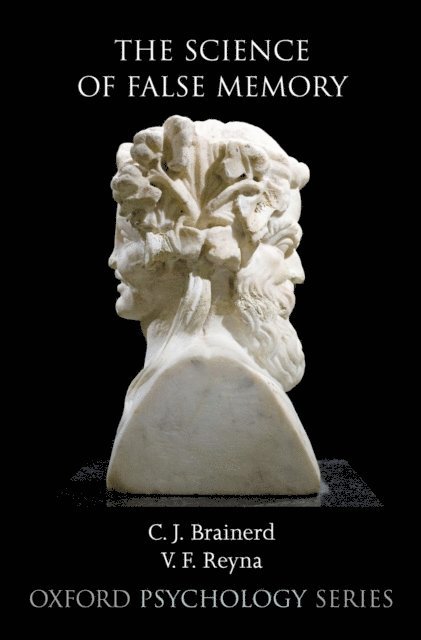
The Science of False Memory
Inbunden, Engelska, 2005
1 737 kr
Skickas inom 7-10 vardagar
A decade or so of intensive research on false memory has revealed much that is not well understood outside the circles of scientists who specialize in such research. However, this research has produced findings that have major implications for a number of fields that are central to human welfare, such as medicine and the law. This book has been written to make those findings accessible to a much wider audience than research specialists including child protective services workers, clinical psychologists, defense attorneys, elementary and secondary teachers, general medical practitioners, journalists, judges, nurses, police investigators, prosecutors, and psychiatrists. For that reason, the book assumes little or no background knowledge in the techniques of memory research. The volume begins with a consideration of progenitors of the modern science of false memory and notes the remarkable degree to which core themes of contemporary research were anticipated by historical figures such as Binet, Piaget, and Bartlett. It continues with an account of the varied methods that have been used to study false science of false memory, with the coverage revolving around three topics: theoretical ideas, both old and new, that have been used to explain false memory and to make predictions about it; research findings and predictions about age changes in false memory between early processes conceptions of false memory, is stressed. In Part II, attention shifts to the falsifiability of eyewitness identifications of suspects; false-memory reports in abuse crimes; and false memory in psychotherapy, including recovered memories of previous lives. Although Part II is concerned with applied research, we again emphasize the unifying trends are explored, with attention being focused on three expanding areas of false-memory research: mathematical models, aging effects, and cognitive neuroscience.
E-bok
PDF, Engelska, 20051 026 kr
Läs direkt efter köp
Findings from research on false memory have major implications for a number of fields central to human welfare, such as medicine and law. Although many important conclusions have been reached after a decade or so of intensive research, the majority of them are not well known outside the immediate field. To make this research accessible to a much wider audience, The Science of False Memory has been written to require little or no background knowledge of the theory and techniques used in memory research. Brainerd and Reyna introduce the volume by considering the progenitors to the modern science of false memory, and noting the remarkable degree to which core themes of contemporary research were anticipated by historical figure such as Binet, Piaget, and Bartlett. They continue with an account of the varied methods that have been used to study false memory both inside and outside of the laboratory. The first part of the volume focuses on the basic science of false memory, revolving around three topics: old and new theoretical ideas that have been used to explain false memory and make predictions about it; research findings and predictions about false memory in normal adults; and research findings and predictions about age-related changes in false memory between early childhood and adulthood. Throughout Part I, Brainerd and Reyna emphasize how current opponent-processes conceptions of false memory act as a unifying influence by integrating predictions and data across disparate forms of false memory. The second part focuses on the applied science of false memory, revolving around four topics: the falsifiability of witnesses and suspects memories of crimes, including false confessions by suspects; the falsifiability of eyewitness identifications of suspects; false-memory reports in investigative interviews of child victims and witnesses, particularly in connection with sexual-abuse crimes; false memory in psychotherapy, including recovered memories of childhood abuse, multiple-personality disorders, and recovered memories of previous lives. Although Part II is concerned with applied research, Brainerd and Reyna continue to emphasize the unifying influence of opponent-processes conceptions of false memory. The third part focuses on emerging trends, revolving around three expanding areas of false-memory research: mathematical models, aging effects, and cognitive neuroscience. False Memory will be an invaluable resource for professional researchers, practitioners, and students in the many fields for which false-memory research has implications, including child-protective services, clinical psychology, law, criminal justice, elementary and secondary education, general medicine, journalism, and psychiatry.