Vesna A. Wallace – författare
Visar alla böcker från författaren Vesna A. Wallace. Handla med fri frakt och snabb leverans.
8 produkter
Buddhism in Mongolian History, Culture, and Society
E-bok, 2015
660 kr
Lägg i varukorg
Buddhism in Mongolian History, Culture, and Society explores the unique elements of Mongolian Buddhism while challenging its stereotyped image as a mere replica of Tibetan Buddhism. Vesna A. Wallace brings together an interdisciplinary group of leading scholars to explore the interaction between …
Buddhism in Mongolian History, Culture, and Society
Häftad, 2015
968 kr
Lägg i varukorg
Buddhism in Mongolia explores the unique historical and cultural elements of Mongolian Buddhism while challenging its stereotyped image as a mere replica of Tibetan Buddhism. Vesna A. Wallace brings together an interdisciplinary group of leading scholars to explore the interaction between the …
Buddhism in Mongolian History, Culture, and Society
E-bok, 2015
660 kr
Lägg i varukorg
Buddhism in Mongolian History, Culture, and Society explores the unique elements of Mongolian Buddhism while challenging its stereotyped image as a mere replica of Tibetan Buddhism. Vesna A. Wallace brings together an interdisciplinary group of leading scholars to explore the interaction between …
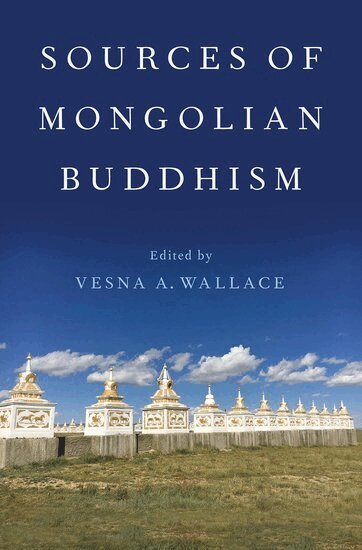
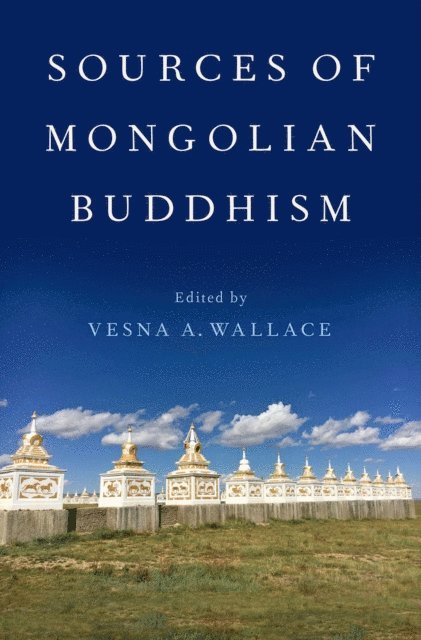
Sources of Mongolian Buddhism
Inbunden, 2020
2494 kr
Lägg i varukorg
Despite Mongolia's centrality to East Asian history and culture, Mongols themselves have often been seen as passive subjects on the edge of the Qing formation or as obedient followers of so-called "Tibetan Buddhism," peripheral to major literary, religious, and political developments. But in fact …
Sources of Mongolian Buddhism
E-bok, 2020
1602 kr
Lägg i varukorg
Despite Mongolia''s centrality to East Asian history and culture, Mongols themselves have often been seen as passive subjects on the edge of the Qing formation or as obedient followers of so-called "Tibetan Buddhism," peripheral to major literary, religious, and political developments. But in fact …
Sources of Mongolian Buddhism
E-bok, 2020
1602 kr
Lägg i varukorg
Despite Mongolia''s centrality to East Asian history and culture, Mongols themselves have often been seen as passive subjects on the edge of the Qing formation or as obedient followers of so-called "Tibetan Buddhism," peripheral to major literary, religious, and political developments. But in fact …
The Inner Kalacakratantra
A Buddhist Tantric View of the Individual
Inbunden, 2001
2902 kr
Lägg i varukorg
The Kalacakratantra is the latest and most comprehensive Buddhist Tantra that is available in its original Sanskrit. This will be the first thorough academic work to be published on this Tantra. The Kalacakratantra's five chapters are classified into three categories: Outer, Inner, and Other …
Buddhism in Mongolian History, Culture, and Society
Inbunden, 2015
2627 kr
Lägg i varukorg
Buddhism in Mongolia explores the unique historical and cultural elements of Mongolian Buddhism while challenging its stereotyped image as a mere replica of Tibetan Buddhism. Vesna A. Wallace brings together an interdisciplinary group of leading scholars to explore the interaction between the …