Vladimir N. Brovkin – Författare
Visar alla böcker från författaren Vladimir N. Brovkin. Handla med fri frakt och snabb leverans.
5 produkter
5 produkter
1 002 kr
Skickas inom 5-8 vardagar
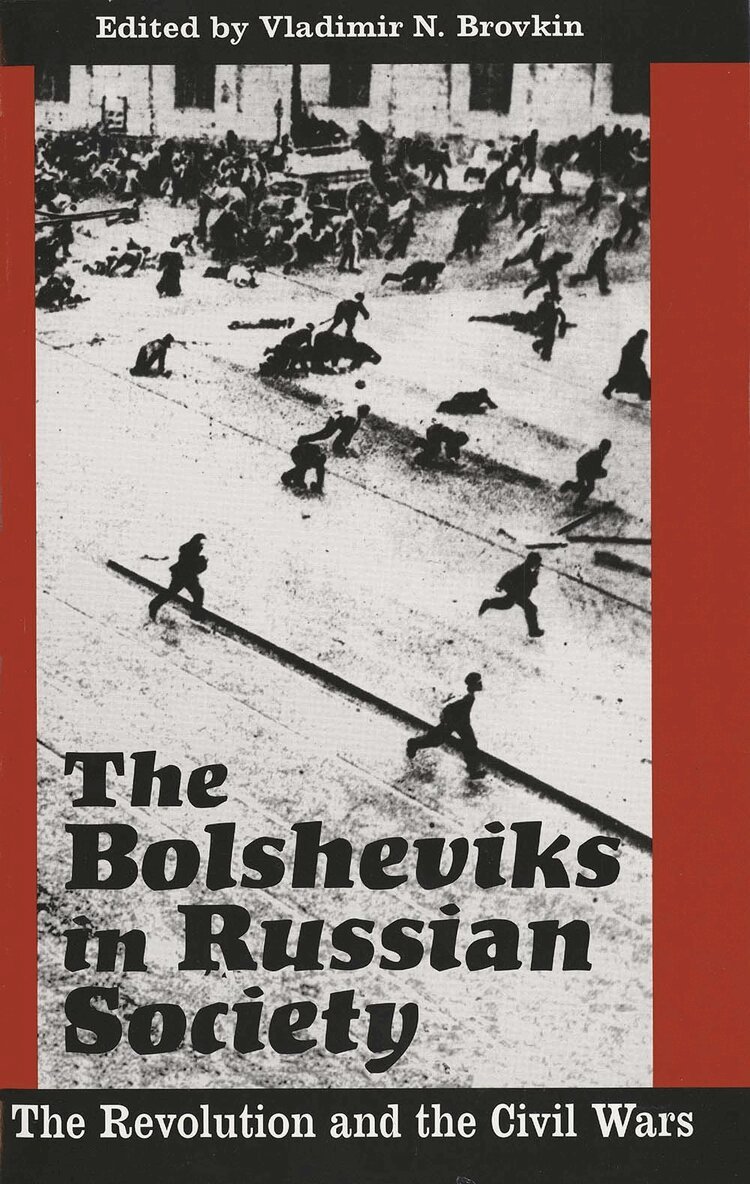
Was the Bolshevik success in Russia during the revolution and civil war years a legitimate expression of the will of the people? Or did Russian workers, peasants, bourgeoisie, and upper-class groups pose numerous challenges to Bolshevik authority, challenges that were put down through unyielding repression? In this book distinguished scholars from East and West draw on recently opened archives to challenge the commonly held view that the Bolsheviks enjoyed widespread support and that their early history was simply a march toward inevitable victory. They show instead that during this period Russian society was at war with itself and with the Bolsheviks.Authors discuss such previously neglected subjects as government policies toward women and toward religious institutions, the protests of workers and peasants, and the anti-Bolshevik movements and parties. In particular, they investigate the actions of other political parties and White leaders, the peasant rebellions and workers' strikes, Bolshevik operations against the church, attitudes toward peasant and working-class women, and new data on Lenin (the last in a chapter by Richard Pipes). Describing not one civil war but several social, political, and military confrontations going on simultaneously, they portray a Russia in turmoil and an outcome that was by no means inevitable.
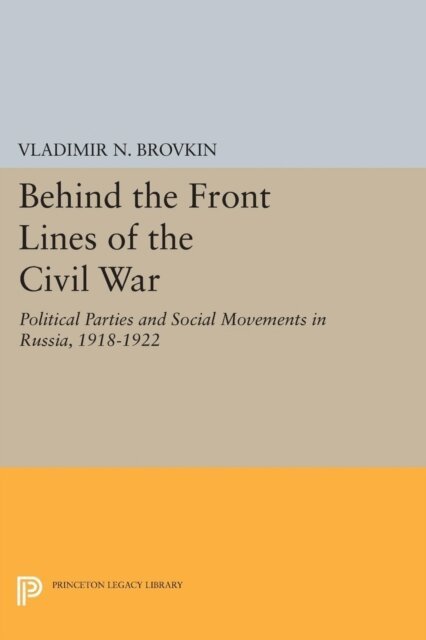
Behind the Front Lines of the Civil War
Political Parties and Social Movements in Russia, 1918-1922
Häftad, Engelska, 2015
675 kr
Skickas inom 7-10 vardagar
Countering the powerful myth that the civil war in Russia was largely between the "Whites" and the "Reds," Vladimir Brovkin views the struggle as a multifaceted social and political process. Brovkin focuses not so much on armies and governments as on the interaction of state institutions, political parties, and social movements on both Red and White territories. In the process, he exposes the weaknesses of the various warring factions in a Russia plagued by strikes, mutinies, desertion, and rebellions. The Whites benefited from popular resistance to the Reds, and the Reds, from resistance to the Whites. In Brovkin's view, neither regime enjoyed popular support. Pacification campaigns, mass shooting, deportations, artillery shelling of villages, and terror were the essence of the conflict, and when the Whites were defeated, the war against the Greens, the peasant rebels, went on. Drawing on a remarkable array of previously untapped sources, Brovkin convicts the early Bolsheviks of crimes similar to those later committed by Stalin.What emerges "behind the front lines" is a picture of how diverse forces--Cossacks, Ukrainians, Greens, Mensheviks, and SRs, as well as Whites and Bolsheviks--created the tragic victory of a party that had no majority support. This book has important contemporary implications as the world again asks an old question: Can Russian statehood prevail over local, regional, and national identities? Originally published in 1994. The Princeton Legacy Library uses the latest print-on-demand technology to again make available previously out-of-print books from the distinguished backlist of Princeton University Press. These editions preserve the original texts of these important books while presenting them in durable paperback and hardcover editions. The goal of the Princeton Legacy Library is to vastly increase access to the rich scholarly heritage found in the thousands of books published by Princeton University Press since its founding in 1905.
Behind the Front Lines of the Civil War
Political Parties and Social Movements in Russia, 1918-1922
Inbunden, Engelska, 2016
3 087 kr
Skickas inom 3-6 vardagar
Countering the powerful myth that the civil war in Russia was largely between the "Whites" and the "Reds," Vladimir Brovkin views the struggle as a multifaceted social and political process. Brovkin focuses not so much on armies and governments as on the interaction of state institutions, political parties, and social movements on both Red and White territories. In the process, he exposes the weaknesses of the various warring factions in a Russia plagued by strikes, mutinies, desertion, and rebellions. The Whites benefited from popular resistance to the Reds, and the Reds, from resistance to the Whites. In Brovkin's view, neither regime enjoyed popular support. Pacification campaigns, mass shooting, deportations, artillery shelling of villages, and terror were the essence of the conflict, and when the Whites were defeated, the war against the Greens, the peasant rebels, went on. Drawing on a remarkable array of previously untapped sources, Brovkin convicts the early Bolsheviks of crimes similar to those later committed by Stalin.What emerges "behind the front lines" is a picture of how diverse forces--Cossacks, Ukrainians, Greens, Mensheviks, and SRs, as well as Whites and Bolsheviks--created the tragic victory of a party that had no majority support. This book has important contemporary implications as the world again asks an old question: Can Russian statehood prevail over local, regional, and national identities? Originally published in 1994. The Princeton Legacy Library uses the latest print-on-demand technology to again make available previously out-of-print books from the distinguished backlist of Princeton University Press. These editions preserve the original texts of these important books while presenting them in durable paperback and hardcover editions. The goal of the Princeton Legacy Library is to vastly increase access to the rich scholarly heritage found in the thousands of books published by Princeton University Press since its founding in 1905.
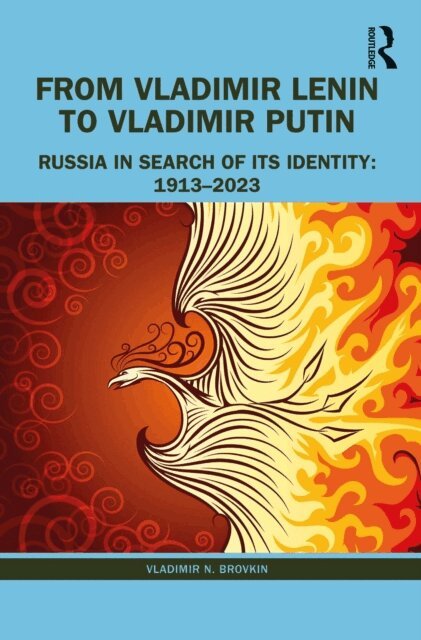
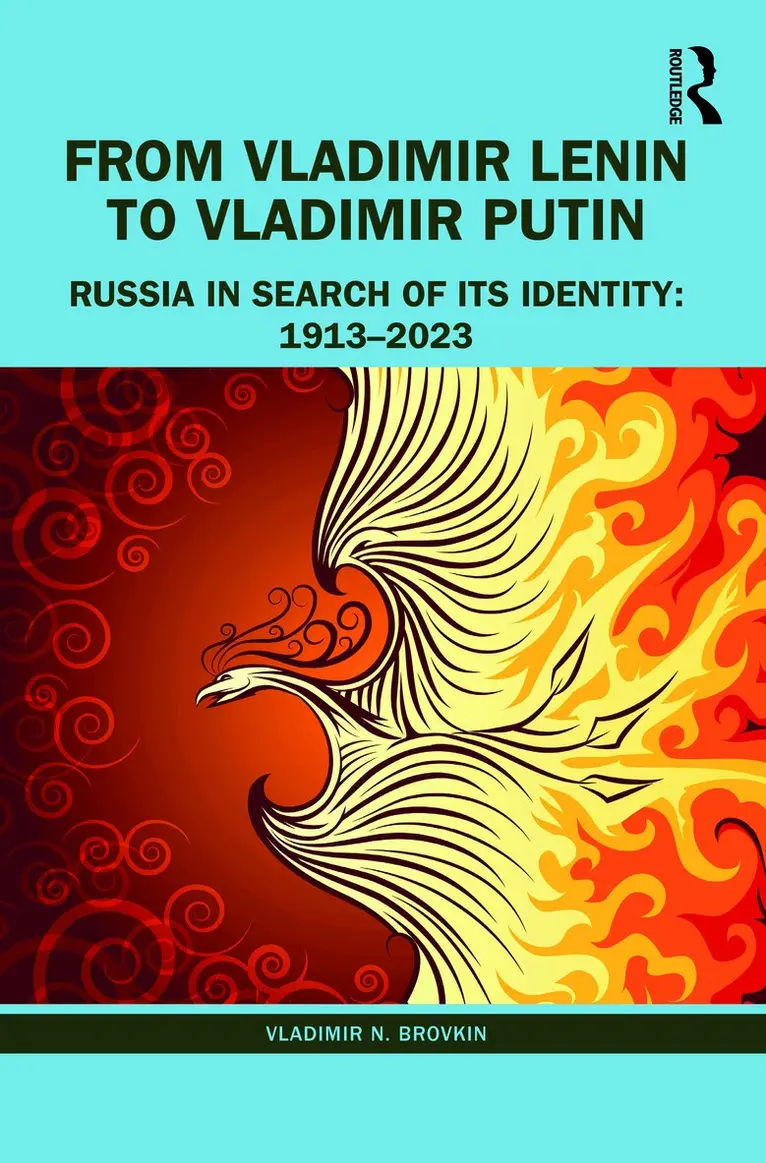
From Vladimir Lenin to Vladimir Putin
Russia in Search of Its Identity: 1913–2023
Häftad, Engelska, 2023
581 kr
Skickas inom 10-15 vardagar
This book integrates Soviet and post-Soviet Russian history into a coherent whole by focusing on the culture, role models, habits and behavior patterns that provide continuity between various political regimes, systems, and rulers from Vladimir Lenin to Vladimir Putin.The unifying theme of all these periods is the central question of identity – how the Russians have defined themselves, their country, and their values. Why did the Bolsheviks try to erase any trace of Old Russia and with what did they try to replace it? Why did Stalin wipe out the kulaks and the old Bolsheviks? What were the political consequences of the Great Patriotic War on the Russians as people? When post-Stalin Russia slowly weakened and gave way to the humanism and Westernization that led to the collapse of the Soviet system, why did the 1990s generate a resurgence of anti-western nationalism? And how to explain the slow and steady break with the West under President Putin?This will be a core textbook for undergraduate and graduate students of Russian and European history, and a valuable text for all those interested in how the Russian past influenced and shaped current politics, and in the international East–West divide in particular.For YouTube discussions of the book, see:https://www.youtube.com/watch?v=lvG1G1cax-k https://www.youtube.com/watch?v=0W3V6nb3h18&t=3s
From Vladimir Lenin to Vladimir Putin
Russia in Search of Its Identity: 1913–2023
Inbunden, Engelska, 2023
2 176 kr
Skickas inom 10-15 vardagar
This book integrates Soviet and post-Soviet Russian history into a coherent whole by focusing on the culture, role models, habits and behavior patterns that provide continuity between various political regimes, systems, and rulers from Vladimir Lenin to Vladimir Putin.The unifying theme of all these periods is the central question of identity – how the Russians have defined themselves, their country, and their values. Why did the Bolsheviks try to erase any trace of Old Russia and with what did they try to replace it? Why did Stalin wipe out the kulaks and the old Bolsheviks? What were the political consequences of the Great Patriotic War on the Russians as people? When post-Stalin Russia slowly weakened and gave way to the humanism and Westernization that led to the collapse of the Soviet system, why did the 1990s generate a resurgence of anti-western nationalism? And how to explain the slow and steady break with the West under President Putin?This will be a core textbook for undergraduate and graduate students of Russian and European history, and a valuable text for all those interested in how the Russian past influenced and shaped current politics, and in the international East–West divide in particular.For YouTube discussions of the book, see:https://www.youtube.com/watch?v=lvG1G1cax-k https://www.youtube.com/watch?v=0W3V6nb3h18&t=3s